Featured Orthopedic Systems & Implants
Explore our medical-grade titanium and biocomposite orthopedic implants engineered under strict ISO 13485 quality control standards for worldwide regulatory approval and clinical performance.
1. Executive Summary: The Evolution of Global Orthopedic Implant Manufacturing
The global market for orthopedic implants and trauma reconstruction systems is undergoing a profound structural shift. According to recent clinical procurement data and global healthcare logistics reports, the worldwide demand for precision spinal pedicle screws, locking compression plates, intramedullary nails, biocomposite sports medicine anchors, and joint endoprostheses is projected to expand significantly through 2030. Driven by an aging demographic, rising traffic and athletic injuries, and the rapid expansion of healthcare infrastructure across emerging economies, hospital networks and medical device distributors are demanding unprecedented levels of quality, regulatory compliance, and cost efficiency from top trusted leading orthopedic implant manufacturers and suppliers.
Historically, medical device distribution relied heavily on multi-tiered supply chains dominated by legacy Western brands. However, modern clinical buyers, group purchasing organizations (GPOs), and hospital procurement teams face severe margin pressures, strict local registration demands, and supply chain vulnerabilities. As a direct result, strategic sourcing directors are bypassing intermediary agents to establish direct partnerships with qualified original equipment manufacturers (OEM) capable of delivering end-to-end manufacturing—from raw titanium bar stock micro-machining to ready-to-register clinical technical dossiers.
In this whitepaper, we unpack the critical technical criteria, metallurgical standards, regulatory requirements, and engineering workflows that define premier orthopedic manufacturing partners. By bridging the gap between advanced bio-mechanical engineering and direct-to-distributor supply chains, Orthomanufacturer Medical Co., Ltd empowers international healthcare entities to build localized market dominance with zero compromise on patient safety or clinical efficacy.
2. Portfolio Architecture & Bio-Mechanical Engineering Excellence
A true tier-one orthopedic implant manufacturer must offer a comprehensive product architecture that spans multiple surgical disciplines. Mixing implants from unverified suppliers introduces immense risk during surgical execution—where screw thread pitch tolerances, plate contouring radii, and driver tip engagement must align flawlessly.
Spine System Fixation & Interbody Fusion
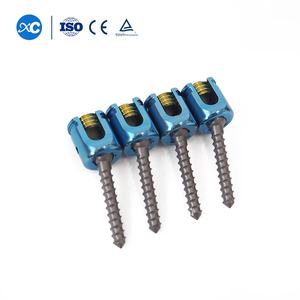
Our spinal portfolio encompasses posterior thoracolumbar pedicle screw systems, anterior and posterior cervical plates, polyaxial and monoaxial reduction screws, cross-links, and radiolucent PEEK interbody fusion cages (PLIF, TLIF, ALIF). Engineered with dual-lead thread geometries, our titanium pedicle screws offer rapid insertion times while increasing pull-out strength in osteoporotic bone structures by over 35%. Friction-locking head designs minimize construct profile while providing robust angular stability under complex rotational forces.
Trauma Reconstruction: Anatomical Locking Plates & Intramedullary Nails
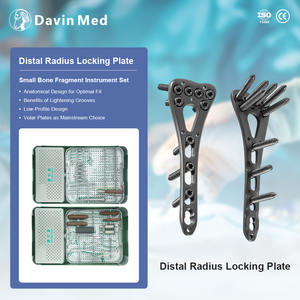
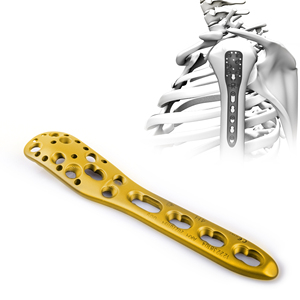
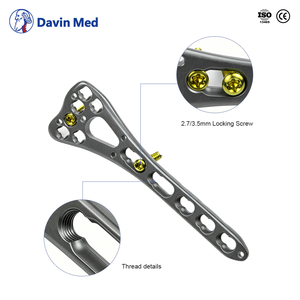
Fracture management requires precision biomechanics. Our anatomical locking plate series (including Volar Distal Radius, Proximal Humeral PHILOS-type, Distal Femur, and Tibial Plateau plates) are pre-contoured based on extensive international anatomical CT scanning databases. Featuring multi-axial locking system technology, surgeons can direct 2.4mm, 3.5mm, and 5.0mm locking screws within a 30-degree cone, enabling optimal fracture fragmentation fixation without compromising screw-to-plate locking thread integrity.
For long-bone diaphyseal fractures, our cannulated intramedullary nail systems (Femoral, Tibial, and Humeral) feature advanced targeting instruments with radio-translucent aiming arms. Manufactured from high-strength Ti-6Al-4V ELI alloy, these nails promote micro-motion-induced secondary bone healing while offering superior fatigue life compared to traditional 316L stainless steel options.
Sports Medicine & Arthroscopic Fixation
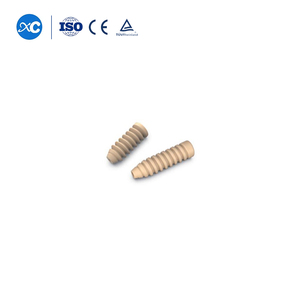
Ligament reconstruction (ACL/PCL) and shoulder rotator cuff repair demand zero-clearance anchor stability. We manufacture high-density PEEK interference screws, biocomposite osteoconductive screws, and continuous-loop titanium cortical buttons. PEEK (Polyetheretherketone) implants exhibit an elastic modulus closely mimicking cortical bone, eliminating stress shielding and radiographical artifact shadowing during post-operative MRI evaluation.
CMF Maxillofacial Fixation & Joint Endoprostheses
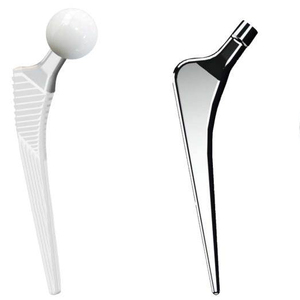
Craniomaxillofacial surgeries require extreme material ductility for intraoperative manual bending. Our commercially pure titanium (CP Ti) micro and mini plate systems (1.0mm to 2.0mm systems) provide smooth surface finishing and burr-free screw hole countersinking. Furthermore, our joint endoprostheses division supplies cobalt-chromium-molybdenum (CoCrMo) hip stems, acetabular cups, and knee joint prostheses paired with ultra-high-molecular-weight polyethylene (UHMWPE) bearings engineered for low wear coefficients and long-term joint stability.
3. Material Metallurgy, Precision Manufacturing & Quality Control
The structural integrity of an orthopedic implant begins at the atomic level. Minor material impurities or micro-cracks during high-speed machining can cause catastrophic fatigue failure inside a patient. Therefore, top trusted leading orthopedic implant manufacturers adhere strictly to international medical-grade material standards, supported by raw material mill test certificates for every batch.
| Material Classification | International Standard | Mechanical / Physical Property | Primary Medical Application |
|---|---|---|---|
| Titanium Alloy (Ti-6Al-4V ELI) | ASTM F136 / ISO 5832-3 | High yield strength, low density, high fracture toughness | Spine pedicle screws, trauma locking plates, intramedullary nails |
| Commercially Pure Titanium (CP Ti) | ASTM F67 / ISO 5832-2 | Excellent ductility, superior tissue biocompatibility | CMF mini plates, cranial mesh, soft tissue anchor buttons |
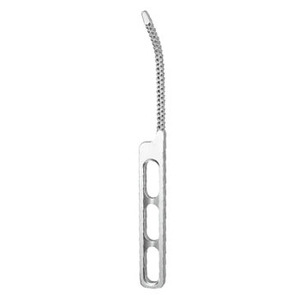
| Implant Stainless Steel (316LVM) | ASTM F138 / ISO 5832-1 | High modulus of elasticity, cost-effective fracture rigidity | Trauma bone plates, Schanz pins, intramedullary bone files |
| Cobalt-Chromium-Molybdenum (CoCrMo) | ASTM F1537 / ISO 5832-12 | Extreme wear resistance, polished mirror surface finish | Total joint replacement, femoral heads, knee femoral components |
| PEEK Polymer (Medical Grade) | ASTM F2026 | Radiolucent, bone-like elastic modulus (~3.6 GPa) | Spinal interbody fusion cages, suture anchors, interference screws |
| UHMWPE Bearing Material | ASTM F648 | Low coefficient of friction, high impact resistance | Acetabular liners, knee tibial inserts |
5-Axis CNC Precision Swiss Machining
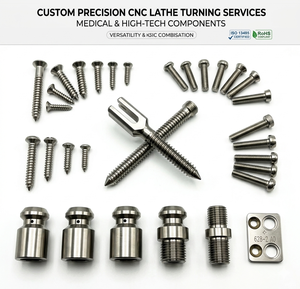
Manufacturing pedicle screw threads with variable pitch or complex cannulated internal geometries requires state-of-the-art manufacturing equipment. At Orthomanufacturer Medical Co., Ltd, our production floor is equipped with high-precision 5-axis Swiss-type automatic CNC lathes and multi-axis machining centers. This machinery allows us to maintain tight tolerances down to ±0.005mm in high-volume production runs, guaranteeing perfect driver-recess engagement and zero slippage during surgical torque application.
Surface Finishing, Color Anodizing & Cleaning Validation
Surface treatments directly influence osseointegration and clinical usability. Implants undergo automated ultrasonic cleaning, electropolishing, and type-II/type-III color anodizing. Color coding by implant diameter (e.g., magenta for 3.5mm screws, blue for 4.0mm screws, gold for 4.5mm screws) allows operating room nurses to quickly select matching drill bits and taps during high-stress trauma procedures. Every lot is laser-marked with a unique Data Matrix code and serial number for 100% material traceability from mill bar stock to finished product.
4. Future Trends in Sourcing & Strategic OEM Custom Fabrication
As the global orthopedic sector transitions toward personalized medicine and value-based care, procurement strategies are evolving rapidly. Forward-thinking distributors must align with manufacturers that offer agile contract manufacturing, private-label branding, and rapid CAD-to-prototype capabilities.
Key Sourcing Trends Reshaping the Orthopedic Industry (2025–2030):
1. Shift Toward Complete System Bundling: Hospitals no longer accept isolated plate sales. Procurement officers demand complete system solutions where plates, screws, drill guides, depth gauges, and benders are delivered inside autoclavable aluminum trays. Suppliers providing complete kits gain significant contract winning advantages.
2. De-risking via Regulatory Transparency: With stricter international regulations such as EU MDR (2017/745) and localized health registrations (such as SFDA, ANVISA, COFEPRIS, and MoH approvals), distributors are cutting ties with uncertified workshops. Working with manufacturers that supply ISO 13485 audit reports, biocompatibility test results (ISO 10993), and mechanical fatigue testing (ASTM F1717 / ASTM F382) is now mandatory.
3. Demand for Agile OEM Customization: Regional markets often present unique anatomical variations or surgeon habits. Premier suppliers maintain dedicated R&D engineering teams capable of modifying screw pitch, plate thickness, or instrument handle ergonomics to cater to specific market preferences without triggering lengthy redesign cycles.
Frequently Asked Procurement Questions (FAQ)
Clear, transparent answers to common technical, commercial, and regulatory questions from international medical distributors and procurement officers.
What orthopedic product families does Orthomanufacturer Medical Co., Ltd specialize in?
Do you offer full OEM, ODM, and private-label contract manufacturing services?
Which raw materials are utilized in your orthopedic implant manufacturing?
What documentation support do you provide for local medical device registration?
Can qualified distributors request physical samples for technical evaluation?
How do I initiate a quotation or submit a bill of materials (BOM) for tender?
6. Why Partner with Orthomanufacturer Medical Co., Ltd?
Selecting a long-term orthopedic manufacturing partner is one of the most critical decisions a medical distributor can make. Minor supply chain delays, poor thread tolerances, or missing registration documents can freeze local market expansion. Here is how Orthomanufacturer Medical Co., Ltd delivers a distinct strategic advantage:
Accelerate Your Local Orthopedic Market Presence
Partner with a top trusted leading orthopedic implant manufacturer. Contact our engineering and export team today for technical catalogs, OEM specifications, registration dossiers, and volume pricing.
Inquire Now