Navigating Modern Orthopedic Supply Chains with Absolute Precision
The global orthopedic implant market is undergoing a seismic structural shift driven by stringent regulatory frameworks (such as EU MDR and US FDA 510(k) updates), increasing hospital demand for value-based care, and the necessity for zero-defect surgical implantology. As a leading manufacturer and exporter, Orthomanufacturer Medical Co., Ltd operates as a high-precision contract manufacturer and distribution partner. We bridge the gap between surgical engineering excellence and commercial scalability for orthopedic distributors worldwide.
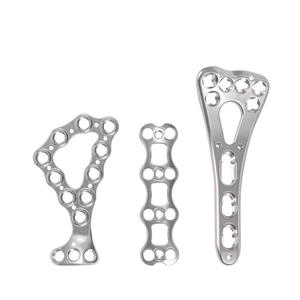
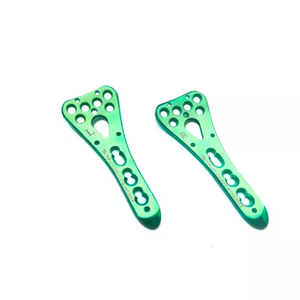
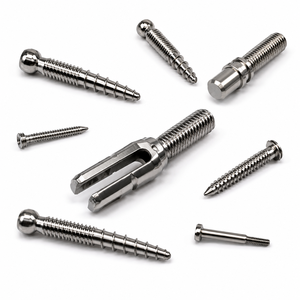
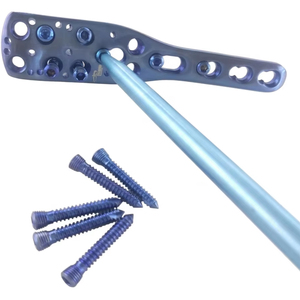
Precision-Engineered Orthopedic Systems
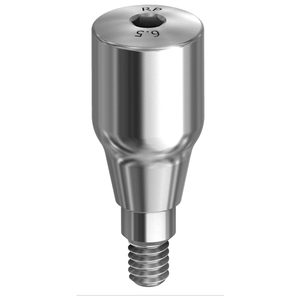
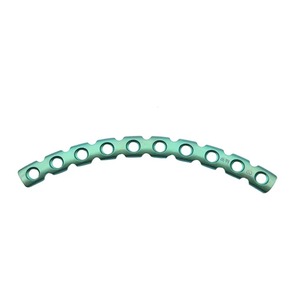
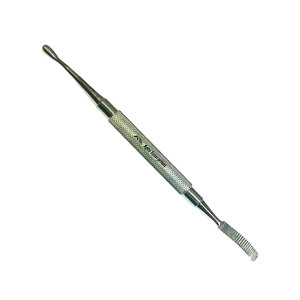
Explore our core distribution-ready products. Each system comes with complete technical dossier files, material test reports, and fully compatible surgical instrument trays.
Why Tier-1 Importers Partner With Orthomanufacturer
In b2b medical device procurement, initial unit price is only a fraction of total cost of ownership. Supply chain disruption, dimensional mismatched instruments, and registration rejections lead to catastrophic losses. Here is how our engineering ecosystem mitigates distributor risk.
Swiss 5-Axis CNC Precision
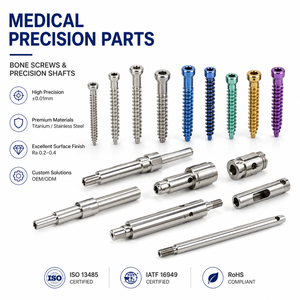
Our production floor utilizes high-precision Swiss-type lathes and multi-axis CNC machining centers capable of maintaining micro-tolerances down to ±0.005mm on critical threads and locking taper joints.
- Eliminates driver stripping in OR environments
- Smooth surface finish reducing tissue friction
- Consistent pitch uniformity across batches
100% Traceability & Metallurgy
Every single titanium bar, stainless steel rod, or PEEK block comes with certified Mill Test Reports (MTR). Raw material heat lots are directly mapped to laser-etched UDI codes on finished implants.
- Certified ASTM F136 Ti-6Al-4V ELI purity
- ASTM F2026 radiolucent PEEK polymers
- Full raw material chemical & mechanical validation
Turnkey Regulatory Dossiers
We eliminate global market entry barriers. We provide distributors with complete technical dossiers, including validation protocol reports, bio-compatibility testing, and sterilization validation data.
- ISO 13485:2016 Certified Quality Management
- CE & FDA 510(k) submission support documentation
- STED formatted technical registration files
Future Sourcing & Procurement Trends in Orthopedic Implants
Distributors must adapt to evolving clinical preferences and global regulatory mandates. Our market analysis highlights four macro trends defining orthopedic procurement over the next decade.
1. Shift Toward "Kit Completeness" & Integrated Systems
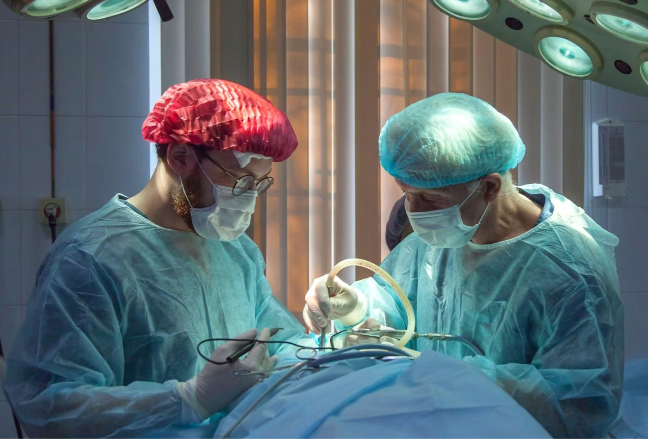
Hospitals and tender boards no longer procure implants in isolation. Sourcing directors prefer standardized, fully integrated systems—where implants, dedicated ergonomic surgical instruments, and autoclavable sterilization trays are supplied as a single co-engineered package. This reduces OR delays caused by mismatched driver bits or ill-fitting aiming arms.
2. Minimally Invasive (MIS) & Biologics Convergence
Procurement volume is rapidly shifting toward MIS pedicle screw systems, cannulated intramedullary nails, and anatomical locking plates requiring smaller surgical incisions. Concurrently, implants featuring porous surface topologies (such as 3D-printed titanium or hydroxyapatite plasma coatings) are outpacing smooth implants due to superior osseointegration profiles.
Get Catalog3. Decentralization of OEM Contract Manufacturing
Global brands are increasingly outsourcing production to specialized ISO 13485 contract manufacturers in Asia to mitigate inflation and operational overhead. Regional distributors are bypassing traditional middleman brands entirely—registering high-grade OEM lines under their own private-label brand to capture higher gross profit margins.
4. Strict UDI Traceability & Environmental Passivation
Regulatory authorities worldwide now require mandatory Unique Device Identification (UDI) laser etching at the single-unit level. Furthermore, eco-friendly automated citric passivation processes are replacing hazardous nitric acid treatments to prevent metal ion leaching while complying with global environmental mandates.
Orthopedic Biomaterials & Technical Standards Matrix
Choosing the correct raw material standard is vital for fatigue strength, biocompatibility, and local registration approval. Below is our standard material reference guide.
| Biomaterial Grade | International Standard | Primary Clinical Applications | Key Mechanical & Biological Advantages |
|---|---|---|---|
| Titanium Ti-6Al-4V ELI | ASTM F136 / ISO 5832-3 | Spine pedicle screws, intramedullary nails, locking plates | Extra-low interstitial (ELI) purity grade yielding high fatigue limit, low modulus elasticity, and osteo-compatibility. |
| Commercially Pure Titanium (CP Grade 2/4) | ASTM F67 / ISO 5832-2 | CMF maxillofacial plates, cranial mesh, small fracture clips | High ductility allowing intraoperative contouring and bending to fit complex anatomical contours without micro-fracturing. |
| Stainless Steel 316L (Implants) | ASTM F138 / ISO 5832-1 | Trauma compression plates, Schanz pins, external fixator rods | High yield strength, cost-effective mechanical rigid fixation, optimal for temporary internal fracture fixation. |
| PEEK (Polyetheretherketone) | ASTM F2026 | TLIF/PLIF/ACDF spine cages, cranial reconstruction plates | Radiolucent properties under X-ray/CT; elastic modulus closely mimics human cancellous bone to eliminate stress shielding. |
| CoCrMo Alloy (Cobalt Chrome) | ASTM F1537 / ISO 5832-12 | Femoral head prostheses, artificial knee joint components | Extreme hardness, low friction coefficient, exceptional wear resistance against UHMWPE bearing surfaces. |
| UHMWPE / Cross-linked PE | ASTM F648 / ISO 5834-2 | Acetabular cup liners, tibial knee inserts | Ultra-high molecular weight polymer providing low wear rates during long-term joint articulation cycles. |
Clinical Domain Portfolios & Surgical Systems
We manufacture complete system lines for major surgical specialties, guaranteeing uninterrupted supply continuity for tenders and private-label programs.
Thoracolumbar & Cervical Spine Systems
Polyaxial pedicle screws, cross-links, occipito-cervical fixation, ACDF anterior cervical plates, and PEEK interbody fusion cages (PLIF/TLIF/ALIF).
Intramedullary Nailing Portfolios
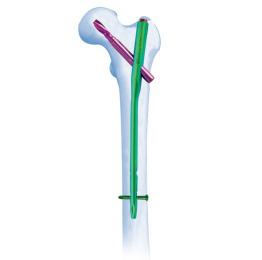
Proximal Femoral Nails (PFNA), Tibial Intramedullary Nails, Humeral Nails, and Retrograde Femoral systems with high-accuracy carbon-fiber distal aiming frames.
Anatomical Trauma Plating Systems
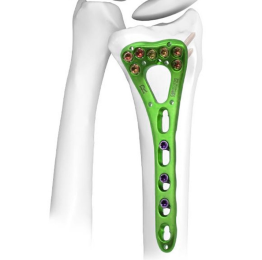
Pre-contoured LCP titanium plates for distal radius, proximal humerus, distal femur, tibia plateau, clavicle, and olecranon fractures paired with color-coded screws.
Structured OEM / ODM Project Execution
From initial CAD design review to final cleanroom packaging, our structured 6-stage engineering process ensures transparent delivery timelines and uncompromised quality.
Engineering Review
Detailed assessment of customer CAD files, samples, or technical specifications. Verification of micro-tolerances, material grade selection, and fatigue stress performance.
Prototype Validation
Rapid CNC machining of initial physical prototypes. Evaluation of driver bit fitment, thread engagement, and intraoperative tactile feedback with surgeon consultants.
Tooling & Programming
Custom 5-axis CNC programming, tool path optimization, and jig fixture fabrication tailored for high-volume automated manufacturing runs.
Batch Production
Precision turning, Swiss lathe milling, automated deburring, optical 3D dimensional measurement, and surface color anodizing per lot specifications.
UDI & Passivation
Laser marking of SKU codes, lot numbers, and UDI barcoding followed by ultrasonic cleaning and validated chemical surface passivation.
Dossier & Delivery
Final quality release packaging, insertion of multi-language Instructions for Use (IFU), and issuance of complete inspection certificates prior to export.
Frequently Asked Questions by B2B Buyers
Direct answers to essential commercial, technical, and regulatory questions asked by international medical device importers and tender managers.
What regulatory registration documents do you provide for local market approval? +
Can Orthomanufacturer produce implants from custom drawings or sample parts? +
How do you ensure dimensional consistency across large-volume production runs? +
Are surgical instruments included, and how is instrument compatibility guaranteed? +
What raw materials are utilized for your orthopedic product lines? +
What is your sample evaluation policy for hospital networks and distributors? +
What private-label packaging and laser etching options are offered? +
Expand Your Orthopedic Line with a Trusted Manufacturer
Partner with Orthomanufacturer Medical Co., Ltd to secure direct factory pricing, robust regulatory registration support, and guaranteed batch-to-batch precision. Request our complete product catalogs and OEM partnership guide today.
Direct Export Consultation
Connect with our technical export engineers to discuss custom OEM drawings, distribution rights, or tender requirements.