Top Trusted Orthopedic Implant Factory Manufacturer & Supplier

Precision Medical Engineering, Certified Biomaterials (ASTM F136 / F138 / F2026), and ISO 13485 / CE Validated Manufacturing for Global Distributors & Hospital Procurement

Enterprise Capabilities

Manufacturing Infrastructure & Quality Metrics

Quantifiable engineering excellence driving long-term reliability for international healthcare procurement.

100%
Raw Material Lot Traceability (ASTM F136 / F138)
±0.005mm
Swiss CNC Machining Micro-Tolerances
Class 100k
Controlled Environment Cleanroom Packaging
50+
Global Export Markets with Regulatory Technical Files
Technical Whitepaper

Metallurgical Standards & Biomechanical Performance in Orthopedic Manufacturing

An authoritative analysis of biomaterial selection, fatigue limit thresholds, and surface passivation kinetics for surgical device implants.

The Physics of Load-Bearing Implant Materials

In modern orthopedic surgical intervention, long-term clinical efficacy hinges upon matching implant elastic modulus with host cortical bone tissue to mitigate stress-shielding phenomena. As a premier orthopedic implant factory manufacturer and supplier, our engineering protocols prioritize high-purity metallurgical alloys governed by stringent international ASTM and ISO directives.

Primary implant fabrications utilize Titanium Alloy Ti-6Al-4V ELI (Extra Low Interstitial, ASTM F136), which reduces interstitial oxygen content below 0.13%. This refined microstructure yields superior fracture toughness, enhanced fatigue resistance under cyclic bending moments (ISO 14801), and an elastic modulus (~110 GPa) significantly closer to human bone (~18-30 GPa) compared to traditional stainless steel (~210 GPa).

For dynamic load applications such as intramedullary nail systems and locking compression plates, micro-structure consistency prevents intraoperative fatigue shear or screw thread stripping. Every batch of raw titanium bar stock undergoes ultrasonic flaw detection and optical emission spectrometry prior to precision CNC turning.

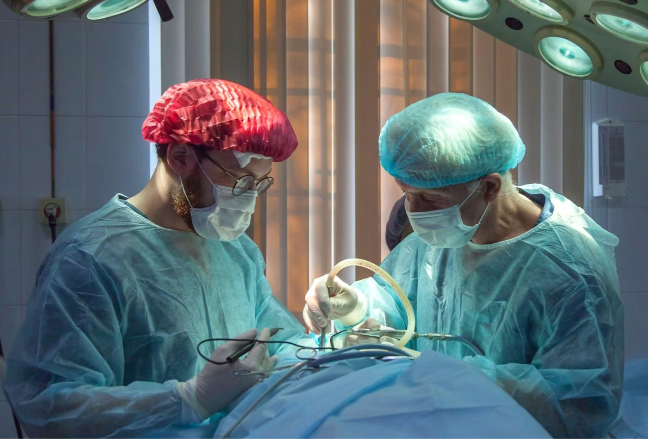
Surgeon performing surgical procedure with orthopedic implants
Biomaterial Classification Standard Specification Yield Strength (MPa) Tensile Strength (MPa) Primary Clinical Indications
Ti-6Al-4V ELI Titanium Alloy ASTM F136 / ISO 5832-3 ≥ 795 MPa ≥ 860 MPa Pedicle Screws, Trauma Locking Plates, Intramedullary Nails
Commercially Pure Titanium (CP Grade 4) ASTM F67 / ISO 5832-2 ≥ 480 MPa ≥ 550 MPa CMF Maxillofacial Plates, Titanium Mesh, Reconstruction Plates
316L Surgical Stainless Steel ASTM F138 / ISO 5832-1 ≥ 690 MPa ≥ 930 MPa High-Stress Trauma Plates, Schanz Pins, External Fixation
PEEK Optima (Polyetheretherketone) ASTM F2026 ≥ 110 MPa ≥ 130 MPa Interbody Spine Fusion Cages, Radiolucent Implants
CoCrMo Wear-Resistant Alloy ASTM F1537 / ISO 5832-12 ≥ 827 MPa ≥ 1172 MPa Total Hip Femoral Heads, Knee Arthroplasty Bearings
Engineering Mechanics

Technical Breakthroughs in Fixation Mechanism Design

Analyzing the anatomical and mechanical innovations driving modern trauma and orthopedic surgeries.

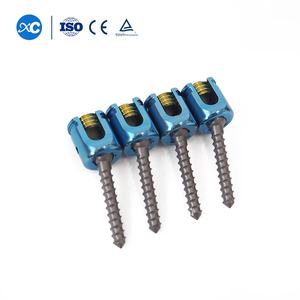
Polyaxial vs. Monoaxial Pedicle Screw Dynamics

Spinal pedicle screws historically presented rigid insertion angles that forced surgeons to manually contour connecting rods, inducing residual material stress. Modern polyaxial pedicle screws feature a spherical head constrained within a threaded collar, permitting 45-degree conical articulation.

Our titanium polyaxial pedicle screws utilize dual-thread geometry (buttress thread proximal, deep cutting distal) to accelerate insertion speeds by 50% while maintaining pull-out strength exceeding 1600 N in osteoporotic bone density models.

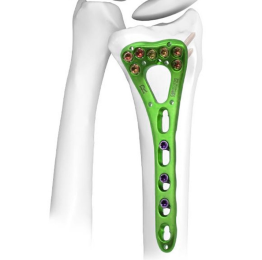
Variable-Angle Volar Plate Biomechanics

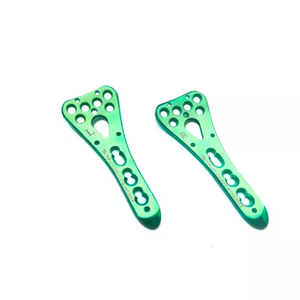
Distal radius intra-articular fractures demand flexible screw positioning to capture small bone fragments without invading synovial joint spaces. Variable-angle locking plates incorporate a specialized thread-lock mechanism within the plate hole.

This design enables surgeons to direct locking screws up to 15 degrees off-axis in any trajectory. The resulting construct forms a rigid multi-planar scaffold that eliminates secondary loss of reduction during postoperative load bearing.

Strategic Procurement

OEM Sourcing Guide & Regulatory Risk Mitigation

Essential validation parameters for international importers, medical device brands, and hospital supply chain managers.

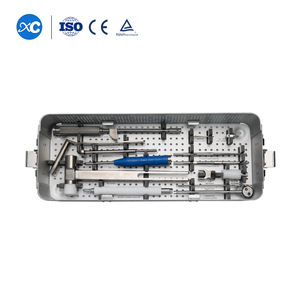
Orthopedic spine system implants and surgical instruments set

5-Point Vendor Qualification Framework

  1. Full Material Traceability: Verify that each implant laser mark corresponds directly to mill test certificates for chemical composition and mechanical tensile limits.
  2. Instrument Interoperability: Ensure surgical tools (screwdrivers, taps, depth gauges) share exact dimensional coupling tolerances with screw recesses to prevent intraoperative stripping.
  3. Surface Treatment Integrity: Inspect anodization uniformity (Type II anodization for fatigue resistance) and ultrasonic aqueous cleaning validation to guarantee non-pyrogenic products.
  4. Regulatory Technical Dossier Support: The manufacturer must supply complete Technical Files (TF) including biocompatibility testing (ISO 10993) and clinical evaluation reports (CER).
  5. Cleanroom Packaging Controls: Confirm that final sealing occurs within Class 100,000 cleanrooms using validated sterile barrier Tyvek pouches.
Procurement Intelligence

Orthopedic Sourcing & Manufacturing FAQ

Addressing key technical, regulatory, and commercial inquiries for biomedical engineering and international supply chain executives.

What raw material grade certificates do you provide with every orthopedic manufacturing batch?
Every shipment includes original raw material mill test certificates guaranteeing compliance with ASTM F136 (Ti-6Al-4V ELI Titanium), ASTM F67 (Commercially Pure Titanium), ASTM F138 (316L Surgical Stainless Steel), or ASTM F2026 (PEEK Optima). These certificates outline mechanical tensile testing, elongation limits, and chemical composition breakdown for regulatory registration.
How does your factory handle OEM private-label custom branding and packaging?
We provide full turn-key OEM/ODM services. This includes fiber-laser marking of your proprietary catalog numbers, logos, and lot numbers directly onto implants and surgical instruments. Furthermore, we offer custom artwork design for outer packaging, blister tray sealing, sterile Tyvek pouching, and barcode compliance (UDI / GS1 standards).
What quality management certifications govern your orthopedic production lines?
Our manufacturing facilities operate strictly under ISO 13485:2016 Quality Management Systems specifically audited for medical device design and manufacturing. Our products hold CE markings and full technical dossiers ready to support local Ministry of Health registration in Europe, Latin America, the Middle East, Southeast Asia, and Africa.
How do you prevent intraoperative driver stripping in pedicle and locking screws?
Driver stripping is minimized through high-precision CNC broaching of Torx (Star) and Hexagonal screw recesses, keeping dimensional tolerances within ±0.005mm. Torx drive geometries distribute insertion torque over a larger contact surface area, preventing stress concentration and driver cam-out during high-torque bone insertion.
Can distributors request sample sets prior to committing to contract manufacturing orders?
Yes. Qualified medical device distributors and hospital procurement teams can request sample evaluation kits. This allows surgical advisory boards and biomedical engineers to inspect material finish, thread engagement, surface anodization, and surgical instrument ergonomics prior to commercial contract signing.
What are the typical lead times for bulk OEM production and export delivery?
Standard inventory items ship within 7-14 business days. Custom OEM production runs (including custom anodizing, laser etching, and special sizing) typically require 30-45 days depending on tooling requirements. Expedited air freight and consolidated sea transport options are coordinated directly by our global export logistics team.
Global Supply Partnership

Build Your Trusted Medical Supply Chain Today

Partner with an established orthopedic implant manufacturer and supplier. Request a tailored pricing quotation, engineering technical file, or sample kit for your target market.

Complete System Matching

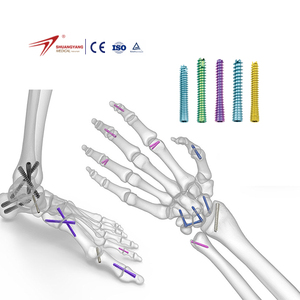
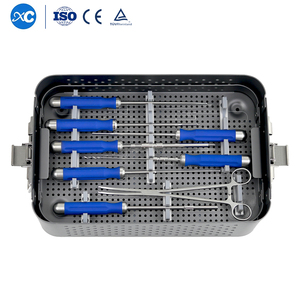
Implants, dedicated surgical instrument sets, and sterilization trays supplied as coherent, registerable kits.

Regulatory Registration Support

Full technical documentation, test reports, IFUs, and certificates supplied to streamline local market clearance.

Competitive Factory Sourcing

Direct OEM manufacturing eliminates middleman markups while maintaining rigid European biomaterial standards.

Contact Us