Featured Orthopedic Implants & Surgical Systems
Explore our precision-engineered orthopedic implants, manufactured under ISO 13485 standards with comprehensive technical registration documentation ready for global distribution.
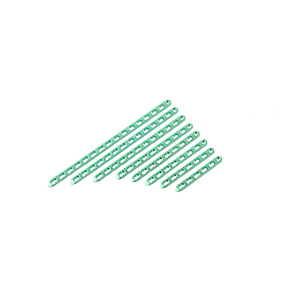
ORTHOCORE 2.0mm Locking Compression Plates Titanium Veterinary Orthopedic Implant Safe and Reliable
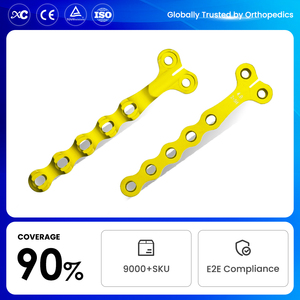
XC MEDICO Veterinary Orthopedic Surgical Implant Plate 4.0mm T-Type Locking Plate Class III Medical Device 1 Year Warranty
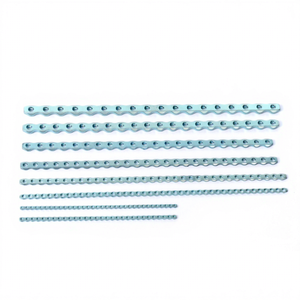
Small Animal Titanium Orthopedic Implant Alps Reconstruction Locking Plate Class III for Veterinary Bone Surgery CE Certified
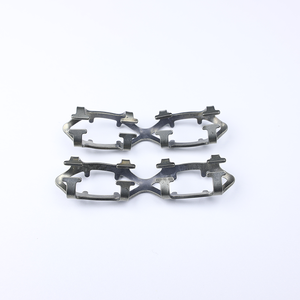
Yi Fantai Orthopedic Nickel-Titanium Patellar Claw Shape Memory Alloy Minimally Invasive Knee Fracture Fixation Implant Medical
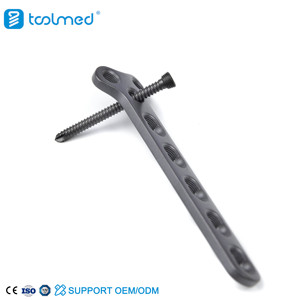
T Type Locking Plate Veterinary Orthopedic Surgical Surgery Implant for Animal Surgery
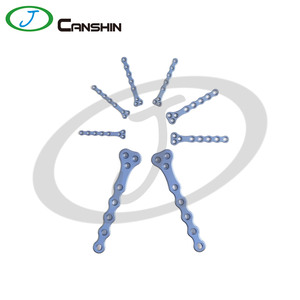
Veterinary Orthopedic Surgery Implant T Type Locking Plate T Shape Reconstruction Locking Plate with Pure Titanium
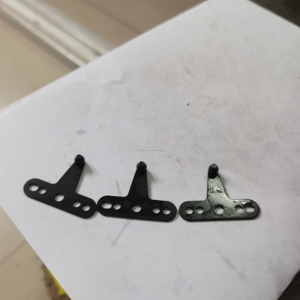
Medical Grade AM ORTHO Right Angled Titanium Orthopedic Trauma Implants Manual Power Source
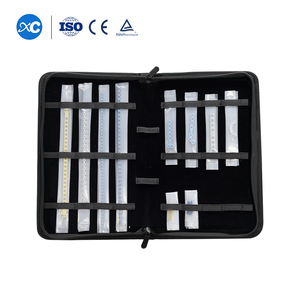
High Quality XC Medico Pet Orthopedic Implant AO/Stem System Sample Pack Stainless Steel Ti CE Certified Class III Model
Navigating Global Orthopedic Implant Registration & OEM Contract Manufacturing
In the modern medical device landscape, acquiring high-precision orthopedic implants is only half the battle for global distributors, OEM brand owners, and hospital procurement networks. The paramount challenge lies in securing regulatory approval across diverse jurisdictions—such as the European Union Medical Device Regulation (EU MDR 2017/745), US FDA 510(k) clearances, Japanese PMDA, Brazilian ANVISA, and Chinese NMPA Class III registrations. A manufacturer’s ability to provide complete, auditable regulatory registration support, backed by pristine technical documentation (STED format), is the definitive competitive edge in reducing time-to-market and mitigating commercial risk.
As a specialized orthopedic implant contract manufacturer and OEM supplier, Orthomanufacturer Medical Co., Ltd operates at the intersection of metallurgical excellence, Swiss-type CNC machining precision, and rigorous regulatory compliance. By aligning manufacturing workflows with ISO 13485:2016 quality management frameworks, we provide our global partners with fully validated implant systems, matched surgical instrumentation, and ready-to-submit regulatory registration dossiers.
Strategic Insight for Procurement Officers: A reliable OEM partner must offer more than finished hardware; they must supply complete lot traceability from raw bar stock to sterile packaging, validated fatigue test data (ASTM F1717 / ASTM F382), and full biocompatibility files according to ISO 10993 specifications.
Metallurgical Precision & Medical Material Specifications
Implant longevity, osseointegration efficacy, and mechanical stability depend entirely on the purity and structural integrity of the raw materials. Our factory enforces strict incoming raw material verification via optical emission spectrometry and mechanical tensile testing against internationally recognized standard specifications:
- Titanium Alloy Ti-6Al-4V ELI (ASTM F136 / ISO 5832-3): Extra Low Interstitial grade titanium engineered for high dynamic load-bearing applications such as pedicle screws, intramedullary long-bone nails, and anatomical locking compression plates. Offers exceptional fatigue strength and bio-inertness.
- Commercially Pure Titanium CP-Ti (ASTM F67 / ISO 5832-2): Unalloyed titanium optimized for malleability and contouring flexibility, extensively utilized in craniomaxillofacial (CMF) mini-plates, mesh systems, and low-profile reconstruction plates.
- Implant-Grade Stainless Steel 316L (ASTM F138 / ISO 5832-1): Vacuum arc remelted (VAR) stainless steel offering exceptional corrosion resistance and mechanical toughness for trauma fracture fixation, Schanz pins, and external fixator rods.
- Cobalt-Chromium-Molybdenum Alloy CoCrMo (ASTM F1537 / ISO 5832-12): Designed for heavy articulating joint prostheses, delivering maximum scratch resistance and low surface roughness for total hip and knee replacements.
- Polyetheretherketone PEEK (ASTM F2026): Radiolucent biomaterial with a modulus of elasticity closely matching natural human cortical bone, eliminating stress-shielding phenomena in cervical and lumbar interbody fusion cages.
Implant Material Performance & Standard Specifications
Direct comparative benchmark of medical-grade alloys and polymers utilized across our OEM manufacturing lines for global product registration.
| Material Classification | Regulatory Standard | Mechanical Strength (MPa) | Primary Clinical Applications | Registration Dossier Availability |
|---|---|---|---|---|
| Ti-6Al-4V ELI Alloy | ASTM F136 / ISO 5832-3 | Yield ≥ 795 | Tensile ≥ 860 | Spinal Pedicle Screws, Locking Compression Plates, IM Nails | Full STED / FDA 510(k) Master File |
| Commercially Pure Titanium | ASTM F67 / ISO 5832-2 | Yield ≥ 275-480 | Tensile ≥ 340-550 | CMF Micro Plates, Reconstruction Mesh, Cranial Fixation | CE MDR Technical File Ready |
| Stainless Steel 316L | ASTM F138 / ISO 5832-1 | Yield ≥ 690 | Tensile ≥ 930 | Trauma Pins, Cannulated Screws, External Fixation Frames | ISO 13485 Audit Dossier Available |
| PEEK Optima Polymer | ASTM F2026 | Flexural Strength ≥ 160-170 | TLIF/PLIF Cages, Cervical Interbody Spacers | Biocompatibility ISO 10993 Complete |
| CoCrMo Articulating Alloy | ASTM F1537 / ISO 5832-12 | Yield ≥ 517 | Tensile ≥ 897 | Femoral Heads, Knee Components, Arthroplasty Implants | Clinical Evaluation Report (CER) Included |
Full-Spectrum Orthopedic Systems & OEM Line Coverage
Integrated implant families complete with matched, color-coded surgical instrument trays and reusable sterilization containers.
Spine Fixation Systems
Comprehensive thoracolumbar pedicle screw constructs, polyaxial and monoaxial screws, cross-links, low-profile cervical plating, and radiolucent PEEK lumbar interbody cages (TLIF/PLIF/ALIF) with intuitive insertion instruments.
Intramedullary Nail Systems
Titanium cannulated long-bone nails for femoral, tibial, and humeral fracture management. Engineered with proximal and distal locking configurations and carbon-fiber targeting radiolucent aiming frames for fluoroscopic accuracy.
Anatomical Locking Plates
Pre-contoured titanium trauma plates matching distal radius, proximal humerus, tibial plateau, and distal femur anatomies. Features combination holes for standard cortical compression and angularly stable locking screw fixation.
Sports Medicine Implants
Advanced soft-tissue repair solutions including titanium and biocomposite suture anchors, interference screws for ACL/PCL ligament reconstruction, and extracortical titanium button devices for tendon reattachment.
Craniomaxillofacial (CMF)
Micro (1.5mm), Mini (2.0mm), and Mandibular Reconstruction (2.4mm/2.7mm) titanium plate systems. Designed for cranioplasty, orbital rim trauma, orthognathic surgery, and complex facial skeleton reconstruction.
Total Joint Arthroplasty
Hip and knee prosthetic joint systems utilizing CoCrMo articulating surfaces, highly cross-linked polyethylene (HXLPE) liners, and plasma-sprayed porous titanium coating for biological press-fit fixation.
External Fixation Systems
Unilateral, ring (Ilizarov type), and hybrid external fixators for open fracture damage-control, limb lengthening, non-union correction, and severe soft-tissue trauma immobilization.
Surgical Power Tools
High-torque, autoclavable battery-powered orthopedic drills, cannulated bone reamers, sagittal saws, and wire drivers. Engineered with brushless motors and micro-processor temperature protection.
Laparoscopic Instruments
Reusable minimally invasive surgical instruments featuring 360-degree rotation, modular detachable drive shafts for steam sterilization, and ergonomic ratcheted handles for precise tissue manipulation.
Step-by-Step Registration Support & Manufacturing Pipeline
How we assist medical device distributors from initial technical drawing validation to final local ministry of health regulatory approval.
Technical Scope & Classification
Analysis of target market regulatory requirements (EU MDR Class IIa/IIb/III, US FDA 510(k) pathway), identifying technical standards and device family groupings.
Dossier & STED File Compilation
Providing standardized technical documentation including raw material mill certificates (ASTM F136/F67), biocompatibility test reports (ISO 10993), and risk analysis files (ISO 14971).
Precision Prototype & Sample Validation
CNC machining of evaluation samples for dimensional verification, insertion torque testing, and mechanical fit checks with surgical instrument trays.
ISO 13485 Audit & Plant Inspection
Supporting distributor regulatory audits with full access to cleanroom environmental monitoring logs, calibrated CMM inspection data, and batch manufacturing records (BMR).
OEM Private Labeling & UDI Marking
Laser etching unique device identifiers (UDI), custom catalog part numbers, and brand logos onto implants alongside barcode-compliant sterile packaging design.
Batch Production & Post-Market Support
Scalable high-volume production with 100% lot traceability, providing ongoing Post-Market Surveillance (PMS) data and periodic safety update reports (PSUR).
2025–2030 Global Trends in Orthopedic Implant Procurement & Manufacturing
The global orthopedic implant sector is experiencing a profound paradigm shift driven by demographic aging, technological advancement, and increasingly stringent regulatory oversight. For procurement directors and medical device importers, staying ahead of these trends is essential to maintaining market leadership and compliance.
1. Additive Manufacturing & Porous Trabecular Titanium
Traditional subtractive CNC machining is increasingly complemented by Selective Laser Melting (SLM) and Electron Beam Melting (EBM) 3D printing technologies. 3D-printed porous titanium structures mimic natural human cancellous bone architecture, featuring inter-connected porosity (60-80% pore volume) that encourages rapid osteoblast migration and direct bone ingrowth. Future regulatory filings will heavily emphasize mechanical characterization of additive structures under static shear and fatigue compression testing.
2. Stringent Global Regulatory Harmonization & MDR Vigilance
The transition from the European Medical Devices Directive (MDD 93/42/EEC) to the stringent Medical Device Regulation (EU MDR 2017/745) has reshaped the global export landscape. Global health authorities now require continuous clinical evaluation, equivalence justification based on identical technical data, and complete raw material chemical characterization. Procurement teams are consolidating supply chains around established manufacturers capable of maintaining active, audited technical files.
3. Customized Patient-Specific Implants (PSI)
Driven by 3D computed tomography (CT) reconstruction software, patient-specific orthopedic implants are moving from niche reconstructive procedures to mainstream orthopedic oncology, complex CMF trauma, and revision joint arthroplasty. Contract manufacturers must integrate flexible CAD/CAM workflows and rapid prototyping capabilities to support fast turnaround times for custom implants.
4. Bioresorbable Biomaterials & Smart Implant Monitoring
Research into magnesium-zinc bioabsorbable alloys for fracture fixation promises to eliminate secondary implant removal surgeries in pediatric and trauma applications. Concurrently, integration of micro-sensor arrays into spinal cages and joint replacements to transmit real-time strain, temperature, and kinematic data represents the horizon of smart orthopedics.
Frequently Asked Questions on Implant Registration & OEM Supply
Technical, regulatory, and commercial insights for medical device distributors and hospital procurement teams.