Featured Medical-Grade Orthopedic Implant Samples
Evaluate dimensional accuracy, surface finish, anodization quality, and instrument compatibility prior to bulk production. All samples feature full raw material lot traceability.
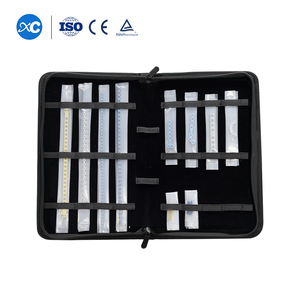
High Quality XC Medico Pet Orthopedic Implant AO/Stem System Sample Pack Stainless Steel Ti CE Certified Class III Model
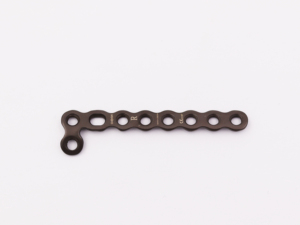
Hot Sale CE Certified Titanium/Stainless Steel Orthopedic Implants Medical Surgical 2.0 L-type Locking Implants for Bone
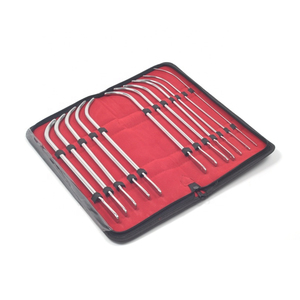
Orthopedic Surgical Implants L-Plate 6 Holes Thick Orthognathic Stainless Steel Manual High-quality Clinic Use
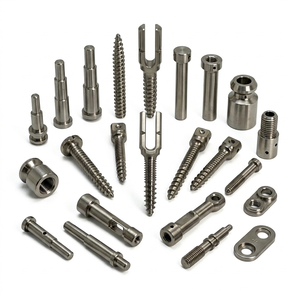
ISO 13485 CNC Medical Machining OEM Spinal Pedicle Screw Orthopedic Bone Screws Plates 5-Axis Precision Implant Parts
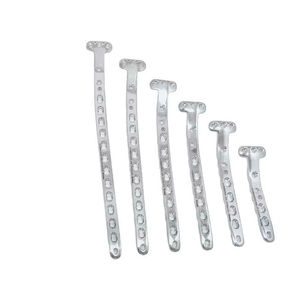
Orthopedic Implants for Veterinary Use Medial Proximal Tibia Plate (3.5mm) with Set of 12pcs (L6/R6) Stainless Steel
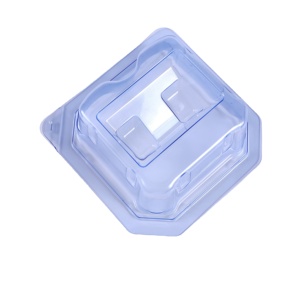
ETO Sterilization Compatible Thermoforming Blister Packaging for Orthopedic Implantable Devices
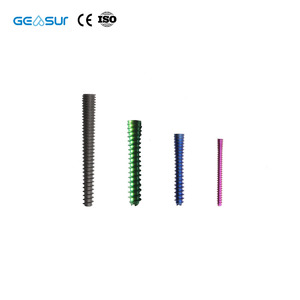
Geasure CE ISO Certified Class III Titanium Alloy Headless Compression Cannulated Screw-Orthopedic Implant for Orthopedic
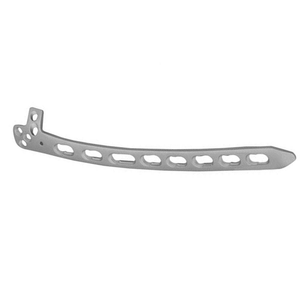
Premium Orthopedic Implants Stainless Steel and Titanium Surgical Implant Solutions
Strategic Value of Physical Sample Verification in Orthopedic Supply Chains
In the global medical device market, procurement decisions regarding implants carry significant regulatory, clinical, and commercial weight. Overseas distributors, hospital procurement networks, and private-label OEM brands cannot rely solely on digital specification sheets or standard laboratory certificates. The request and technical evaluation of physical orthopedic implant samples represents the most critical risk-mitigation step in supplier qualification.
A physical sample kit provides direct empirical proof of a factory's micro-machining capabilities, metallurgical purity, surface passivation depth, and driver-interface tolerances. When surgeons operate in the surgical suite, thread strip-outs, driver cam-outs, micro-burrs, or sub-optimal plate contourability can stall procedures and compromise clinical outcomes. By initiating a rigorous sample evaluation program, medical device buyers verify that every pedicle screw, locking plate, or cannulated screw meets exacting bio-mechanical standards before executing high-volume OEM purchase contracts.
Metallurgical Integrity and Biomaterial Grade Specifications
Top trusted orthopedic implant manufacturers utilize raw materials strictly complying with international ASTM and ISO standards for implantable medical devices. Chemical composition, grain size uniformity, tensile strength, and fatigue resistance must be validated via mill test certificates (MTC) linked to every single production lot.
| Implant Material | Standard Specification | Primary Clinical Applications | Key Mechanical & Biological Attributes |
|---|---|---|---|
| Titanium Alloy (Ti-6Al-4V ELI) | ASTM F136 / ISO 5832-3 | Pedicle Screws, Spinal Rods, Intramedullary Nails, Locking Screws | Extra-low interstitial grade providing high fatigue strength, biocompatibility, and reduced MRI artifacting. |
| Commercially Pure Titanium (CP-Ti) | ASTM F67 / ISO 5832-2 | CMF Mini Plates, Cranial Mesh, Reconstructive Micro-implants | Superior ductility enabling intraoperative hand-bending without elastic spring-back or structural micro-fractures. |
| Medical Grade Stainless Steel | ASTM F138 (316L) / ISO 5832-1 | Trauma Plates, External Fixation Pins, Veterinary AO Implants | High tensile modulus, economical cost-to-performance ratio, and proven resistance to pitting and crevice corrosion. |
| PEEK (Polyetheretherketone) | ASTM F2026 | Spinal Interbody Fusion Cages (PLIF, TLIF, ALIF, Cervical) | Radiolucent modulus matching cortical human bone (~3.6 GPa), eliminating stress shielding phenomena. |
| CoCrMo Alloy & UHMWPE | ASTM F1537 / ASTM F648 | Total Hip Stems, Femoral Heads, Knee Prostheses Bearing Inserts | Ultra-low wear rate during articulating contact, superior tribological stability in joint reconstruction. |
Micro-Machining Precision & Surface Finish Dynamics
The manufacturing process of implantable devices requires high-precision 5-axis Swiss-type automatic lathe turning and CNC milling. Critical quality control metrics evaluated during sample testing include:
- Thread Pitch & Profile Tolerances: Self-tapping flutes and buttress thread geometries must exhibit zero flash or micro-burrs under optical comparator inspection at 50x magnification.
- Surface Roughness (Ra): Articulating components require surface finishing below Ra 0.05 μm, whereas osteointegrative bone plates and spinal screws maintain smooth passivated surfaces at Ra 0.2 - 0.4 μm.
- Anodization Layer Integrity: Type II titanium anodization enhances fatigue life and wear resistance, while Type III color anodization establishes intuitive color-coding for surgical teams to differentiate screw diameters instantly in the operating room.
- Passivation Verification: Nitric or citric acid passivation treatments remove free iron particles from stainless steel surfaces, creating a protective chromium oxide layer that prevents corrosion inside the human host environment.
State-of-the-Art Production & Regulatory Support
As a specialized medical device OEM supplier, Orthomanufacturer Medical Co., Ltd combines advanced 5-axis CNC machining with comprehensive technical dossier support for seamless market registration.
System-Level Matching
We deliver complete, coherent implant portfolios paired with dedicated surgical instrument sets and sterilization trays, eliminating driver-recess mismatches and component binding in surgery.
Registration Technical Dossiers
We provide global distributors with complete regulatory support documentation, including material certificates, ISO 13485 test reports, sterilizer validation data, and Instructions for Use (IFU).
100% UDI Lot Traceability
Fiber laser marking inscribes crisp part numbers, lot codes, and QR/UDI barcodes on every single component, linking final products directly back to raw material heat numbers.
Private-Label OEM / ODM Customization
From CAD modifications based on surgeon feedback to custom packaging configurations (thermoforming blisters or Tyvek pouches), we fully support private-label brand deployment.
ISO Class 7 Cleanroom Packaging
Implants undergo automated ultrasonic cleaning and passivated rinse cycles prior to primary packing in controlled cleanrooms, ensuring low particulate counts and ETO sterilization readiness.
Fast-Track Sample Fulfillment
Standard catalog sample packs—including pedicle screws, locking plates, and cannulated screws—ship within 3–5 business days to accelerate distributor tender preparation.
Future Procurement & Development Trends in Orthopedic Implants
Key technological shifts shaping global hospital tenders, distributor sourcing strategies, and manufacturing standards over the next decade.
Transition Toward 3D-Printed Porous Titanium & Osseointegrative Micro-Structures
Conventional machined titanium surfaces are increasingly being augmented or replaced by additive manufacturing (Selective Laser Melting - SLM / Electron Beam Melting - EBM). 3D-printed porous titanium scaffolds replicate trabecular bone geometry with interconnecting porosity (50–70% void fraction and 300–600 μm pore size). This structure significantly accelerates early bone ingrowth and long-term secondary fixation in spinal interbody fusion cages, acetabular cups, and custom joint revision implants. Procurement teams must partner with suppliers offering certified additive production lines equipped with post-processing thermal stress relief and residual powder evacuation validation.
Patient-Specific Implants (PSI) & Rapid Custom Prototyping
Advances in high-resolution DICOM data processing from CT/MRI scans have driven demand for customized anatomical implants in complex maxillofacial, oncological, and revision orthopedic procedures. Contract manufacturers are integrating digital CAD/CAM workflows with 5-axis high-speed milling to reduce lead times for custom reconstruction plates and patient-specific surgical cutting guides from weeks to days. Sample evaluation protocols are evolving from inspecting standard catalog geometries to auditing a factory's digital design workflow, 3D anatomical modeling accuracy, and rapid prototyping capabilities.
Bioresorbable Polymer Composites in Sports Medicine
In sports medicine, particularly ligament reconstruction and rotator cuff repair, surgeon preference is moving from permanent metallic anchors to bioresorbable biocomposites (such as PLGA combined with Hydroxyapatite or β-Tricalcium Phosphate). These biocomposite suture anchors and interference screws maintain structural fixation during tendon-to-bone healing, gradually resorbing over 18 to 36 months while promoting native bone replacement. Factories providing sample packs for sports medicine must demonstrate controlled degradation profiling, sterile barrier degradation testing, and torque-to-yield performance under physiological fluid simulation.
Stringent Regulatory Alignment (EU MDR 2017/745 & US FDA 510k UDI Mandates)
Global market access now demands compliance with the European Union's Medical Device Regulation (EU MDR 2017/745), requiring extensive clinical evaluation dossiers, post-market surveillance (PMS), and continuous Risk Management (ISO 14971). Furthermore, mandatory Unique Device Identification (UDI) laser marking requires high-contrast GS1-compliant DataMatrix codes on even micro-sized bone screws. Distributors are consolidating vendor bases, choosing top-tier factories capable of supplying complete, auditable technical documentation alongside sample orders to streamline local health authority approvals.
Sterile-Ready & Eco-Responsible Packaging Engineering
Hospitals are actively seeking to reduce operating room operating costs and sterilization turnover times by shifting from non-sterile bulk implants to sterile-packaged units. Modern suppliers supply orthopedic samples inside pre-validated thermoforming blister packages sealed with Tyvek® lids, optimized for Ethylene Oxide (ETO) or Gamma radiation sterilization. These packaging systems guarantee 5-year shelf-life stability, maintain sterile barrier integrity during transit, and minimize single-use plastic waste through recyclability compliance.
How Procurement Teams Should Evaluate Orthopedic Samples
A structured 4-step physical and mechanical verification protocol for hospital buyers and distributor quality engineers.
Step 1: Dimensional & Thread Fit Audit
Inspect thread pitch, outer diameter, cannulation concentricity, and driver-recess mating using calibrated digital micrometers, pin gauges, and surgical screwdrivers. Ensure zero wobble or slippage under insertion torque.
Step 2: Surface Finish & Anodization Check
Examine bone contact surfaces for uniform color anodization, absence of tool marks, and smooth chamfered edges. Confirm that laser markings are legible, abrasion-resistant, and correctly formatted for UDI scanning.
Step 3: Mechanical & Biomechanical Testing
Review factory-provided mechanical test reports for static torsion, pull-out strength, dynamic bending fatigue (ASTM F543 / ASTM F1717), and material mill test certificates confirming raw bar stock purity.
Technical & Procurement FAQ for Orthopedic Implants
Detailed answers regarding sample requests, manufacturing standards, custom OEM capabilities, and regulatory compliance.
What specific orthopedic products are available in your evaluation sample program?
Our evaluation sample program covers our full product range, including spinal pedicle screws, PEEK cervical/lumbar cages, anatomical locking plates (distal radius, proximal humerus, tibial plateau), intramedullary nails, CMF micro/mini plates, sports medicine suture anchors, cannulated screws, external fixators, and veterinary AO implant sets. Matched surgical instruments and demo sterilization boxes can also be included for trial evaluation.
How does your factory ensure raw material traceability and quality compliance?
Every batch of raw titanium (ASTM F136 / ASTM F67), stainless steel (ASTM F138), or PEEK (ASTM F2026) undergoes rigorous receiving inspection, including chemical spectral analysis and mechanical tensile testing. Raw materials are assigned an internal heat lot number that follows the material through 5-axis CNC machining, surface treatment, cleanroom packing, and final fiber laser marking. Mill Test Certificates (MTC) are attached to all shipment documentation.
Do you offer OEM and private-label laser marking on sample implants?
Yes. We support custom laser marking, including distributor brand logos, catalog reference numbers, lot tracking codes, and GS1-compliant UDI DataMatrix barcodes. During sample production, we provide digital marking proofs to verify logo placement and micro-legibility prior to final surface passivating and dispatch.
What regulatory support documentation is provided with standard or custom samples?
Sample requests can be accompanied by comprehensive regulatory support packages, including ISO 13485:2016 quality management certificates, CE compliance declarations, raw material analysis sheets, biocompatibility testing summaries (ISO 10993), sterilization validation parameters, and comprehensive Instructions for Use (IFU) in multiple languages (English, Spanish, French, Arabic, Russian).
What is the typical lead time for standard catalog samples versus custom ODM prototypes?
Standard catalog samples (such as pedicle screws, locking bone plates, or cannulated screws) are typically dispatched within 3 to 5 business days via express international air courier. Custom OEM/ODM samples manufactured from customer CAD drawings or reverse-engineered physical samples require engineering review, tooling setup, and CNC programming, with prototypes ready for shipment in 15 to 25 business days.
Can sample implants be shipped in sterile packaging ready for clinical trials?
Samples are primarily supplied non-sterile inside protective thermoforming blister trays or sealed cleanroom bags for dimensional and mechanical evaluation. However, upon request for clinical evaluation or trial use in authorized markets, samples can be packed in ISO Class 7 cleanrooms using ETO-sterilization-compatible Tyvek® double blister packaging with sterilization indicator strips.
What are the Minimum Order Quantities (MOQ) following sample evaluation approval?
We maintain flexible MOQ policies designed to support regional distributors launching new product lines or bidding on initial hospital tenders. While standard catalog implants can be ordered in small batch quantities (e.g., 10 to 50 pieces per SKU), custom OEM runs are subject to production batch sizing negotiated during initial quotation.
How do I request an evaluation sample kit or start a custom project consultation?
Simply click the "Inquire Now" button on this page to initiate live technical assistance or submit your inquiry detailing your target product families, required quantities, and target market regulatory requirements. Our medical device engineering and export team will respond within 24 business hours with pricing, technical datasheets, and sample dispatch schedules.
Request Your Orthopedic Implant Sample Kit Today
Connect directly with our senior engineering and medical export management team. Receive full technical datasheets, material certs, and physical sample pricing tailored to your market needs.