CE Certified Orthopedic & Surgical Implant Systems
Engineered with medical-grade Titanium (Ti-6Al-4V ELI) and Surgical Stainless Steel (316L VM). Complete matching instrument kits and full lot traceability guaranteed.
Executive Summary: India’s Role as a Preferred Medical Device Manufacturing Hub for Greater Boston
The global orthopedic device supply chain is experiencing a structural realignment. Healthcare networks across New England—anchored by Boston’s world-class clinical research hospitals, Level-1 trauma institutions, and rapidly expanding Ambulatory Surgery Centers (ASCs)—face mounting financial pressures driven by Medicare reimbursement adjustments, Diagnostic Related Group (DRG) capitations, and rising surgical instrument acquisition costs. In response, biomedical procurement directors and OEM medical device distributors in Massachusetts are increasingly looking toward CE-certified Indian orthopedic implant manufacturers to secure reliable, high-precision, and cost-optimized surgical implants.
As a leading Indian medical device manufacturer with decades of expertise in precision CNC machining, titanium metallurgy, and regulatory technical documentation, our facility serves as a primary OEM/ODM engine for global export markets. By maintaining rigid compliance with ISO 13485:2016 standards, EU MDR 2017/745 regulations, and US FDA 510(k) equivalency protocols, we bridge the gap between rigorous Western clinical performance mandates and competitive cost structures.
Why Boston Healthcare Purchasing Managers Are Re-evaluating Supply Chains
Boston’s medical ecosystem is unique. Home to academic powerhouses such as Mass General Brigham, Beth Israel Deaconess Medical Center, Tufts Medical Center, and Boston Children's Hospital, the region demands uncompromising biomechanical reliability. Historically, domestic U.S. tier-1 device manufacturers dominated this corridor. However, inflated list prices for standard trauma locking plates, pedicle screw systems, and cannulated screws have strained surgical department budgets, particularly in outpatient ASC settings where fixed fee schedules apply.
Direct sourcing from audited, CE-marked Indian manufacturing facilities provides New England distributors and hospital procurement teams with a distinct strategic advantage. Our production processes utilize raw materials imported directly from certified global suppliers—such as ASTM F136 Ti-6Al-4V ELI (Extra Low Interstitial) titanium alloy and ASTM F138 316L implant-grade stainless steel. This guarantees that mechanical yield strength, fatigue endurance, and biocompatibility match or exceed legacy Western brands, while mitigating supply chain chokepoints.
Localized Clinical Application Scenarios in Greater Boston
Orthopedic surgical demands vary significantly across different care settings in Massachusetts. Our product lines are tailored to meet the specific biomechanical and operational mandates of modern surgical workflows.
Level-1 Trauma & Emergency Surgery
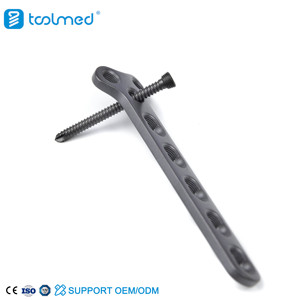
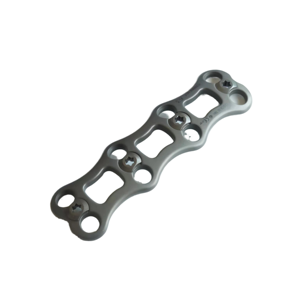
In high-volume emergency trauma centers across Downtown Boston and Cambridge, speed and system completeness are critical. Our anatomical locking plate systems (distal radius, proximal humerus, lateral tibial plateau) and cannulated intramedullary nail systems feature color-coded anodization and intuitive aim-arm instrumentation, facilitating rapid intraoperative assembly during complex fracture stabilization.
Ambulatory Surgery Centers (ASCs)
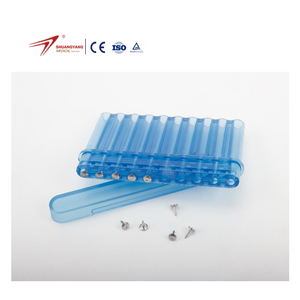
Outpatient surgical centers in suburban Boston (such as Waltham, Newton, and Burlington) require cost-predictable, pre-sterilized procedure packs. We supply custom OEM sterile-packaged bone screw caddies, anterior cervical plating kits, and GBR tack systems designed for rapid OR turnover and minimized reprocessing overheads.
Maxillofacial & Dental Reconstruction
Boston's renowned dental school clinics and oral-maxillofacial surgical units demand extreme metallurgical purity. Our micro and mini titanium plating systems (1.5mm to 2.0mm system profiles) and GBR bone tack configurations provide reliable osseous fixation for craniofacial trauma, orthognathic correction, and guided tissue regeneration.
Veterinary Orthopedic Research & Referral
Serving New England's extensive veterinary clinical network and university research labs, we provide high-grade T-Type and straight locking plate implants. Manufactured to identical human-grade metallurgical standards, these systems ensure high fatigue tolerance for canine TPLO (Tibial Plateau Leveling Osteotomy) and fracture repair.
Localized Procurement Trends & Technical Compliance in New England
Procuring medical devices for the U.S. East Coast market requires navigating a complex regulatory and economic landscape. Below is an analytical breakdown of how our Indian manufacturing framework aligns with the requirements of Boston-based medical importers and distributor networks.
1. Regulatory Alignment: Navigating EU MDR 2017/745 & FDA 510(k) Integration
Distributors importing medical devices into the United States must ensure strict compliance with FDA 21 CFR Part 820 (Quality System Regulation) and obtain appropriate 510(k) clearances. Because our export facility maintains a comprehensive CE Certification audit trail and ISO 13485:2016 quality management system, we provide our OEM clients with fully structured Technical Files, Biocompatibility Assessment Reports (ISO 10993 series), and Design History Files (DHF). This pre-compiled documentation accelerates the FDA 510(k) predicate comparison process, saving Boston distributors months of regulatory drafting.
2. Material Science & Biomechanical Performance Standards
A frequent query from clinical evaluation committees at academic medical centers concerns material equivalence. We utilize certified medical-grade alloys subject to rigorous spectrographic, chemical, and mechanical testing prior to manufacturing:
| Material Standard | Composition / Grade | Tensile Strength (MPa) | Primary Clinical Application |
|---|---|---|---|
| ASTM F136 / ISO 5832-3 | Ti-6Al-4V ELI Alloy | ≥ 860 MPa | Pedicle Screws, Cervical Plates, Intramedullary Nails |
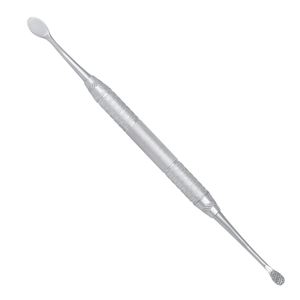
| ASTM F138 / ISO 5832-1 | 316L Stainless Steel (Vacuum Melted) | ≥ 490 MPa | Trauma Plates, Cortical Screws, Surgical Files |
| ASTM F67 / ISO 5832-2 | Commercially Pure Titanium (Grade 4) | ≥ 550 MPa | CMF Micro-Plates, GBR Bone Tacks, Mesh |
| ASTM F2026 | PEEK Optima (Polyetheretherketone) | ≥ 95 MPa | Spinal Interbody Fusion Cages (ALIF/TLIF/PLIF) |
3. Multi-Axis Swiss Lathe Machining & Surface Treatments
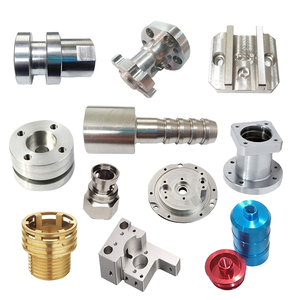
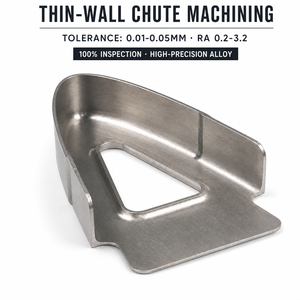
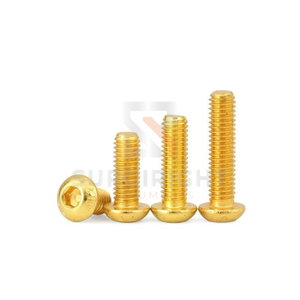
Implant integrity relies heavily on surface finishing and thread geometry. Our facility utilizes advanced 7-axis CNC Swiss-type automatic lathes and 5-axis vertical machining centers. Critical screw threads—such as dual-lead self-tapping feature profiles—are micro-milled to eliminate burrs. Type II anodization for titanium implants creates a durable oxide layer that prevents cold-welding between locking screws and plate holes while providing vivid, color-coded intraoperative identification.
Enterprise Manufacturing Infrastructure & Quality Architecture
As a premier Indian OEM/ODM partner for global healthcare brands, our manufacturing footprint is engineered around reproducibility, safety, and operational transparency.
ISO 13485:2016 Certified
Audited quality management system governing every stage from raw bar stock receiving to final cleanroom packaging.
ISO Class 7 Cleanrooms
Controlled environmental packaging areas utilizing ultrasonic multi-stage cleaning and bioburden testing protocols.
Laser UDI Traceability
Direct Part Marking (DPM) ensures complete lot tracking back to the original heat number of raw titanium bar stock.
Complete System Kits
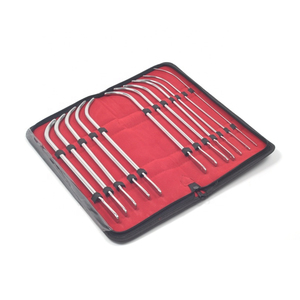
We do not just sell implants. We manufacture matched instrument sets and sterilizable graphic trays for single-source reliability.
Custom OEM/ODM Engineering
In-house CAD/CAM design team capable of translating physical prototypes or 2D technical drawings into 3D production models.
Optimized Boston Freight Logistics
Established air and ocean freight pathways into Logan International Airport (BOS) and Port of Boston with clear customs documentation.
Frequently Asked Questions for Boston Procurement Managers & Importers
Direct answers to regulatory, logistical, and technical questions commonly asked by medical device purchasing teams in Massachusetts.
How does your CE Certification assist Boston distributors in clearing US customs and meeting hospital requirements?
Can we request physical sample kits for clinical evaluation at Boston teaching hospitals?
What implant-grade materials are used for your spine and trauma systems?
Do you offer custom OEM labeling and private-label laser etching for U.S. brands?
What are the typical lead times for shipment to the Port of Boston or Boston Logan International Airport (BOS)?
How do Indian orthopedic manufacturing costs compare with traditional European or Domestic U.S. suppliers?
Partner with India’s Premier Orthopedic Implant Manufacturer
Expand your product catalog in New England with CE-certified, high-precision trauma, spine, and dental implant systems. Request our full digital technical catalog or apply for sample evaluation kits today.