Featured Orthopedic Implants & Fixation Solutions
Engineered to stringent US FDA 21 CFR Part 830 standards. Every device features laser-etched GS1 DataMatrix UDI barcodes linked directly to raw material heat certificates and Device History Records (DHR).
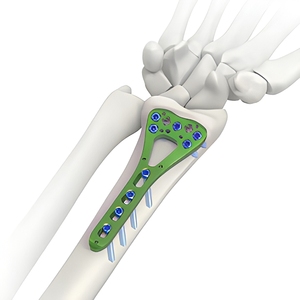
Orthopedic Trauma Implant Multi-axial Locking Plate Pure Titanium Distal Radius Medial Fracture Bone Fixation MDR/ISO 13485
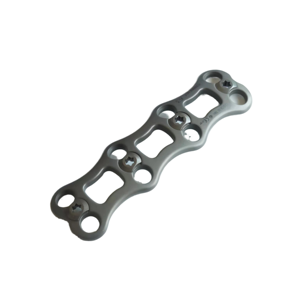
Anterior Cervical Plate Spine Implants Steel Manual MOL CE Certified Minimally Invasive Orthopedic Implants by Blush Surgical
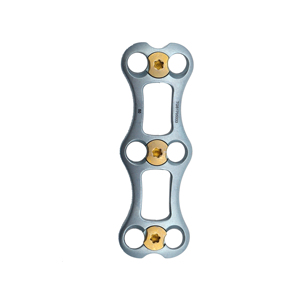
Medical Titanium Anterior Cervical Spine Locking Plate Orthopedic Spinal Fracture Fixation Surgical Bone Implant Device
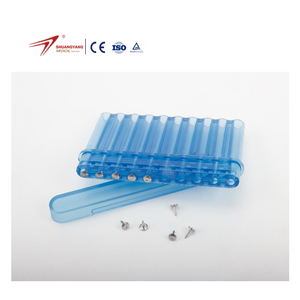
Shuangyang Orthopedic Implant Titanium Alloy Screw Gbr Membrane Bone Tack System Dental Hospital Use CEISO Certified 1 Year
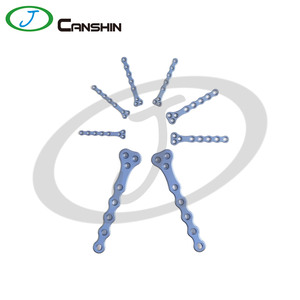
Veterinary Orthopedic Surgery Implant T Type Locking Plate T Shape Reconstruction Locking Plate with Pure Titanium
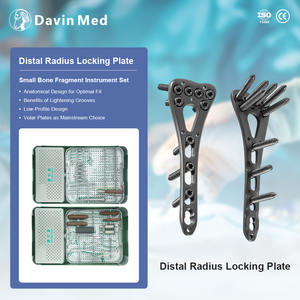
Titanium Volar Distal Radius Locking Plate Multi-Directional Screw Fixation Orthopedic Implant with Multi-Axial Locking System
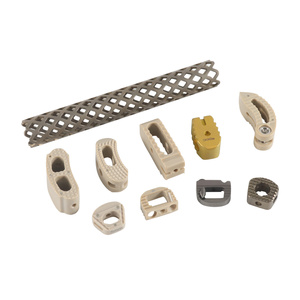
Variety of Orthopedic Spine Anterior Cervical Implant Titanium Plate Good Price Factory Ce Approved Orthopedic Implants
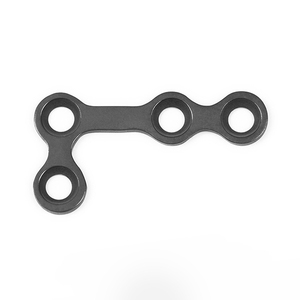
Orthopedic Implant Solutions Advanced Veterinary Fracture Repair Systems Hot Sale Surgical Orthopedic Implants with Cheap Price
Navigating US FDA Traceability & Quality Standards for China-Sourced Orthopedic Implants
In the highly regulated United States orthopedic device market, sourcing trauma plates, pedicle screws, intramedullary nails, and spinal reconstruction implants from overseas manufacturers requires total transparency. US healthcare systems, Group Purchasing Organizations (GPOs), and Ambulatory Surgical Centers (ASCs) demand uncompromised compliance with **FDA 21 CFR Part 830 (Unique Device Identification - UDI)** and **21 CFR Part 820 (Quality System Regulation - QSR)**.
As a leading specialized OEM manufacturer and exporter based in China, our production ecosystem bridges the cost-efficiency of Chinese medical manufacturing with the stringent regulatory rigor demanded by the US Food and Drug Administration (FDA) and hospital risk management boards.
Information Gain Key Takeaway: Modern US orthopedic procurement is no longer driven solely by unit pricing. Procurement directors now prioritize lot-level material origin certification (ASTM F136/F67), Device History Record (DHR) auditability, and automated GS1 DataMatrix laser-etching verification to eliminate product recall exposure and clinical liability risks.
1. The FDA UDI System & GS1 Barcode Compliance Architecture
Every orthopedic implant shipped to the United States from our manufacturing facility undergoes high-resolution fiber laser marking compliant with ISO/IEC 15415 standards. The Unique Device Identification system comprises two critical code structures:
- Device Identifier (DI): A mandatory, fixed portion of a UDI that identifies the specific model or version of the implant (e.g., Titanium Volar Distal Radius Locking Plate, 3.5mm System).
- Production Identifier (PI): Conditional, dynamic barcode segments that incorporate the manufacturing lot/batch number, date of manufacture, expiration date, and individual serialized number for total clinical tracking inside US hospital Operating Rooms (OR).
2. Material Integrity: ASTM F136 Ti-6Al-4V ELI vs. Standard Materials
A primary failure point in non-compliant medical exports is raw material inconsistency. We strictly source implant-grade titanium bar stock certified under ASTM F136 (Ti-6Al-4V Extra Low Interstitial) and ASTM F67 (Commercially Pure Titanium). ELI grade materials provide superior damage tolerance, enhanced fatigue life under dynamic mechanical stress, and minimal risk of toxic micro-element leaching, essential for load-bearing cervical spine locking plates and distal radius fracture fixations.
6-Stage Traceability Architecture: From Raw Billet to Sterile OR
Our closed-loop Device History Record (DHR) system ensures that every screw, plate, and surgical tack can be traced back to its specific raw material heat number, CNC machine operator, surface anodization batch, and CMM inspection log.
1. Spectrometric Raw Material Verification
Every incoming bar stock of Titanium Alloy or 316L Stainless Steel undergoes positive material identification (PMI) via optical emission spectrometry to verify compliance with ASTM chemical and mechanical standards prior to machining.
2. High-Precision Swiss CNC Machining
Utilizing 5-axis DMG MORI and Citizen Swiss-type lathes, multi-axial locking screw threads and complex anatomical plate curves are machined with sub-micron tolerances (±0.005mm) under automated coolant temperature control.
3. Type II & Type III Anodization
Surface passivation and electro-chemical color anodization create a biocompatible, corrosion-resistant titanium oxide layer. Color coding allows immediate intraoperative size identification by surgical staff.
4. Optical CMM & Thread Gauge Inspection
100% optical Coordinate Measuring Machine (CMM) inspection verifies hole alignment, multi-directional locking pitch, and plate thickness. Zero non-conforming parts are passed to laser etching.
5. High-Resolution Fiber Laser Marking
GS1 DataMatrix barcodes, lot identifiers, part numbers, and size codes are etched directly onto non-contact regions of the implant. Barcode readability is validated with automated vision scanners.
6. ISO Class 7 Cleanroom Packaging
Implants are cleaned via multi-stage ultrasonic deionized water baths and packaged in double Tyvek peelable pouches inside an ISO Class 7 cleanroom, ready for EtO or Gamma sterilization.
US Healthcare Dynamics: ASC Shift & Cost-Effective Supply Chain Resilience
The landscape of orthopedic surgery in the United States is undergoing a seismic structural shift. Key drivers redefining purchasing behaviors among US hospital networks and independent surgical practices include:
Ambulatory Surgery Center (ASC) Migration
US surgeons are rapidly shifting outpatient procedures—including volar distal radius plating, anterior cervical discectomy and fusion (ACDF), and small-joint trauma—from expensive tertiary hospitals to ASCs. ASCs demand pre-sterilized, single-use packaged implants that reduce autoclave turnover costs and inventory drag.
Value-Based Healthcare & Price Disruption
Medicare and private payers in the US continue to clamp down on reimbursement rates for orthopedic procedures. US distributors can no longer afford the inflated margins of tier-1 domestic brands. Sourcing directly from our high-precision China factory saves 35%–50% in landed unit cost without compromising biomechanical efficacy.
Malpractice Risk Mitigation via Full Traceability
US legal defensibility requires impeccable documentation. In cases of delayed bone union or construct revision, having 100% batch traceability linking the specific plate lot to its raw material chemical analysis shields US distributors and medical practices from liability risks.
Orthopedic Implant Material Specifications & Quality Compliance Matrix
Compare standard OEM exporter configurations against our US-grade verified manufacturing metrics.
| Parameter | Standard Export Factory | Our US-Export Verified Standard | US Clinical Benefit |
|---|---|---|---|
| Titanium Grade | Standard Ti-6Al-4V (ASTM F1472) | ASTM F136 Ti-6Al-4V ELI (Extra Low Interstitial) | Higher fracture toughness and fatigue strength under cyclic stress |
| Traceability Level | Box Label Barcode Only | 100% Direct Part Laser Etched GS1 DataMatrix + Lot ID | Complete intraoperative scan-in compliance for US FDA GUDID |
| Quality Certification | Basic ISO 9001 | ISO 13485:2016 + FDA 21 CFR Part 820 QSR Compliant | Passes US hospital vendor credentialing & FDA facility audits |
| Machining Precision | ±0.02 mm Standard CNC | ±0.005 mm 5-Axis Swiss Machining | Zero-play engagement with driver bits; prevents screw stripping |
| Cleanroom Packaging | Standard Industrial Workshop | ISO Class 7 Environment + Double Tyvek Pouching | Immediate terminal sterilization readiness (EtO/Gamma) |
| Document Deliverables | Commercial Invoice & Packing List | Full DHR Packet: Material Mill Certs, CMM Reports, CoA, IFU | Instant 510(k) file compilation & regulatory submission support |
Frequently Asked Questions by US Medical Importers & OEMs
Addressing key regulatory, logistical, and technical queries regarding orthopedic implant sourcing from China to the United States.
How does your factory ensure compliance with FDA 21 CFR Part 830 (UDI Mandate)?
We utilize medical-grade 355nm ultraviolet and fiber laser marking systems to etch GS1-compliant DataMatrix barcodes directly onto every implant surface. The barcode encodes the Global Trade Item Number (GTIN), lot control number, and expiration date. Each code is verified with an optical scanner to guarantee 100% readability prior to cleanroom packaging, allowing seamless scan-in to US hospital GUDID systems.
Can you provide material mill certificates for ASTM F136 titanium and ASTM F2026 PEEK?
Yes, absolutely. Every shipment is accompanied by complete raw material mill inspection certificates detailing chemical composition, tensile yield strength, elongation percentage, and metallurgical grain structure. We maintain strict material segregation, and raw heat numbers are recorded in the Device History Record (DHR) for a minimum of 15 years.
What is your typical lead time for custom OEM private-label orthopedic plate systems to the US?
For existing catalog items with private-label laser marking and custom packaging, lead times range between 3 to 4 weeks. For custom OEM/ODM implant systems requiring CAD engineering review, prototype sampling, mechanical fatigue testing (ASTM F382 / ASTM F543), and production tooling, typical launch timelines are 8 to 12 weeks.
How do you handle US customs clearance, tariffs, and medical device export documentation?
We work directly with specialized medical freight forwarders experienced in US FDA import clearance. We supply accurate Harmonized Tariff Schedule (HTS) codes, Commercial Invoices detailing Device Identifiers, Radiation Control statements (if applicable), and FDA Manufacturer Registration numbers. We offer DDP (Delivered Duty Paid) shipping terms to simplify delivery straight to your US warehouse.
Are your surgical instrument sets compatible with standard US driver handles and quick-connect AO couplings?
Yes. All surgical instruments—including hex drivers, Torx/Star drivers, depth gauges, drill guides, and bending irons—are designed around standardized international AO quick-connect interfaces. This ensures total interchangeability with existing surgical trays used in US operating rooms.
What testing protocols are conducted to prevent screw stripping or plate breakage in trauma cases?
Our implants undergo rigorous static and dynamic fatigue testing in accordance with ASTM F382 (Metallic Bone Plates) and ASTM F543 (Metallic Medical Bone Screws). We test torsional yield strength, insertion torque, axial pull-out force, and four-point bending fatigue strength to guarantee structural stability under physiological loading conditions.
Can qualified US distributors evaluate physical evaluation samples before placing volume contracts?
Yes. We support legitimate US medical device distributors, orthopedic brands, and hospital procurement groups with non-sterile sample kits for dimensional validation, fit checks, driver engagement testing, and anodization finish evaluation. Click the "Get Catalog" button to request sample availability.
Your Strategic OEM/Private-Label Partner for Orthopedic Success
Choosing the right orthopedic implant manufacturing partner in China is a critical strategic decision for US medical suppliers. With over 15 years of dedicated focus on spinal internal fixation systems, trauma locking plates, intramedullary nails, CMF mini-plates, and sports medicine anchors, our facility stands as a benchmark of precision engineering.
State-of-the-Art Machining Fleet
Over 80 CNC multi-axis machines, including Tornos, Citizen, and DMG MORI centers operating continuously under automated quality control monitoring.
Full Regulatory Dossier Support
We provide comprehensive technical files, 3D STEP models, sterilization validation reports, and ISO 10993 biocompatibility testing datasets to accelerate your US 510(k) applications.
Scalable Contract Manufacturing
Flexible minimum order quantities (MOQs) tailored for growing US medical brands, paired with massive volume scaling capacity for high-volume tender contracts.
Accelerate Your US Orthopedic Supply Chain Today
Request our comprehensive 2025 product catalog, material traceability whitepaper, and OEM price list tailored specifically for United States importers and medical brand owners.
Get Catalog