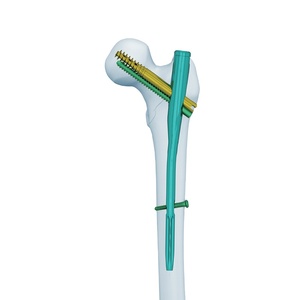
Direct Factory Recommendations
CE & ISO 13485 Certified Orthopedic Implant Portfolio
Precision-machined implant systems engineered from ASTM F136 Ti-6Al-4V ELI titanium alloy and 316L surgical stainless steel, ready for CDRRHR registration and hospital tenders across Manila.
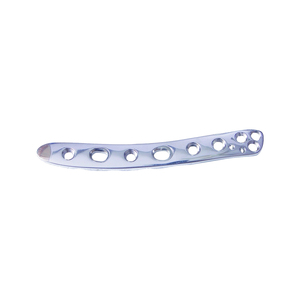
Wholesale Rate Stainless Steel Orthopedic Implants High Quality CE Certified Customizable
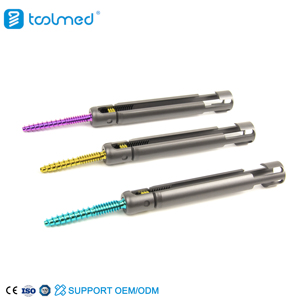
Everest 5.5 MIS Titanium Polyaxial Pedicle Screw System Orthopedic Spine Implants
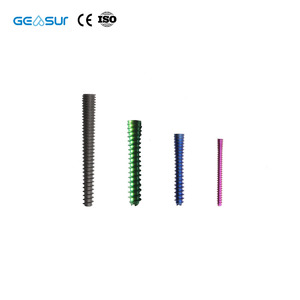
Geasure CE ISO Certified Class III Titanium Alloy Headless Compression Cannulated Screw
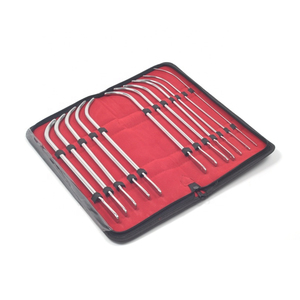
Orthopedic Surgical Implants L-Plate 6 Holes Thick Orthognathic Stainless Steel System
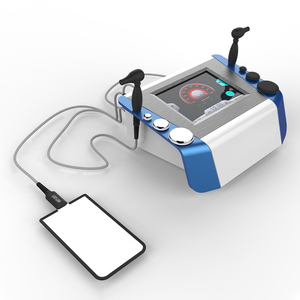
Orthotic & Post-Operative Physiotherapy Scan & Electrode Rehabilitation Unit
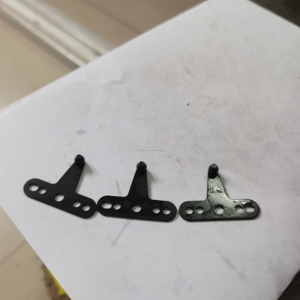
Medical Grade AM ORTHO Right Angled Titanium Orthopedic Trauma Implant System
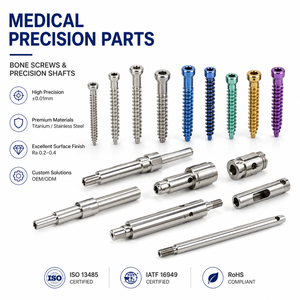
Custom Medical Orthopedic Implant Component Kit CNC Machined Stainless Steel
100%
Raw Material Lot Traceability (ASTM F136 / F138)
< 0.005mm
CNC Swiss Lathe Precision Machining Tolerance
45-60%
Average TCO Savings vs Tier-1 Western Brands
CDRRHR
FDA Philippines CPR Technical Dossier Ready
Market Dynamics & Procurement Strategy
Evaluating Orthopedic Implant Suppliers for Metro Manila Hospitals
How healthcare institutions in the National Capital Region (NCR) are optimizing procurement budgets without compromising clinical outcomes.
The orthopedic healthcare sector in Metro Manila is undergoing a structural shift driven by increasing trauma admissions, expanding national health insurance coverage (PhilHealth Z-Benefits), and mounting fiscal pressures on both public government hospitals and private hospital networks. As the focal point of specialized surgical care in the Philippines, Metro Manila hosts key tertiary institutions such as the Philippine Orthopedic Center (POC) in Quezon City, the Philippine General Hospital (PGH) in Ermita, as well as premier private networks including St. Luke’s Medical Center (BGC and QC), The Medical City (Pasig), and Makati Medical Center.
For procurement committees, hospital purchasing boards, and medical device distributors operating in Manila, selecting the right orthopedic implant manufacturer is a complex decision. Historically, European and North American Tier-1 brands dominated the market. However, high unit costs and rigid distribution channels have strained hospital supply chains. Today, forward-thinking Manila distributors and hospital networks actively compare international OEM manufacturers to establish direct direct-to-factory supply contracts that deliver equivalent mechanical performance, full regulatory compliance, and significantly improved operational margins.
1. Demographic Drivers and Clinical Demand in Metro Manila
Metro Manila's population density exceeds 14,000 people per square kilometer, creating high traffic volume across major thoroughfares like EDSA, C-5, and Commonwealth Avenue. Consequently, high-energy vehicular trauma—particularly involving motorcycles—represents a major proportion of emergency surgical admissions at POC and regional trauma centers. Key clinical demands include:
- Trauma Fixation Systems: High demand for titanium and stainless steel anatomical locking plates for distal radius, proximal humerus, shaft fractures of the femur, tibia, and ankle complex.
- Spinal Surgery: Increasing incidence of degenerative spine disorders and traumatic spinal cord injuries requiring pedicle screw fixation systems (open and MIS), PEEK interbody fusion cages, and cervical plate sets.
- Arthroplasty & Joint Replacement: Growing elderly demographic seeking Total Knee Arthroplasty (TKA) and Total Hip Arthroplasty (THA) under PhilHealth reimbursement packages.
- CMF Maxillofacial Fixation: Specialized facial bone repair kits for trauma surgical units across NCR public hospitals.
2. The PhilHealth Reimbursement Paradox & Cost-Per-Case Optimization
The Philippine Health Insurance Corporation (PhilHealth) sets strict capitation limits and fixed benefit packages for orthopedic procedures. Public and private hospitals face the "reimbursement ceiling" challenge: when using legacy Tier-1 implants, the cost of the implant hardware frequently consumes 70% to 90% of the total PhilHealth package allowance, leaving minimal margin for surgical facility fees, post-operative care, and hospital operational overhead.
By partnering directly with ISO 13485 certified manufacturers who supply Class III medical devices backed by CE marking and technical dossiers for FDA Philippines (CDRRHR) registration, Manila medical distributors can offer hospitals compliant implant packages at 40% to 60% lower acquisition cost. This provides hospitals with the financial flexibility to expand surgical volume while ensuring surgeons have access to precision-machined, anatomically contoured implant hardware.
Technical Benchmark
Comparative Analysis: Supplier Categories in Manila
Evaluating Global Tier-1 Brands vs. Direct OEM Manufacturers (e.g., CZMEDITECH/Orthomanufacturer) vs. Unaccredited Generic Suppliers.
| Evaluation Parameter | Global Tier-1 Brands (Legacy) | CZMEDITECH / OEM Direct Supply | Low-Cost Unaccredited Vendors |
|---|---|---|---|
| Raw Material Specification | ASTM F136 Titanium / ASTM F138 316L | ASTM F136 ELI Titanium / ASTM F138 316L | Non-certified standard grade alloy |
| Machining Precision & Tolerance | < 0.005mm (Swiss CNC) | < 0.005mm (Multi-Axis CNC Lathes) | > 0.020mm (Manual/Standard CNC) |
| FDA Philippines (CDRRHR) Readiness | Fully Registered (High Royalty Cost) | Complete STED Dossiers & ISO 13485 Provided | No STED dossier support; high rejection risk |
| Instrument Matching & Ergonomics | Excellent (Proprietary sets) | 100% Matched Reusable Instrument Trays | Inconsistent tolerances; driver cam-out risk |
| Unit Cost to Manila Importer | Very High (Driven by global overhead) | Direct Factory Wholesale Rate (Optimal Margin) | Low (High risk of clinical failure/recalls) |
| Supply Chain Lead Time to Manila | 12–20 Weeks (Regional hub backlogs) | 2–4 Weeks (Direct express air/sea cargo to Manila) | Unpredictable lead times |
Regulatory & Quality Control
FDA Philippines (CDRRHR) Registration & Tropical Resilience
Essential quality standards, material science validations, and packaging durability required for medical device importation into Metro Manila.
CDRRHR Technical Dossier Compliance
The Center for Device Regulation, Radiation Health, and Research (CDRRHR) under the Philippine FDA strictly regulates Class B, C, and D medical devices. Direct OEM suppliers support Manila importers by providing complete Summary Technical Documentation (STED), including ISO 13485:2016 audit reports, biocompatibility test results (ISO 10993 series), chemical composition analysis, and mechanical fatigue test data (ASTM F1717 for spine, ASTM F382 for plates).
Request Registration Dossier SupportTropical Climate & Sterile Barrier Packaging
Metro Manila experiences year-round tropical conditions with ambient relative humidity frequently exceeding 85% and temperatures reaching 35°C+. Implants and instrument sets stored in hospital supply centers (such as PGH or regional NCR clinics) require robust sterile barrier packaging. Manufacturers utilize medical-grade Tyvek packaging with double-peel pouches compliant with ISO 11607-1/2 standards to guarantee 5-year sterile shelf life without seal degradation.
Consult Packaging SpecsBiocompatible Metallurgy & Surface Anodization
Implant failure in trauma or spinal reconstruction often stems from surface micro-cracks or fretting corrosion. Premium OEM production uses Ti-6Al-4V ELI (Extra Low Interstitial) titanium alloy conforming to ASTM F136. Type II electrochemical surface anodization creates a dense oxide layer that increases fatigue resistance, enhances osseointegration, and minimizes metallic ion release in body fluids.
Request Material Certificates
Surgical Practice & Clinical Fit
Specialized Clinical Applications in Manila OR Environments
Matching precise anatomical implant design with localized patient morphometry and surgical preferences in the Philippines.
1. Spinal Trauma and Degenerative Lumbar Fixation
Spinal surgeries performed in Metro Manila hospitals require implants engineered for Southeast Asian bone density profiles. The Everest 5.5 MIS Pedicle Screw System and Model 1100 1 Titanium Pedicle Screws feature dual-lead self-tapping threads that reduce insertion torque while maximizing pedicle wall engagement. In osteoporotic patients—a growing demographic in Manila private hospitals—cortical thread patterns near the screw neck provide strong fixation near the pedicle cortex, preventing post-fusion screw loosening.
2. Complex Extremity Trauma & Periarticular Fractures
Emergency trauma rooms at POC and PGH frequently manage severe periarticular and open long-bone fractures. Anatomical locking plates (such as distal radius, proximal humerus, and distal femur plates) must be pre-contoured to reduce intraoperative bending time. Pre-contoured locking plates made of cold-worked Ti-6Al-4V or 316L stainless steel allow combination locking and compression holes (Combi-holes), giving Manila orthopedic surgeons the choice between dynamic interfragmentary compression and rigid angle-stable locking fixation in a single construct.
3. Scaphoid & Small Bone Compression
For hand and foot surgical subspecialties in Manila, the Headless Compression Cannulated Screw System provides low-profile interfragmentary compression across joint surfaces. The headless profile permits countersinking below the articular cartilage, eliminating hardware impingement during wrist or midfoot range of motion exercises.
4. Cranio-Maxillofacial (CMF) Reconstruction
Facial fracture fixations resulting from athletic injuries or motor accidents require flexible, low-profile implant plates. The L-Plate 6-Hole Orthognathic System utilizes pure titanium (ASTM F67 Grade 2), allowing precise manual contouring to conform to complex facial skeletons while maintaining structural stability under masticatory loads.
Logistics & Importer Operations
Optimizing Supply Chain from Factory to Manila Warehouses
Streamlining customs clearing at Manila South Harbor and Ninoy Aquino International Airport (NAIA) for seamless inventory replenishment.
Customs Clearance & HS Code Classification
Medical device shipments entering the Philippines via Manila South Harbor (Port Area) or NAIA Air Cargo Terminal require clear customs documentation. Manufacturers provide standardized commercial invoices, packing lists, Certificate of Origin (Form E for ASEAN-China free trade duty reductions), and precise HS Code declarations (e.g., 9021.10 for orthopedic appliances and bone fracture implants), expediting BOC (Bureau of Customs) release.
Inquire About Shipping SchedulesBuffer Stocking in Local NCR Hubs
Hospital orthopedic surgical schedules in Manila operate on tight timelines. Distributors maintaining central warehouses in Quezon City, Pasig, Taguig, or Manila proper can establish vendor-managed inventory (VMI) buffer stocks with direct factory partners. Fast lead-time manufacturing cycles (2 to 4 weeks) ensure distributors never experience stock-outs on high-turnover screw sizes and plate configurations.
Discuss Inventory Programs
Frequently Asked Questions
Manila Orthopedic Sourcing & Procurement FAQ
Direct answers to crucial questions asked by Philippine medical importers, hospital purchasing committees, and biomedical engineers.
What certificates are required to import orthopedic implants into the Philippines?
To import orthopedic implants into the Philippines legally, your company must hold a valid License to Operate (LTO) as a Medical Device Importer/Distributor issued by the FDA Philippines. Additionally, each implant family requires a Certificate of Product Registration (CPR) from the CDRRHR. Direct factory manufacturers support this process by providing certified ISO 13485 audit certificates, CE declarations, technical dossiers (STED), and material testing reports.
How do OEM titanium implants compare in quality to established Western brands?
Leading direct OEM manufacturers utilize the exact same certified raw materials (such as US/European origin ASTM F136 Ti-6Al-4V ELI titanium alloy and ASTM F138 316L stainless steel) and multi-axis Swiss CNC precision lathes as legacy Western brands. Mechanical fatigue testing confirms that load capacity, pull-out strength, and wear characteristics match international standards, while factory-direct pricing eliminates brand-name markup costs.
Can Manila distributors request custom private-label branding and laser marking?
Yes. Private-label OEM services include customized fiber laser marking directly on implants (specifying part numbers, lot numbers, trace codes, and your brand logo), custom sterile pouch printing, customized outer box packaging, and localized Instructions for Use (IFU) inserts tailored to your distribution brand in the Philippines.
What is the typical delivery timeline from factory production to Manila delivery?
Standard catalog items (spine pedicle screws, locking plates, intramedullary nails) are generally maintained in factory stock and can be dispatched via air freight (DHL/FedEx/UPS) to NAIA airport within 5 to 7 business days. Bulk container orders shipped via ocean freight to Manila South Harbor typically arrive within 18 to 25 calendar days including customs release.
Are matched surgical instrument sets available for evaluation before placing bulk orders?
Yes. Qualified medical device distributors and hospital procurement boards in Metro Manila can request sample evaluation kits and demonstration surgical instrument trays. This allows local orthopedic surgeons and scrub nurses to assess ergonomic feel, driver-to-recess engagement, and tray sterilization layout before committing to commercial contracts.
How do OEM implant prices assist hospitals with PhilHealth Z-Benefit compliance?
PhilHealth sets fixed reimbursement rates for spinal fusion, hip replacements, and major fracture surgeries. High-cost legacy implants frequently exceed reimbursement limits, forcing hospitals or patients to pay out-of-pocket gaps. By sourcing factory-direct certified implants at 40-60% lower acquisition cost, healthcare providers fit within PhilHealth package caps while maintaining high surgical quality standards.
Partner with a Proven Orthopedic Implant Manufacturer
Empower your medical distribution business or hospital system in Metro Manila with direct factory pricing, ISO 13485 / CE certified surgical quality, and dedicated CDRRHR registration dossier support.