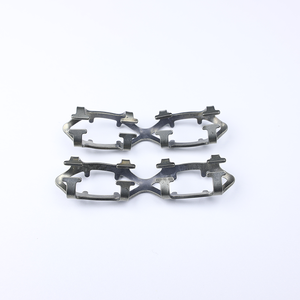
Yi Fantai Orthopedic Nickel-Titanium Patellar Claw Shape Memory Alloy Implant
Minimally invasive knee fracture fixation device utilizing NiTi shape memory thermo-elasticity for continuous dynamic tension across patellar fragments.
Engineered to strict ISO 13485 and ASTM standards. Each system provides full lot traceability, validated cleanroom packaging, and private-label customization tailored for Brazilian distributors and Japanese clinical institutions.
Minimally invasive knee fracture fixation device utilizing NiTi shape memory thermo-elasticity for continuous dynamic tension across patellar fragments.
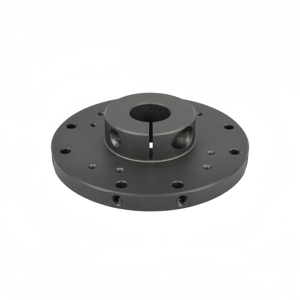
Ultra-precision 5-axis CNC machined titanium components built to customer CAD specifications with tight micrometer tolerances and anodized surface finishes.
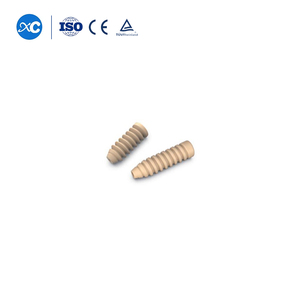
High-strength PEEK and biocomposite interference screws for rigid tendon graft fixation in knee arthroscopy and ligament reconstruction.
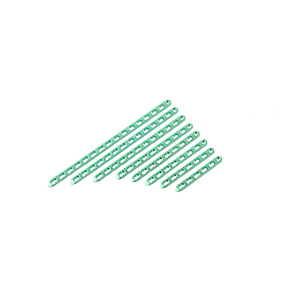
Low-profile anatomical locking compression plate system featuring combo-holes for angularly stable rigid fixation in micro-trauma surgery.
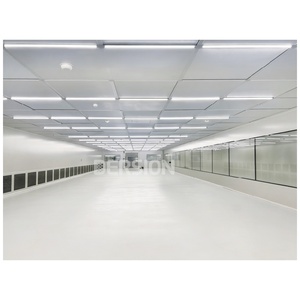
Direct medical-grade sterile packaging and contract manufacturing inside ISO 14644-1 certified cleanrooms for global distribution compliance.
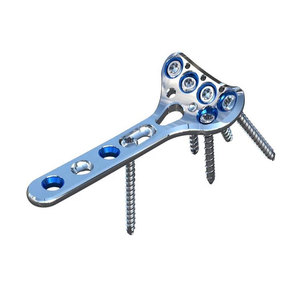
Fully integrated ergonomic surgical toolkits and matched spinal instrument trays crafted from autoclavable German surgical stainless steel.
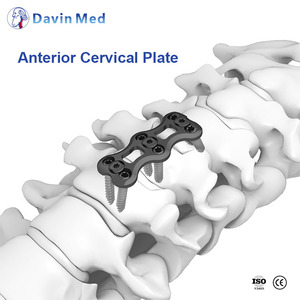
Ultra-thin anterior cervical plate system featuring self-locking tactile screw mechanism and dynamic lordotic trajectory options.
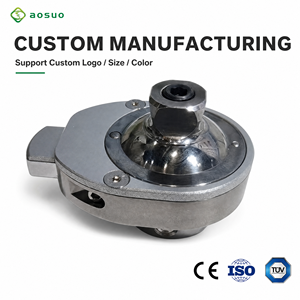
Flexible high-durability orthopedic structural braces and external fixation assemblies designed for post-traumatic joint stabilization.
The global orthopedic device manufacturing landscape is undergoing a structural paradigm shift driven by stringent regulatory convergence, rising surgical volumes in emerging markets, and an intense clinical demand for patient-matched precision. In South America, Brazil stands as the largest medical device market, governed strictly by ANVISA (Agência Nacional de Vigilância Sanitária) under updated frameworks such as RDC 665/2022. Concurrently, Japan represents the world’s most advanced super-aged demographic, overseen by the PMDA (Pharmaceuticals and Medical Devices Agency) and MHLW, demanding unparalleled biomechanical reliability, ultra-compact anatomical profiles, and zero-defect quality control.
This technical whitepaper provides medical device brand owners, procurement directors, and surgical distributors with an authoritative analysis of contract manufacturing strategies. By leveraging state-of-the-art 5-axis CNC Swiss turning, ISO Class 7 cleanroom packaging, and validated biomaterial metallurgical processes (ASTM F136 Ti-6Al-4V ELI, ASTM F2026 PEEK, NiTi shape memory alloys), our specialized factory infrastructure serves as a vital bridge—supplying OEM solutions tailored to the distinct regulatory, anatomical, and economic imperatives of both the Brazilian and Japanese medical sectors.
Implant longevity and osseo-integration depend entirely on substrate chemistry, surface topography, and fatigue resistance. Every batch manufactured in our facility undergoes rigorous raw material verification against ASTM and ISO specifications prior to precision machining.
| Biomaterial Grade | Standard Specification | Mechanical & Biological Attributes | Primary Clinical Applications |
|---|---|---|---|
| Ti-6Al-4V ELI | ASTM F136 / ISO 5832-3 |
Extra-low interstitial titanium alloy; high fatigue limit, superior strength-to-weight ratio, bio-inert oxide layer. | Pedicle screws, trauma locking plates, intramedullary nails, cervical fusion plates. |
| CP Titanium (Grades 2 & 4) | ASTM F67 / ISO 5832-2 |
Commercially pure titanium providing optimal ductility for intraoperative cold-bending and anatomical adaptation. | CMF micro/mini plates, reconstructive titanium mesh, craniomaxillofacial fixation. |
| Medical Grade PEEK | ASTM F2026 |
Polyetheretherketone; bone-like modulus of elasticity (~3.6 GPa), radiolucent, zero artifacting under CT/MRI. | PLIF/TLIF lumbar cages, cervical interbody spacers, arthroscopic interference screws. |
| NiTi Shape Memory Alloy | ASTM F2063 |
Superelastic nickel-titanium alloy exhibiting thermal phase transformation ($A_f$ temperature calibrated to body temp). | Patellar claw fracture fixators, memory staples, minimally invasive dynamic clamps. |
| CoCrMo Cast/Wrought Alloy | ASTM F1537 / ISO 5832-12 |
Cobalt-chromium-molybdenum alloy offering extreme surface hardness and ultra-low bearing wear rates. | Total joint arthroplasty, femoral heads, knee tibial/femoral articulating components. |
| 316L Implant Stainless Steel | ASTM F138 / ISO 5832-1 |
Vacuum melt high-passivated stainless steel balancing high tensile strength with cost-effective clinical utility. | Trauma pins, Schanz screws, external fixator bars, veterinary compression plates. |
Deploying orthopedic implants successfully requires deep alignment with regional healthcare infrastructure, surgical preferences, and patient demographics. Below is a detailed breakdown of localized application requirements across Brazil and Japan.
The Brazilian market is characterized by a dual-tier healthcare system: the unified public health system (SUS - Sistema Único de Saúde) and a expanding private hospital sector (e.g., Rede D'Or, Hospital Albert Einstein). SUS demands high-volume, robust, and cost-efficient trauma constructs, whereas private networks favor premium bio-composite sports medicine anchors and minimally invasive spine systems.
Japan’s orthopedic market is heavily shaped by an aging population with elevated prevalence of osteoporosis, degenerative spinal conditions, and joint osteoarthritis. Japanese orthopedic surgeons require ultra-low profile implants tailored to Asian anatomical bone structures, exceptional tactile instrument feedback, and flawless surface finishing verified under PMDA regulatory audits.
Utilizing high-precision Citizen and Star Swiss-type automatic turning lathes, our facility maintains tight tolerances within ±0.005mm for complex thread profiles and cannulated screws.
Technical InquiriesIn-house validated cleaning, ultrasonic deburring, and sterile barrier packaging operating under ISO 14644-1 Class 7 cleanroom protocols to ensure minimal endotoxin levels.
Technical InquiriesProviding global distributors with comprehensive technical files, material certificates, mechanical test reports (ASTM F1717), and IFUs formatted for rapid ANVISA and PMDA submission.
Technical InquiriesTo remain competitive, medical device distributors in São Paulo, Rio de Janeiro, Tokyo, and Osaka are transitioning from pure finished-goods importing toward strategic private-label contract manufacturing. Key trends reshaping procurement include:
Distributors demand high-precision fiber laser etching for custom logos, catalog SKU numbers, matrix codes (GS1 UDI), and size callouts directly on anodized implant surfaces.
Surgical failure often stems from driver-recess slippage. OEM buyers now insist on single-source manufacturing of both implants and reusable surgical tools to ensure seamless intraoperative fit.
Turnkey registration support via standardized technical dossiers (STED) significantly reduces market approval timelines before ANVISA (Brazil) and PMDA (Japan).
Flexible production schedules allowing low-to-medium volume initial runs allow distributors to evaluate local surgeon feedback prior to committing to high-volume commercial scaling.
Direct answers to technical, regulatory, and logistical questions from medical device importers and brand owners.
Whether expanding your product line in the Brazilian market or establishing a zero-defect supply line for Japanese hospitals, our engineering team is ready to execute your specifications.