Featured EU MDR Grade Orthopedic Implants
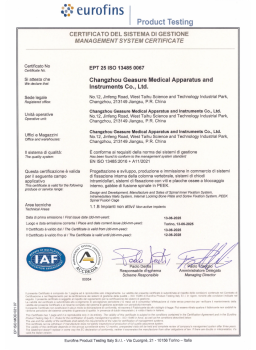
Precision-engineered bio-compatible systems manufactured under ISO 13485:2016 standard, fully validated for Nigerian hospital networks and surgical centers.
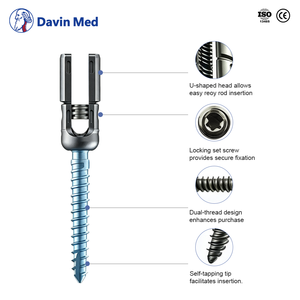
DavinMed CE/ISO Spine Polyaxial Pedicle Screw Long Tail Titanium Orthopedic Implant Sterile Packaging Anodized Surface Finish
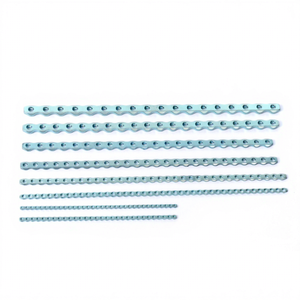
Small Animal Titanium Orthopedic Implant Alps Reconstruction Locking Plate Class III for Veterinary Bone Surgery CE Certified
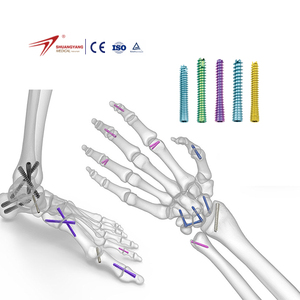
Shuangyang Price Titanium Orthopedic Screws Surgical Implants Herbert Cannulated Compression Screw Surgical Screws
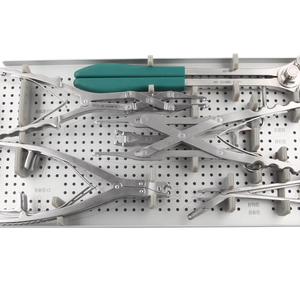
COX 6.0 Screw & Rod System Class I Implant Instruments for Orthopedic Surgery
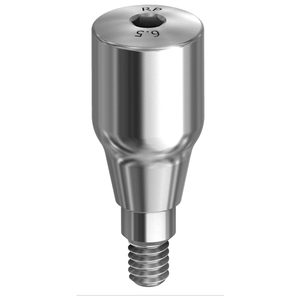
Straight Angled Prosthetic Abutment 0 15 25 Degree Internal Hex Conical Morse Taper Compatible Titanium Dental Implant 118 8
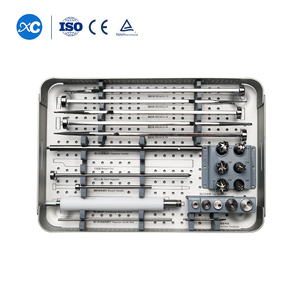
XC MEDICO Premium MINI Double Action Hip System-Veterinary Orthopedic Implants for Animal Hip Joint Prosthesis Surgery
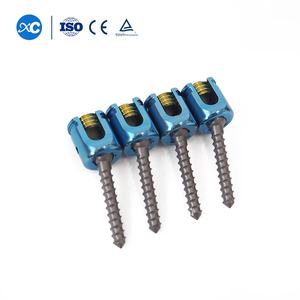
Veterinary Orthopedic Implants Polyaxial Spine Pedicle Screw Titanium Orthopaedic Implant
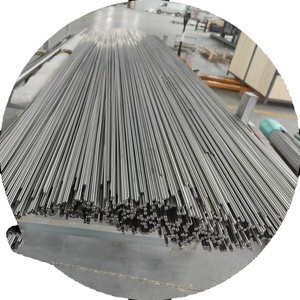
Titanium bar Grade 5 Eli Orthopedic Implants 3mm 4mm 5mm Dental Surgical Implant Price Per kg
The Nigerian Orthopedic Market: Navigating EU MDR Standards, NAFDAC Regulations & Clinical Demand
As West Africa’s largest economy and most populous nation, Nigeria is undergoing a massive structural transformation in its healthcare sector. Driven by urban population growth, expansion of teaching hospitals, and an unprecedented rise in orthopedic surgical procedures, the demand for certified high-precision implants has reached a critical tipping point.
Epidemiological Drivers and Surgical Requirements
Orthopedic care in Nigeria faces unique epidemiological challenges. High-density urban corridors—such as the Lagos-Ibadan expressway, the Abuja-Lokoja artery, and major commercial hubs in Kano and Port Harcourt—record substantial volumes of high-energy road traffic accidents (RTAs). This creates an immediate, heavy demand for rigid internal and external fixation systems.
Concurrently, an aging demographic in major metropolitan centers has led to an increase in degenerative spinal diseases, osteoporotic vertebral compression fractures, and severe osteoarthritis requiring total joint arthroplasty (TJA). Surgeons in Nigerian tertiary centers—such as Lagos University Teaching Hospital (LUTH), University College Hospital (UCH) Ibadan, and National Hospital Abuja—increasingly demand trauma and spinal systems that strictly match European mechanical and biocompatibility benchmarks.
Bridging EU MDR (2017/745) with NAFDAC Registration Pathways
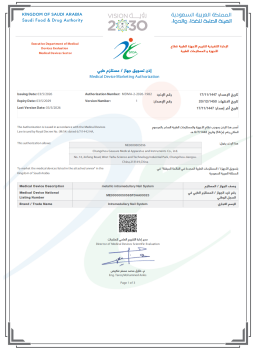
The National Agency for Food and Drug Administration and Control (NAFDAC) in Nigeria has systematically tightened regulatory oversight for imported Class IIb and Class III medical devices. To secure NAFDAC marketing authorization, importers and distributors must provide full technical documentation proving structural integrity, biological safety, and clinical safety evaluation.
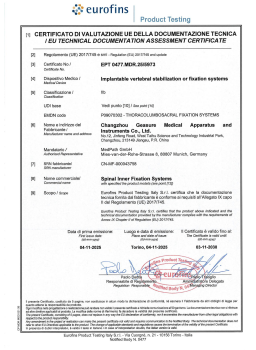
Partnering with an OEM factory holding verified EU MDR 2017/745 Annex IX/X technical files drastically accelerates the NAFDAC evaluation process. European MDR compliance mandates rigorous Post-Market Clinical Follow-up (PMCF), comprehensive ISO 14971 Risk Management, and 100% Unique Device Identification (UDI) tracking—guaranteeing that Nigerian healthcare providers receive zero-defect implants ready for institutional tenders.
Information Gain: Why Technical Dossier Completeness Matters for Nigerian Distributors
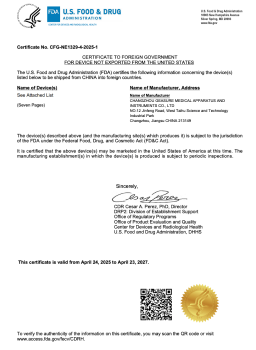
Distributors frequently experience commercial paralysis when NAFDAC audits stall due to incomplete raw material batch certificates, lack of biocompatibility test reports (ISO 10993), or inadequate sterilization validation files. Our factory provides an integrated NAFDAC-ready technical package with every export shipment, including Free Sale Certificates (FSC), Certificate of Analysis (CoA), ISO 13485 audit reports, and localized packaging compliance.
Standardized Material Grades & Structural Integrity
Surgical implants must withstand extreme fatigue dynamics and harsh environmental conditions during transit and intraoperative handling. We strictly utilize raw materials compliant with international implant standards.
| Material Standard | ISO Standard | Biomechanical Profile | Target Surgical Application | Nigerian Market Requirement |
|---|---|---|---|---|
ASTM F136 (Ti-6Al-4V ELI) |
ISO 5832-3 | High fatigue strength, low elastic modulus (110 GPa), ELI extra-low interstitial purity. | Pedicle Screw Systems, Intramedullary Nails, Locking Bone Plates. | Resists micro-motion fatigue in heavy load-bearing trauma cases across Nigerian public hospitals. |
ASTM F67 (CP Titanium) |
ISO 5832-2 | Commercially pure titanium with high ductility for intraoperative cold-bending. | CMF Maxillofacial Micro/Mini Plates, Titanium Mesh, Reconstruction Plates. | Allows precise anatomical contouring during complex facial reconstruction in specialized trauma centers. |
ASTM F138 (316L Stainless Steel) |
ISO 5832-1 | Passivated vacuum-melted stainless steel with high corrosion resistance. | Trauma Compression Plates, Schanz Screws, External Fixation Rods. | Cost-effective damage control trauma care for high-volume state hospital tenders. |
ASTM F2026 (PEEK-OPTIMA) |
ISO 22675 | Radiolucent thermoplastic with bone-like modulus of elasticity (3.5 GPa). | PLIF/TLIF/ACDF Interbody Fusion Cages, Spinal Spacers. | Provides clear post-operative X-ray/MRI artifact reduction for Nigerian spine surgeons. |
ASTM F648 (UHMWPE) |
ISO 5834-2 | Ultra-high-molecular-weight polyethylene with high wear resistance. | Acetabular Liners, Tibial Bearings for Total Joint Arthroplasty. | Long-term wear resistance ensuring 15-20+ year joint implant longevity in younger patient demographics. |
Orthopedic Systems Engine: Complete Implant & Instrument Kits
To eliminate driver recess slip, thread binding, and instrument incompatibility during surgery, every implant series is matched with custom-machined autoclavable surgical tool sets.
Spine Fixation Systems
Includes posterior thoracolumbar polyaxial pedicle screws, long-tail MIS screws, anterior cervical plates, and PEEK interbody fusion cages. Designed with friction-head polyaxial tulip technology to ease rod insertion in complex scoliosis or trauma cases.
Intramedullary Nail Systems
Cannulated proximal femoral nails (PFNA), tibial nails, and humeral nails. Features carbon-fiber targeting carbon arms for radiological transparency and precision distal locking under fluoroscopy.
Anatomical Locking Plate Systems
Pre-contoured titanium plates for distal radius, proximal humerus, lateral tibia, and clavicle. Combination holes allow surgeons to switch seamlessly between compression and locking screw fixation.
Sports Medicine & Arthroplasty
Titanium and PEEK suture anchors, interference screws, cortical fixation buttons, and modular joint prostheses (hip stems, acetabular cups, knee femoral components) built for high-wear durability.
CMF & Maxillofacial Systems
Low-profile 1.5mm micro and 2.0mm mini titanium plate matrix with self-tapping screws. Ideal for pan-facial trauma, mandibular reconstruction, and cranial defect repairs.
Surgical Power Tools & Accessories
Autoclavable battery-powered orthopedic drills, oscillating saws, and sternum saws. Heavy-duty brushless motors engineered to withstand high humidity and frequent sterilization cycles.
Localized Application Scenarios Across Nigerian Healthcare Facilities
Our orthopedic implant systems are optimized to overcome operational and environmental challenges faced by surgical teams across urban and regional hospitals in Nigeria.
Scenario A: Public Teaching Hospitals & Tertiary Trauma Centers
Locations: Lagos (LUTH), Ibadan (UCH), Enugu (UNTH), Kano (AKTH), Benin (UBTH), Zaria (ABUTH).
Operational Challenge: High patient turnout requiring rapid damage-control trauma surgery, unpredictable autoclave steam cycles, and heavy tender procurement constraints.
Implants Solution: Pre-packaged sterile 316L Stainless Steel trauma locking plates and external fixation kits. High resistance to steam corrosion and budget-optimized bulk pricing fit state and federal procurement budgets.
Scenario B: Private Specialized Orthopedic Clinics & Spine Hubs
Locations: Victoria Island, Lekki, Ikeja (Lagos State), Maitama, Asokoro (Abuja FCT), Port Harcourt.
Operational Challenge: High expectations for minimally invasive surgery (MIS), lower post-op complication rates, rapid recovery, and advanced radiological clarity.
Implants Solution: EU MDR-certified Titanium Ti-6Al-4V ELI pedicle screws, PEEK lumbar interbody cages, and cannulated compression screws. Enables exact intraoperative placement and zero-artifact MRI follow-ups.
Scenario C: Regional General Hospitals & Mission Facilities
Locations: Secondary healthcare facilities in Ondo, Delta, Kaduna, Anambra, and Plateau States.
Operational Challenge: Limited access to complex fluoroscopy units and power fluctuations during surgical procedures.
Implants Solution: Self-tapping bone screw designs with color-coded anodized drill bits and mechanical aiming instruments that allow precise manual locking without reliance on continuous C-arm imaging.
Scenario D: Veterinary Surgeries & Research Institutions
Locations: Veterinary Teaching Hospitals at University of Ibadan, Ahmadu Bello University Zaria, and private animal care centers.
Operational Challenge: Need for ultra-compact, high-strength reconstructive locking plates and micro hip joints for small-animal bone reconstruction.
Implants Solution: Specialized mini double action hip systems and Class III veterinary ALPS locking plates engineered for small animal biomechanics.
6-Stage Zero-Defect Manufacturing Pipeline
From raw titanium bar stock to laser-marked sterile packaging, our production line guarantees strict compliance with European and global medical standards.
Spectrometry Raw Material Audit
Every batch of Ti-6Al-4V ELI, Stainless Steel 316L, and PEEK undergoes chemical spectrometry and mechanical tensile testing before entering CNC lines.
5-Axis Swiss CNC Machining
High-precision Japanese and Swiss lathes machine threads, drive recesses, and cannulations within strict micro-tolerances (±0.005mm).
Surface Treatment & Anodization
Bio-compatible Type II electrochemical anodization for color coding, combined with ultrasonic cleaning and passivation to remove residual contaminants.
CMM Dimensional Inspection
Optical and Coordinate Measuring Machine (CMM) multi-point verification guarantees exact matching between implants and surgical instrument drivers.
Laser UDI Marking & Traceability
Permanent fiber laser marking of SKU numbers, lot codes, and UDI bar codes to provide 100% traceability required for NAFDAC audits.
ISO Class 7 Cleanroom Packaging
Sealed double-blister packaging assembled in controlled cleanroom environments, compliant with ISO 11607 packaging validation standards.
Frequently Asked Questions for Nigerian Buyers & Importers
Direct answers addressing technical compliance, NAFDAC documentation, payment terms, and logistics to Nigeria.
How does EU MDR 2017/745 certification streamline NAFDAC registration in Nigeria?
What documentation is supplied with factory shipments for Nigerian customs and NAFDAC clearance?
- ISO 13485:2016 Quality Management Certificate
- EU MDR Certificate / CE Certificate of Conformity
- Free Sale Certificate (FSC) issued by the competent authority
- Certificate of Analysis (CoA) & Raw Material Test Reports (Mill Certificates)
- Commercial Invoice, Packing List, Certificate of Origin, and Bill of Lading / Airway Bill
Can we order OEM private-label laser marking and custom packaging with our Nigerian company name?
How do you protect stainless steel and titanium implants from humidity and corrosion during maritime transit to Lagos?
Can hospital purchasing boards request sample kits before participating in federal or state tenders?
What is the standard lead time for manufacturing and delivering bulk trauma orders to Nigeria?
Expand Your Orthopedic Supply Footprint in Nigeria
Partner with an established EU MDR compliant manufacturer to secure reliable factory pricing, NAFDAC-ready documentation, and world-class implant precision for your hospital tenders and wholesale distribution network.