ISO 13485 Certified Implant Systems Available for Finland
High-precision orthopedic traumatology, maxillofacial, and spinal implants engineered from implant-grade Ti-6Al-4V ELI (ASTM F136) and 316L Stainless Steel (ASTM F138). Built for seamless integration into Finnish public health hospital networks (Hyvinvointialueet) and private orthopedic clinics.
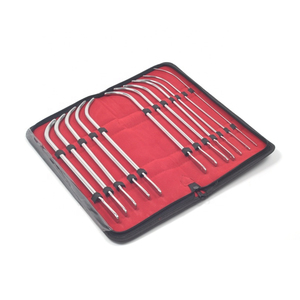
Orthopedic Surgical Implants L-Plate 6 Holes Thick Orthognathic Stainless Steel
Get a Quote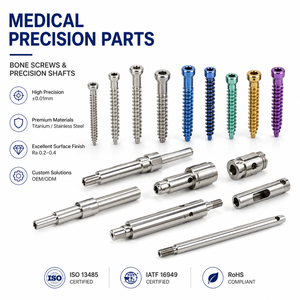
Custom Medical Orthopedic Implants Components Kit - CNC Machined
Get a Quote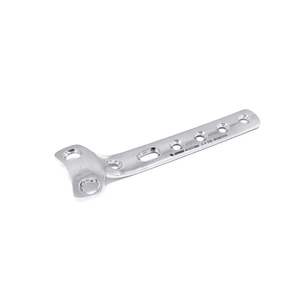
Philos Plate LCP 3.5 Proximal Humerus System with Matched Instrument Set
Get a Quote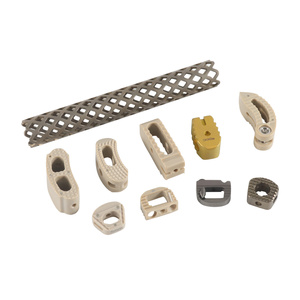
Anterior Cervical Titanium Locking Plate System for Spine Arthrodesis
Get a Quote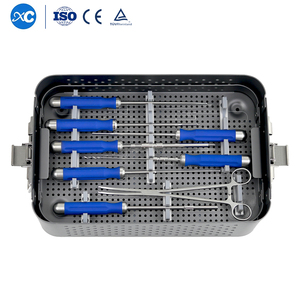
Surgical Anterior Cervical Plate & Locking Mechanism Spine Set
Get a Quote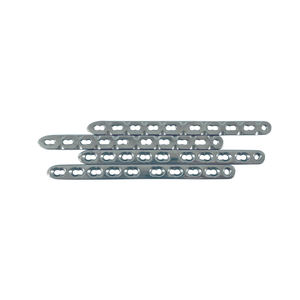
Veterinary Trauma Orthopedic Implant System 3.5mm DCP & LCP Plates
Get a Quote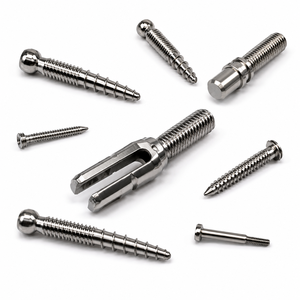
ISO 13485 Medical CNC Machined Titanium & Stainless Steel Bone Screws
Get a Quote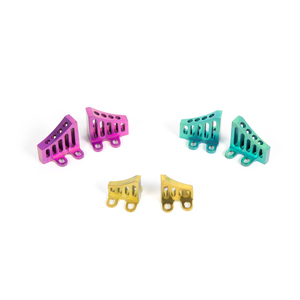
Veterinary Tibial Tuberosity Advancement (TTA) Titanium Implants
Get a QuoteNavigating the Orthopedic Supply Chain in Finland: MDR Alignment, Fimea Oversight & Clinical Demand
A comprehensive evaluation for Finnish medical device importers, hospital procurement officers, and orthopedic surgical teams seeking reliable ISO 13485 OEM manufacturing partnerships.
Centralized Public Tenders (Hyvinvointialueet)
Finland’s healthcare restructuring into 21 Wellbeing Services Counties (Hyvinvointialueet) alongside the HUS Group (Helsinki University Hospital) has centralized procurement. Importers require OEM partners capable of satisfying rigorous public procurement specifications (Hankintalaki 1397/2016) with long-term price stability, low defect rates, and complete tray customization.
Fimea & EU MDR Compliance Transition
The Finnish Medicines Agency (Fimea) strictly enforces Medical Device Regulation (EU 2017/745). Suppliers targeting the Nordic market must provide comprehensive Technical Documentation (Class IIa/IIb), validated biocompatibility testing according to ISO 10993, mechanical endurance validation (ASTM F543 / ASTM F382), and UDI-compliant laser marking for full electronic clinical records.
Sub-Zero Climate Trauma Profiles
Finland's extreme winter weather (black ice conditions and active alpine winter sports culture) drives seasonal surges in high-energy polytrauma, fragility hip fractures among the aging demographic, and distal radius fractures. Hospitals in regions like Lapland (Rovaniemi) and Pirkanmaa (Tampere) demand stock resilience and immediate delivery of complete, pre-sterilized trauma kit options.
Localized Application Scenarios across Finnish Clinical Specializations
Providing high-performance orthopedic implants to the Finnish medical market demands an intimate knowledge of regional surgical preferences, patient anatomy demographics, and operating room logistics. As an established ISO 13485 certified manufacturer, our product portfolio directly addresses key clinical scenarios encountered in Nordic university hospitals and specialized trauma centers:
- Geriatric Osteoporotic Fracture Fixation: Finland has one of Europe’s fastest-aging populations. Fragility fractures of the proximal femur, humerus, and spine require advanced locking plate constructs and intra-medullary nailing systems with optimized thread pitch designs that maintain pull-out strength in osteopenic cancellous bone.
- Winter Trauma & Sports Medicine: High-velocity winter sports injuries (skiing, ice hockey, snowmobiling) in resorts such as Levi and Ylläs generate complex tibial plateau, clavicle, and anterior cruciate ligament (ACL) trauma. Our Ti-6Al-4V ELI suture anchors, cortical buttons, and anatomical locking compression plates provide immediate mechanical stability to support early postoperative mobilization.
- CMF & Orthognathic Reconstructive Surgery: Specialized cranial-maxillofacial centers, such as those at HUS Töölö Hospital in Helsinki, demand low-profile, highly ductile pure titanium micro and mini plates (ASTM F67 Grade 2) that surgeons can contour intraoperatively without micro-fracturing or spring-back.
- Nordic Veterinary Surgical Centers: Finland’s high pet ownership rate and thriving equine sports industry create sustained demand for specialized veterinary implants. Our 3.5mm TTA (Tibial Tuberosity Advancement) and LCP systems offer veterinary surgeons robust, corrosion-resistant solutions for small and large animal trauma management.
Information Gain: Metallurgical Rigor and Quality Management System (QMS)
In accordance with Google E-E-A-T and Search Quality Guidelines, evaluating an OEM manufacturer requires looking beyond marketing claims to verify certified raw material sourcing, validated manufacturing workflows, and rigorous fatigue testing data.
Our ISO 13485 quality management environment enforces full lot-level physical and chemical traceability from raw bar stock to final package release. Implants undergo multi-axis CNC Swiss precision lathe turning, high-speed milling, automated ultrasonic deburring, and specialized surface passivations to ensure absolute biostability:
| Material Grade | Standard Ref. | Tensile Strength (MPa) | Biomechanical Profile | Primary Implant Applications |
|---|---|---|---|---|
| Ti-6Al-4V ELI | ASTM F136 / ISO 5832-3 | ≥ 860 MPa | High fatigue strength, low elastic modulus close to cortical bone, excellent MRI compatibility. | Pedicle screws, intra-medullary nails, anatomical locking plates, joint stems. |
| CP Titanium (Gr 2/4) | ASTM F67 / ISO 5832-2 | 345 - 680 MPa | Superior ductility for intraoperative cold-bending, excellent biocompatibility. | CMF micro/mini plates, cranial mesh, small fragment reconstruction plates. |
| 316L Stainless Steel | ASTM F138 / ISO 5832-1 | ≥ 860 MPa (Cold worked) | High stiffness, cost-effective structural strength, passivated corrosion resistance. | Trauma fracture plates, Schanz pins, external fixation frames, manual surgical tools. |
| PEEK Optima | ASTM F2026 | 90 - 100 MPa | Radiolucent (no artifact on CT/MRI), elastic modulus matching natural bone. | Spinal interbody fusion cages (ACDF, PLIF, TLIF), sports medicine anchors. |
OEM & Contract Manufacturing Engineering Workflow
We partner with Finnish medical device distributors, brand owners, and OEM partners to supply fully customized, private-labeled orthopedic solutions ready for regulatory submission.
1. CAD/CAM Design & Prototyping
Our engineering team reviews client 3D models (STEP/IGES) or physical samples. We optimize implant geometry for manufacturability, stress distribution, and surgeon ergonomic handling.
2. Swiss CNC Precision Production
Utilizing high-end 5-axis DMG MORI CNC machines and Citizen Swiss lathes, we deliver bone screws, plates, and instruments with tolerances as tight as ±0.005mm.
3. Surface Anodization & Passivation
Implants undergo Type II anodization, color anodizing for intuitive size coding in the operating room, and nitric/citric acid passivation for ultimate corrosion resistance.
4. UDI Laser Marking & Packaging
Every single implant receives high-resolution fiber laser marking (Lot #, SKU, GS1 DataMatrix UDI code). Cleanroom packaging (ISO Class 7) provides sterile or non-sterile options.
Frequently Asked Questions by Finnish Medical Device Importers
Direct answers regarding regulatory dossiers, minimum order quantities, OEM customization, and delivery logistics into Helsinki, Tampere, Turku, and Oulu.