ISO 13485
Certified Medical Manufacturing
100%
Traceable Grade 5 Titanium & 316L
EU MDR
Ready Technical Documentation Dossiers
24/7
OEM Engineering & Export Support
Tender-Ready Implant Portfolio
High-Precision Orthopedic Fixation Systems for Hungarian Suppliers
Explore our primary implant and trauma fixation portfolio engineered to meet the demanding standards of Hungarian healthcare facilities, from emergency damage-control trauma to complex limb reconstruction.
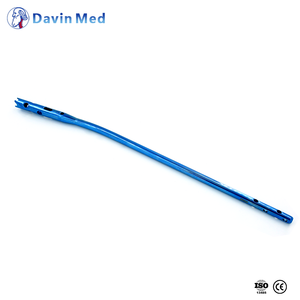
Multiple Length Cannulated Tibial Interlocking Intramedullary Nail
Send an Inquiry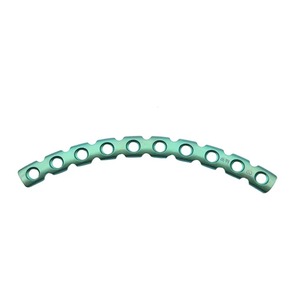
DCP Reconstruction 3.5mm Plate Titanium Grade 5 Trauma System
Send an Inquiry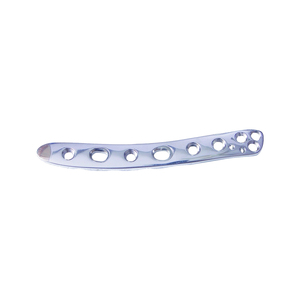
Stainless Steel Orthopedic Trauma & External Fixation Components
Send an Inquiry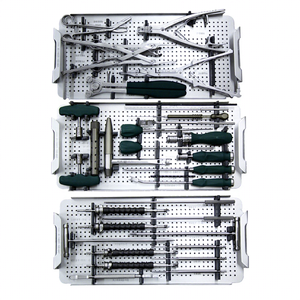
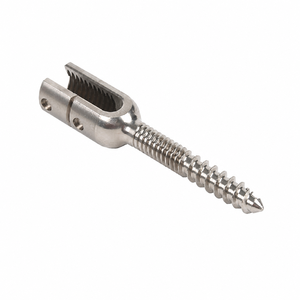
Titanium Alloy COXII Pedicle Screw-Rod 6.0 Spinal System
Send an Inquiry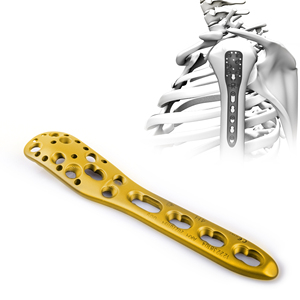
Proximal Humeral Titanium Locking Plate (Philos Anatomical System)
Send an Inquiry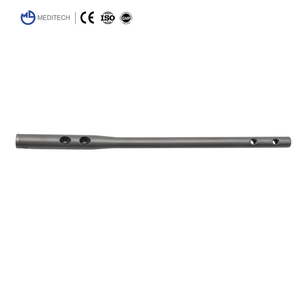
Titanium Alloy Intramedullary Nail System (Class III Medical Implants)
Send an Inquiry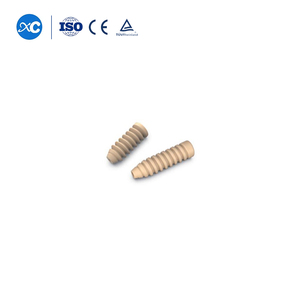
Sports Medicine PEEK Interference Screw for ACL/PCL Reconstruction
Send an Inquiry
Industry White Paper
The Hungarian Orthopedic External Fixation Market: Procurement & Clinical Dynamics
An authoritative strategic analysis for hospital procurement officers, medical device importers, and trauma department chairpersons across Hungary.
Healthcare Infrastructure & Trauma Fixation Demands in Hungary
Hungary’s orthopedic and trauma surgical ecosystem operates within a structured network governed by regional university centers—such as Semmelweis University in Budapest, the University of Debrecen, the University of Szeged, and the University of Pécs—alongside dedicated national institutes like the Manninger Jenő National Institute of Traumatology (Országos Traumatológiai Intézet).
Over the past decade, trauma centers in Hungary have increasingly adopted Damage Control Orthopedics (DCO) protocols for high-energy polytrauma cases resulting from industrial, agricultural, and transit accidents on major arterial highways (e.g., M1, M3, M7). External fixation plays a pivotal role in DCO, offering rapid stabilization of open fractures (Gustilo-Anderson Grade II/III), unstable pelvic ring injuries, and severe articular dislocations before definitive internal fixation can be safely conducted.
- Public Healthcare Financing (NEAK): Products must align with Nemzeti Egészségbiztosítási Alapkezelő reimbursement groups and budget constraints.
- Shift Toward Carbon Fiber Components: Radiotranslucent carbon fiber connecting rods are increasingly specified in Hungarian tender documents to allow intraoperative artifacts-free fluoroscopy and post-operative CT/MRI evaluation.
- Pin-Tract Infection Mitigation: Preference for Hydroxyapatite (HA) coated Schanz pins to minimize pin loosening in prolonged external frame installations.
Key Hungarian Tender Procurement Criteria
1. EU MDR 2017/745 Compliance: Mandatory CE mark certification backed by complete Notified Body audits. Legacy MDD certificates are rapidly being phased out in Hungarian public tenders.
2. Modular Interchangeability: Trauma kits must allow seamless combination of unilateral bar-to-pin clamps, multi-pin clamps, carbon rods, and transfixation pins without requiring secondary instrument trays.
3. Rapid Delivery & Local Warehouse Stocks: Hungarian distributors require manufacturers who offer guaranteed short lead times to Budapest to maintain emergency hospital consignment stocks.
4. OEM Laser Marking & UDI Traceability: Unique Device Identification (UDI-DI / UDI-PI) laser marked directly on implants and frames for automatic barcode scanning into hospital management systems.
Biomechanical Engineering Excellence
Engineering Principles of Our External Fixation Systems
External fixation is not merely a temporary mechanical clamp; it is a dynamic biological system designed to balance stiffness with micro-motion to accelerate fracture healing.
Material Metallurgy & Bio-Grade Choice
We utilize high-grade Ti-6Al-4V ELI (ASTM F136) titanium alloy and 316L Surgical Stainless Steel (ASTM F138). Titanium components offer superior biocompatibility, a lower modulus of elasticity closer to cortical bone, and reduced artifact noise during postoperative magnetic resonance imaging (MRI).
Precision Thread & Pin Mechanics
Our Schanz pins feature computer-optimized thread pitch designs (corticocancellous dual threads) with self-drilling and self-tapping tips. This design drastically reduces thermal osteonecrosis during insertion—a critical factor in preventing premature pin loosening in complex trauma cases.
Carbon Fiber Rod Mechanics
Our continuous-filament carbon fiber connecting rods deliver high flexural rigidity with zero radiopacities under X-ray. Surgeons can evaluate fracture reduction, callus formation, and anatomical axial alignment in real time without removing or adjusting frame constructs.
| Fixator System Type | Primary Clinical Indications | Key Material Specifications | Biomechanical Advantages | Hungarian Hospital Usage |
|---|---|---|---|---|
| Unilateral Modular Fixator | Tibial/Femoral open fractures, polytrauma DCO | Ti-6Al-4V / 316L Stainless Steel | Rapid single-ball clamp insertion; high torsional stiffness | Standard Emergency Stock |
| Ilizarov Circular Fixator | Complex non-unions, limb lengthening, deformity correction | High-tensile Aircraft Aluminum / Stainless Steel | 3D multi-planar distraction/compression strain control | University Orthopedic Clinics |
| Hybrid External Fixator | Peri-articular fractures (distal tibia, tibial plateau) | Carbon Fiber Rings + Metaphyseal Pins | Combines wire tensioning with rigid rod pin stability | Regional Trauma Centers |
| Pelvic C-Clamp System | Unstable pelvic ring disrupture, severe hemorrhage control | High-Strength Stainless Steel & Titanium | Direct sacroiliac joint compression for rapid hemostasis | Polytrauma ICU Units |
| Dynamic Wrist Fixator | Comminuted intra-articular distal radius fractures | Anodized Aluminum Alloy & Titanium Screws | Controlled joint distraction preserving radiocarpal motion | Outpatient Hand Surgery |
Clinical Applications
Localized Application Scenarios Across Hungarian Healthcare
How our external fixation solutions fulfill specific clinical and surgical operational mandates in the Hungarian medical landscape.
Emergency Traumatology & Highway Polytrauma
Hospitals located along Hungary's transit arteries require rapid-assembly trauma kits. Our pre-sterilized modular unilateral fixator kits enable trauma surgeons to construct stable bridging frames in under 15 minutes, controlling soft-tissue swelling and stabilizing Gustilo Grade III open fractures before definitive plating or intramedullary nailing.
Reconstructive Deformity & Bone Defect Surgery
In specialized academic clinics such as Semmelweis and Debrecen, limb reconstruction teams utilize our circular Ilizarov and hexapod-compatible rings for distraction osteogenesis, corrective osteotomies, and treating post-traumatic osteomyelitis bone losses.
Disaster Preparedness & Military Medical Reserves
Our lightweight, highly durable stainless steel external fixation kits are optimized for long-term storage in Hungarian defense and emergency response stockpiles, retaining full mechanical integrity without degradation over extended shelf-lives.
Regulatory & Manufacturing Excellence
Empowering Hungarian Importers with EU MDR Compliance
We remove the burden of regulatory friction for Hungarian medical device distributors through rigorous quality management and comprehensive Technical Dossiers.
ISO 13485:2016 Certified Production
Our manufacturing facilities operate under strict ISO 13485 quality control protocols. Every manufacturing step—from raw titanium billet inspection to multi-axis CNC milling, passivating, and cleanroom packaging—is fully documented.
EU MDR 2017/745 Ready Dossiers
We provide complete Technical Files, Clinical Evaluation Reports (CER), Risk Management Documents (ISO 14971), and Biocompatibility Testing (ISO 10993) required for smooth registration with the Hungarian National Institute of Pharmacy and Nutrition (OGYÉI / NNK).
Custom OEM & Private Label Branding
For established Hungarian distributors, we offer custom laser engraving for brand logos, customized catalog part numbers, and specialized instrument tray layouts tailored to local surgical ergonomics.
Frequently Asked Questions
Buyer FAQ: Orthopedic External Fixation for Hungary
Direct technical and regulatory answers for Hungarian medical suppliers, hospital procurement teams, and surgical staff.
What regulatory documentation do you provide for hospital tender submission in Hungary? +
We provide full technical documentation compliant with EU Regulation 2017/745 (MDR). This includes CE Certificates issued by accredited Notified Bodies, ISO 13485:2016 Quality Management System certificates, Material Mill Inspection Certificates (ASTM F136 / ASTM F138), ISO 10993 Biocompatibility Test Reports, and Hungarian/English Instructions for Use (IFU).
Are your external fixators compatible with established modular systems used in Europe? +
Yes. Our modular external fixation components feature standard rod diameters (e.g., 11.0mm carbon fiber rods for large fragments, 8.0mm for medium, and 4.0mm/3.0mm mini systems) and pin connection geometries that conform to international biomechanical standards. They integrate seamlessly with standard surgical drill drivers and instrument sets utilized across European trauma centers.
How do you handle shipping logistics, customs clearing, and delivery times to Budapest? +
We work with international express carriers (DHL, FedEx, UPS) and specialized air freight forwarders providing door-to-door delivery directly to warehouses in Budapest, Debrecen, or Szeged. Standard air shipments typically arrive within 5 to 7 business days, with full commercial invoice, packing list, and custom declaration documents prepared to expedite Hungarian customs clearance.
Can Hungarian distributors order customized surgical instrument trays and custom color anodizing? +
Absolute precision OEM customization is one of our primary core strengths. We supply custom graphic sterilization trays manufactured from aluminum or PPSU, tailored with silicone brackets to fit your precise kit layout. Implants and clamps can also undergo color anodization (e.g., gold, blue, green, violet) to assist theater nurses in fast intraoperative size identification.
What are the mechanical advantages of your Hydroxyapatite (HA) coated Schanz pins? +
Our HA-coated Schanz pins feature a micro-thin layer of crystalline hydroxyapatite applied via plasma spray technology. This enhances bone-to-pin osteointegration, significantly increasing pull-out strength in osteoporotic bone and lowering the incidence of pin-tract infection and premature pin loosening during long-term frame retention.
What is the minimum order quantity (MOQ) for OEM/Private Label external fixation contracts? +
We maintain flexible MOQ policies tailored to support growth-oriented regional medical suppliers in Hungary. Standard catalog products can be ordered in low batch volumes for sample validation and clinical evaluation. For full private-label packaging and custom laser engraving, MOQs are negotiated based on annual forecast commitments.
How do your external fixation solutions assist in NEAK reimbursement bidding? +
By maintaining high-efficiency 5-axis CNC automated manufacturing, we deliver premium EU MDR-compliant titanium and stainless steel implants at highly competitive direct-factory price points. This cost-performance advantage enables our Hungarian distributor partners to submit aggressive, highly profitable bids in national public healthcare (NEAK) hospital procurement tenders.
How can we request physical sample kits for hospital clinical trials in Hungary? +
Distributors and chief trauma surgeons can request non-sterile evaluation samples or complete demo instrument trays directly through our export department. Click the inquiry button below to submit your business details, target hospital project, and required product specs. Our international sales engineers will contact you within 24 hours.
Partner with a World-Class Orthopedic Fixation Manufacturer
Expand your orthopedic portfolio in Hungary with top-tier, EU MDR-compliant external fixation systems, intramedullary nails, and spinal implants backed by complete technical documentation and direct factory engineering support.