Export-Ready Biocompatible Orthopedic & Veterinary Systems
Direct factory supply of implantable trauma, spine, joint, and veterinary systems fully tested according to ISO 10993 cytotoxicity, hemocompatibility, and mechanical fatigue standards for the Canadian market.
Navigating Biocompatibility Standards & Health Canada Licensing for the Toronto Healthcare Market
Providing actionable insight into biological risk evaluation, OEM manufacturing controls, and regulatory submission pathways for Ontario orthopedic device importers.
The Critical Role of Biocompatibility Testing in Canadian Medical Procurement
The Greater Toronto Area (GTA)—anchored by premier clinical networks including the University Health Network (UHN), Sunnybrook Health Sciences Centre, Mount Sinai Hospital, and St. Michael's Hospital—maintains some of the world's most rigorous clinical evaluation standards for implantable medical devices. For orthopedic procurement directors, OEM medical device brand owners, and hospital supply chain managers across Ontario, sourcing orthopedic implants requires far more than dimensional precision. It demands verifiable, audit-ready biological safety credentials that satisfy Health Canada’s Medical Devices Regulations (SOR/98-282) and international ISO 10993 standards.
As dedicated factory exporters supplying international distributors, our manufacturing infrastructure bridges high-precision CNC machining with exhaustive laboratory validation. Every permanent metallic, polymeric, and ceramic surgical implant exported to the Toronto market undergoes rigorous material characterization and biological evaluation to eliminate risks of cytotoxicity, adverse tissue response, systemic toxicity, and long-term ion leaching.
Health Canada Device Licensing (MDL & MDEL) Integration
Class III and Class IV orthopedic implants—such as pedicle screws, total hip prostheses, and intramedullary nails—require a Health Canada Medical Device Licence (MDL). Importers and distributors based in Mississauga, Markham, and Toronto operating under a Medical Device Establishment Licence (MDEL) rely on factory-direct technical files (STED format) including full ISO 10993 biological evaluation reports to ensure rapid regulatory approval without costly deficiency letters.
Risk Mitigation via ISO 13485 & MDSAP Frameworks
Our production facilities operate under strict ISO 13485:2016 quality management systems aligned with the Medical Device Single Audit Program (MDSAP). This ensures that batch-to-batch chemical cleanliness, surface passivation, laser UDI marking, and sterile packaging validation mirror the stringent expectations of Canadian regulatory bodies and hospital purchasing alliances like Plexxus and Mohawk Medbuy.
The ISO 10993 Biocompatibility Testing Battery for Permanent Surgical Implants
Exhaustive laboratory testing protocols conducted to validate tissue integration, hemocompatibility, and long-term chemical safety of metallic and polymeric implants.
| ISO Standard | Evaluation Parameter | Testing Methodology & Substrate | Acceptance Criteria for Canadian Market |
|---|---|---|---|
| ISO 10993-5 | In Vitro Cytotoxicity | L929 Mouse Fibroblast MEM Elution / MTT Assay | Zero Cell Toxicity Cell viability > 70% relative to control; no cell lysis or morphological changes. |
| ISO 10993-10 / 23 | Sensitization & Irritation | Guinea Pig Maximization Test (GPMT) & Intracutaneous Reactivity | No delayed hypersensitivity; primary irritation index score < 0.4. |
| ISO 10993-11 | Systemic Toxicity & Pyrogenicity | Acute/Subacute Systemic Toxicity (Rabbits) & LAL Endotoxin Test | Bacterial endotoxin levels < 0.5 EU/mL (or < 20 EU/device) per USP <85> guidelines. |
| ISO 10993-6 | Local Effects Post-Implantation | Histopathological evaluation in muscular & bone tissue (4, 12, 26 weeks) | Normal osteogenesis; fibrous capsule formation within acceptable limits; zero osteolysis. |
| ISO 10993-18 | Chemical Characterization | ICP-MS, GC-MS, LC-MS Extractables & Leachables (E&L) Profiling | Leachable heavy metals (Ti, Al, V, Ni, Cr, Co) well below Toxicological Threshold of Concern (TTC). |
| ISO 10993-4 | Hemocompatibility | Hemolysis (Direct/Indirect Contact), Complement Activation, Thrombogenicity | Hemolytic index < 2%; no platelet aggregation or thrombus formation during blood contact. |
| ISO 10993-19 | Physico-Chemical Surface Analysis | X-ray Photoelectron Spectroscopy (XPS), Scanning Electron Microscopy (SEM-EDS) | Uniform oxide layer thickness (> 5nm TiO2 layer); absence of foreign particulate contaminants. |
In Vitro Cytotoxicity Assays
Evaluation via ISO 10993-5 ensures that extractable substances from raw materials (such as residual machining oils or polishing compounds) do not induce cellular death or impair osteoblast proliferation. Devices undergo 72-hour extraction in polar and non-polar media prior to assay execution.
Endotoxin & Pyrogen Monitoring
For orthopedic trauma and spine hardware shipped to Toronto acute care centers, pyrogen-free status is paramount. Our post-cleaning ultrasonic aqueous wash cycles are validated to consistently produce devices below 0.25 EU/mL, protecting surgical patients from toxic shock and aseptic loosening.
Histopathological Osteo-Integration
Implantation studies (ISO 10993-6) in cortical and cancellous bone models confirm direct bone-to-implant contact (BIC). Trabecular 3D-printed titanium implants demonstrate dense lamellar bone ingrowth without inflammatory giant-cell infiltration.
Medical-Grade Implant Alloys & Polymer Specifications
Controlling chemical composition, microstructural grain size, and mechanical strength to meet rigid international ASTM and ISO standards for human and animal surgical intervention.
| Material Class | Governing Standard | Chemical Composition Highlights | Mechanical Properties & Biocompatibility Profile |
|---|---|---|---|
| Ti-6Al-4V ELI | ASTM F136 / ISO 5832-3 | Ti-balance, Al 5.5-6.5%, V 3.5-4.5%, Interstitials (Fe < 0.25%, O < 0.13%) | Tensile Strength > 860 MPa. Extra Low Interstitial (ELI) grade provides maximum fracture toughness for pedicle screws & trauma plates. |
| CP Titanium (Gr 2/4) | ASTM F67 / ISO 5832-2 | Commercially Pure Titanium, Fe < 0.30-0.50%, O < 0.25-0.40% | High ductility & bendability. Ideal for intraoperative contouring of CMF maxillofacial micro-plates and cranial mesh. |
| 316L VAR Stainless Steel | ASTM F138 / ISO 5832-1 | Cr 17-19%, Ni 13-15%, Mo 2.25-3.0%, Low Carbon (C < 0.03%) | Vacuum Arc Remelted (VAR) to eliminate non-metallic inclusions. Superior corrosion resistance; passivated per ASTM F86. |
| CoCrMo Alloy | ASTM F1537 / ISO 5832-12 | Co-balance, Cr 26-30%, Mo 5-7%, Ni < 1.0% | Ultra-high wear resistance and hardness (> 35 HRC). Primary choice for femoral heads and total knee bearing surfaces. |
| PEEK-OPTIMA | ASTM F2026 | Polyetheretherketone thermoplastic, 100% unfilled or radiopaque BaSO4 filled | Elastic modulus (3.5 GPa) closely matching human cortical bone; radiolucent for artifact-free post-op MRI/CT imaging. |
| UHMWPE | ASTM F648 / ISO 5834-2 | Ultra-High Molecular Weight Polyethylene, cross-linked, vitamin-E stabilized | Extremely low coefficient of friction against CoCrMo/Ceramic heads; highly resistant to oxidative wear in total joint replacement. |
Surface Anodization & Passivation Controls
All metallic implants undergo chemical passivation per ASTM F86 (nitric acid / citric acid bath) to strip free iron particles and generate a stable, self-healing titanium oxide (TiO2) or chromium oxide passivation layer. Type II electro-anodization enhances fatigue life and reduces friction, while Type III color anodization provides vivid, color-coded size identification for operating room scrub nurses.
Trabecular Porosity & 3D Printing Biocompatibility
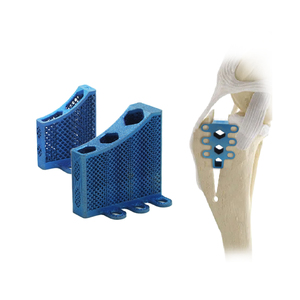
Utilizing Selective Laser Melting (SLM) and Electron Beam Melting (EBM) additive technologies, our factory manufactures porous titanium implants featuring interconnected pore networks (pore size 400-700 μm, porosity 65-80%). This architecture matches the modulus of cancellous bone, encouraging rapid vascularization and biological fixation in spinal fusion and veterinary TTA procedures.
Localized Application Scenarios Across the Greater Toronto Area
Tailoring implant design, instrument ergonomics, and packaging solutions to meet the demands of Ontario's regional healthcare ecosystems.
1. Level-1 Trauma & Acute Fracture Centers
Primary Settings: Sunnybrook Health Sciences Centre, St. Michael’s Hospital (Unity Health Toronto).
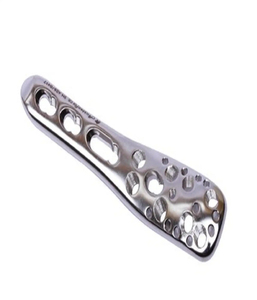
Clinical Requirement: Rapid-response trauma fixator systems, multi-fragment anatomical locking compression plates, and cannulated intramedullary femoral/tibial nails. Implants must feature high fatigue strength to withstand non-union and complex comminuted fracture loads in polytrauma care.
- Pre-contoured anatomical curvature minimizing intra-op bending
- Sterile-packaged single-use emergency trauma sets
- Fully traceable lot codes for hospital inventory systems
2. Elective Arthroplasty & Spine Reconstruction
Primary Settings: Toronto Western Hospital (UHN), Mount Sinai Hospital, Trillium Health Partners (Mississauga).
Clinical Requirement: Primary and revision total hip/knee prostheses and thoracolumbar spinal fusion systems. Demands ultra-low wear bearing surfaces (CoCrMo/UHMWPE) and radiolucent PEEK cages to optimize long-term clinical outcomes in aging demographic profiles across Ontario.
- HA-coated titanium stems for cementless primary fixation
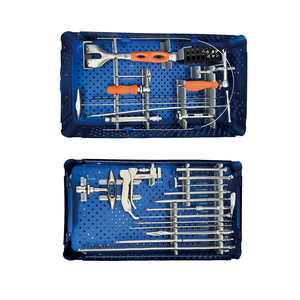
- MIS pedicle screw instruments with low insertion torque
- Complete ISO 10993-6 chronic tissue safety documentation
3. Specialized Veterinary Surgical Networks
Primary Settings: Toronto Veterinary Emergency Hospital (TVEH), OVC Referral Networks, GTA Specialty Clinics.
Clinical Requirement: High-performance veterinary orthopedic implants including Tibial Tuberosity Advancement (TTA) wedges, TPLO plates, micro-fragment mini locking plates, and custom acetabular plates for canine/feline stifle and hip stabilization.
- 3D printed titanium cages optimized for bone graft packing
- 316L VAR stainless steel for economical veterinary trauma care
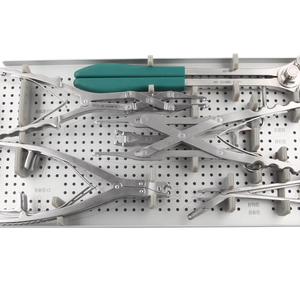
- Compact, sterilizable veterinary kit configurations
Key Trends Driving Orthopedic Procurement in Ontario
Strategic supply chain evolution, sustainability, and technological shifts transforming how Canadian medical device distributors select overseas manufacturing partners.
1. Supply Chain Diversification & Direct Factory OEM
Canadian healthcare suppliers are moving away from multi-tiered broker models toward direct OEM/ODM factory partnerships. By establishing direct contracts with certified manufacturers capable of delivering ISO 10993 compliance, Toronto distributors reduce procurement costs by 30-45% while retaining complete oversight of device design, laser marking, and labeling.
2. Adoption of Additive Trabecular Titanium
With orthopedic surgeons in Toronto increasingly favoring porous metals over traditional plasma-sprayed coatings, demand for 3D-printed titanium implants (TTA cages, interbody fusion devices, acetabular cups) is surging. Direct-printed porous lattice structures eliminate the risk of coating delamination while providing superior osseointegration.
3. Pre-Sterilized, Single-Use Implants & Kitting
Hospital sterilizer capacity constraints in the GTA have accelerated the shift toward factory pre-sterilized implants packed in double ISO Class 7 cleanroom blisters. Gamma or Ethylene Oxide (EtO) sterilized kits eliminate hospital reprocessing costs and provide 100% sterility assurance at the point of care.
4. Rigorous Traceability & Unique Device Identification (UDI)
Health Canada regulations mandate comprehensive barcode traceability from raw material melt to patient implantation. Overseas factories must supply GS1-compliant UDI laser-etched matrix codes on all implants, ensuring seamless integration with Canadian electronic health record (EHR) and ERP systems.
Why Toronto Medical Importers Partner with Orthomanufacturer Medical Co., Ltd
Combining multi-axis Swiss CNC precision, accredited biological laboratory validation, and flexible OEM private-label production tailored to Canadian regulatory specifications.
5-Axis CNC Precision Engineering
Operating high-speed Japanese Tsugami Swiss-type lathes and German DMG MORI 5-axis machining centers, producing complex screw threads, locking plate combi-holes, and intramedullary nail cannulations with micro-tolerances down to ±0.005mm.
ISO Class 7 Cleanroom Cleaning
Automated multi-stage ultrasonic washing utilizing purified reverse-osmosis (RO) water and neutral detergent baths, followed by cleanroom primary packaging inside certified ISO Class 7 environments to guarantee low particulate counts.
Complete Regulatory Technical Files
We provide Canadian distributors with full technical documentation packets including raw material mill certificates, ISO 10993 biological safety reports, biomechanical fatigue test data (ASTM F543 / ASTM F1717), and STED files for Health Canada MDL submissions.
Frequently Asked Questions by Canadian Medical Importers
Addressing key biological testing, regulatory, shipping, and OEM customization queries for purchasing decision-makers in Toronto and Ontario.
How do your ISO 10993 biocompatibility test reports support Health Canada Device Licensing (MDL)?
What specific titanium and steel material certifications are included with each export shipment to Toronto?
Can you manufacture custom or private-label orthopedic implants under our Toronto company's brand name?
What are your typical production lead times and logistics routes into the Greater Toronto Area?
How do you ensure instrument-implant interface compatibility and prevent intraoperative driver stripping?
What sample evaluation process is available for Ontario hospital procurement committees and distributors?
Partner with a Certified Orthopedic Implant Exporter for Toronto
Elevate your medical product portfolio with factory-direct access to ISO 10993 tested trauma, spine, joint, and veterinary implant systems. Contact our specialized export engineering team today for technical dossiers, OEM quotations, and catalog requests.
Get Catalog