CE & ISO Certified Orthopedic Implants & Surgical Systems
Complete implant portfolios delivered with complete technical documentation packages ready for URPL registration and Polish National Health Fund (NFZ) hospital procurement.
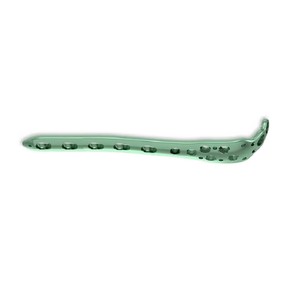
Wholesale Orthopedic Implants Export Quality Surgical Implant Manufacturer and Supplier
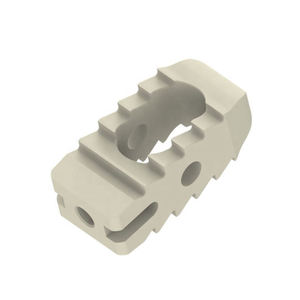
Lumbar Interbody Fusion Cage PEEK Orthopedic Implant Bone Fracture Fixation Class III Medical Device Model 7500 CE Certified
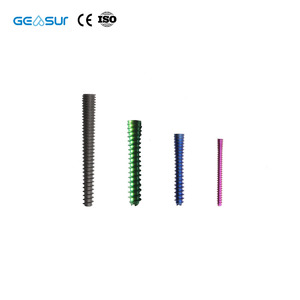
Geasure CE ISO Certified Class III Titanium Alloy Headless Compression Cannulated Screw-Orthopedic Implant for Orthopedic
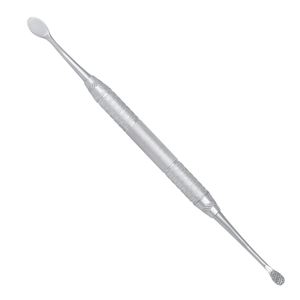
1X Miller Colburn Cross Cut Surgical Bone File Stainless Steel Dental Implant Orthopedic Deburring Finishing Tool Reusable Pro X
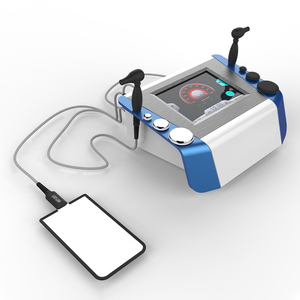
New Arrival Orthotic Physiotherapy & Rehabilitation Scan Leg Electrode Diagnostic Machine
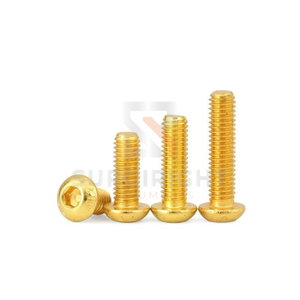
Wholesale Bone Screw Export Quality Orthopedic Implant Manufacturer And Supplier For Trauma Surgery
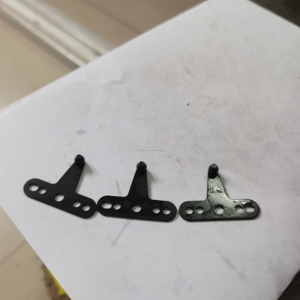
Medical Grade AM ORTHO Right Angled Titanium Orthopedic Trauma Implants Manual Power Source
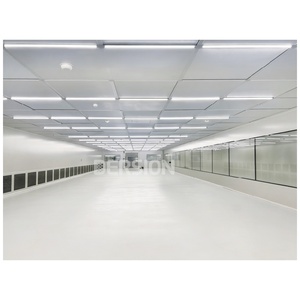
Orthopedic Implant ISO Class 7 Cleanroom Manufacturing & Sterile Packaging Facility
Navigating EU MDR 2017/745: The Essential Orthopedic Implant Documentation Package for the Polish Market
The European medical device ecosystem has undergone a profound structural transformation following the transition from the legacy Medical Device Directive (MDD 93/42/EEC) to the stringent European Medical Device Regulation (EU MDR 2017/745). For orthopedic distributors, hospital purchasing syndicates, and OEM importers operating in Poland, securing high-precision surgical hardware is no longer sufficient on its own. The commercial viability of surgical devices hinges directly upon the completeness, scientific rigor, and legal auditability of the Orthopedic Implant Documentation Package.
In Poland, the primary regulatory oversight body—the Urząd Rejestracji Produktów Leczniczych, Wyrobów Medycznych i Produktów Biobójczych (URPL)—requires thorough notifications and technical verifications before any Class IIa, Class IIb, or Class III orthopedic implant can be legally placed on the market or qualified for public healthcare tenders administered by the Narodowy Fundusz Zdrowia (NFZ). As an established high-tech OEM/ODM manufacturer specializing in spine, trauma, joint, and maxillofacial systems, Orthomanufacturer Medical Co., Ltd delivers end-to-end Technical Dossiers meticulously aligned with Annex II and Annex III of Regulation (EU) 2017/745.
MDR Annex II Technical Dossiers
Comprehensive device descriptions, intended purpose, GSPR checklists, risk management files according to ISO 14971:2019, and full design verification protocols.
Full Material Traceability
Complete mill certificates for implantable Ti-6Al-4V ELI (ASTM F136), CP Titanium (ASTM F67), PEEK Optima (ASTM F2026), and 316L (ASTM F138) linked to laser lot codes.
Polish URPL Ready Documentation
Pre-translated Instructions for Use (IFU), outer packaging layout templates, EUDAMED UDI-DI/UDI-PI mapping, and Polish clinical evaluation summaries.
The 8 Technical Pillars of Our Polish Orthopedic Documentation Dossier
When Polish medical device distributors submit documentation to hospital tender committees or regulatory auditors, missing data points lead to immediate disqualification or lengthy administrative delays. Our factory provides an exhaustive, turn-key technical portfolio engineered to satisfy the rigorous evaluation standards of Notified Bodies (e.g., TÜV, BSI, DNV) and local Polish enforcement agencies.
| Dossier Module | Standard / Regulation | Key Elements Included in Documentation Package | Polish Tender Value |
|---|---|---|---|
| 1. Device Identification & UDI | EU MDR Article 27 / GS1 Standard | Basic UDI-DI assignment, UDI-PI coding logic, EUDAMED database registration XML dataset, barcode verification reports. | Mandatory URPL |
| 2. GSPR Checklist | MDR Annex I (GSPR 1 - 23) | Cross-referenced evidence matrix mapping every general safety and performance requirement to specific testing reports. | High Audit Priority |
| 3. Metallurgical & Raw Material | ASTM F136, ASTM F2026, ISO 5832 | Raw material mill test certificates (Chemical analysis, mechanical tensile/yield strength, grain size analysis, microstructural phase verification). | NFZ Quality Points |
| 4. Biocompatibility Dossier | ISO 10993 Series (Parts 1, 3, 5, 6, 10, 11) | Cytotoxicity, sensitization, intracutaneous reactivity, systemic toxicity, subchronic toxicity, and implantation effect reports. | Safety Essential |
| 5. Biomechanical Validation | ASTM F1717, ASTM F543, ASTM F2077 | Static axial compression, dynamic fatigue resistance testing (run-out at 5 million cycles), pull-out strength, and torsional yield testing. | Surgeon Confidence |
| 6. Sterilization & Shelf-Life | ISO 11137 (Gamma) / ISO 11607 | Bioburden testing, dose audit reports, sterile barrier package integrity (seal strength, bubble leak), accelerated aging (5-year validation). | Infection Control |
| 7. Clinical Evaluation Report (CER) | MDR Article 61 / MDCG 2020-6 | Systematic literature review, equivalent device appraisal, clinical safety data analysis, and Post-Market Clinical Follow-up (PMCF) plan. | Regulatory Approval |
| 8. Localization Package (Poland) | Polish Medical Device Act 2022 | Polish IFU (Instrukcja Użycia), symbol explanations per ISO 15223-1, surgical technique guides, liability release frameworks. | Tender Prerequisite |
Orthopedic Implant Product Families Servicing Polish Clinical Procedures
Poland's surgical volumes have experienced sustained expansion across provincial trauma centers, clinical university hospitals (Szpitale Uniwersyteckie), and private orthopedic clinics. To support this broad clinical demand, Orthomanufacturer Medical Co., Ltd manufactures integrated implant-instrument ecosystems designed for seamless intraoperative performance.
Spine Fixation & Interbody Systems
Our thoracolumbar pedicle screw systems utilize dual-thread geometry for maximized pedicular purchase. Paired with PEEK Optima (ASTM F2026) lumbar cages (PLIF, TLIF, ALIF) featuring tantalum radiopaque markers, these implants offer radiolucency and an elastic modulus matching cancellous bone to minimize stress shielding.
Intramedullary Nailing & Trauma Fixation
Engineered for long-bone fracture stabilization, our cannulated femoral, tibial, and humeral intramedullary nails feature anatomical curvature and multi-planar distal locking options. Supplied with carbon-fiber target aiming arms to achieve precise distal screw placement under fluoroscopy.
Anatomical Locking Compression Plates
Pre-contoured titanium alloy (Ti-6Al-4V ELI) plates for distal radius, proximal humerus, distal femur, and tibial plateau. Combination holes accommodate both angular stable locking screws and dynamic compression cortical screws, facilitating optimal biological fixation.
Polish Healthcare Market Trends & Public Procurement Tenders (Prawo Zamówień Publicznych)
Procurement of medical devices by public healthcare facilities in Poland is strictly governed by the Polish Public Procurement Law (Prawo Zamówień Publicznych - PZP). Hospital tender criteria have progressively evolved beyond pure unit-price evaluation. Today, tender scoring formulas routinely allocate significant weight (up to 40%) to technical characteristics, documentation validity, material quality, and instrument tray ergonomics.
Distributors partnering with Orthomanufacturer Medical Co., Ltd gain a distinct competitive advantage in Polish public tenders through:
- ✓ Rapid Technical Qualification: Pre-assembled MDR Annex II/III compliance files dramatically accelerate tender submission lead times from months to days.
- ✓ Zero Interoperability Risk: Complete system matching (implants + color-coded instruments + container trays) eliminates intraoperative mismatch claims.
- ✓ Private Label & OEM Flexibility: Customizable laser-etching for local Polish distributor brand building, including customized lot numbering structures.
Advanced Precision Manufacturing & ISO 14644 Class 7 Cleanroom Validation
Our state-of-the-art manufacturing campus operates under a certified ISO 13485:2016 Quality Management System. Raw bar stocks undergo rigorous optical emission spectrometry (OES) upon receipt to verify elemental purity. Production leverages ultra-precision 5-axis CNC Swiss-type lathes, multi-tasking machining centers, and automated wire electrical discharge machining (EDM).
Post-machining processes include controlled chemical deburring, electropolishing, and Type II anodization for vibrant, wear-resistant color coding. Cleanroom processing takes place inside validated ISO Class 7 cleanrooms, where automated ultrasonic cleaning removes inorganic particulate contaminants prior to double-blister sterile barrier packaging.
Frequently Asked Questions by Polish Medical Importers & Procurement Teams
What regulatory documents are included in your standard Polish Documentation Package? +
How do you support product notification with the Polish URPL authority? +
Can we request OEM private-label laser marking and Polish packaging customization? +
What raw material grades are used for your orthopedic implant lines? +
What is the process for ordering clinical evaluation samples for hospital trial sets? +
What are the lead times for manufacturing and exporting full implant systems to Poland? +
Why Leading European Importers Partner with Orthomanufacturer Medical Co., Ltd
With decades of dedicated biomedical manufacturing experience, Orthomanufacturer Medical Co., Ltd stands as a reliable, high-precision supply chain partner for orthopedic brands across Europe. We bridge the gap between rigorous European regulatory compliance and cost-efficient high-volume production.
Defect-Free Guarantee
100% dimensional verification using automated optical CMM measurement systems and thread pitch go/no-go gauges on every single manufacturing lot.
Dedicated Polish Account Managers
Direct access to regulatory engineers and export project managers familiar with Central Eastern European regulatory frameworks and logistics.
Full System Compatibility
Matched instrumentation sets, surgical technique manuals, and sterilization trays designed in harmony with implant geometry.
Request Your Orthopedic Implant Technical Documentation Package
Partner with an ISO 13485:2016 certified factory ready to supply your Polish business with EU MDR compliant dossiers, samples, and competitive OEM terms.