Featured OEM/ODM Orthopedic Systems
Precision-engineered spinal, trauma, joint, and sports medicine implant portfolios verified to ASTM F136 and ASTM F2026 international standards.
Executive Summary: Sourcing Orthopedic Implants in Southeast Asia vs Global Hubs
The global orthopedic implant market is experiencing a profound paradigm shift driven by supply chain diversification, rising surgical volumes in emerging economies, and the demand for high-precision manufacturing. Procurement directors, hospital purchasing committees, and medical device brand owners face a critical operational decision: evaluating domestic assembly and factory capabilities in Vietnam against established, vertically integrated manufacturing hubs in China and Switzerland.
Vietnam has emerged as an increasingly prominent regional manufacturing destination, particularly within economic zones such as the Saigon Hi-Tech Park (SHTP) in Ho Chi Minh City, the Vietnam-Singapore Industrial Park (VSIP) in Bình Dương, and specialized industrial corridors in Bắc Ninh and Đồng Nai. However, navigating the landscape of orthopedic implant manufacturers comparison: manufacturer & factories in Vietnam requires an analytical, multi-faceted framework. Sourcing directors must assess not only unit production cost, but also critical variables such as titanium metallurgical purity (ASTM F136 ELI vs ASTM F67), 9-axis Swiss CNC machining tolerances, surface passivations, ISO 13485 cleanroom validation, and local Ministry of Health (MOH) regulatory pathways under Decree 98/2021/NĐ-CP and Decree 07/2023/NĐ-CP.
Detailed Benchmark: Vietnam Domestic Factories vs Established Global OEM Manufacturers
To provide actionable information gain for procurement officers and healthcare executives, the following comparative matrix details the technical, regulatory, and industrial capabilities of medical device manufacturing facilities operating within Vietnam compared to global OEM export specialists.
| Evaluation Parameter | Vietnam Domestic Factories & OEM Plants | Global OEM Export Specialists (China Hubs) | Strategic Impact on Buyer |
|---|---|---|---|
| Primary Focus | Packaging, contract assembly, basic trauma plates, local MOH supply. | End-to-end R&D, complex spine systems, joint arthroplasty, global OEM/ODM. | Determines product complexity feasibility and time-to-market. |
| Raw Material Supply Chain | Heavily reliant on imported titanium bars (Japan/China) and PEEK polymers. | Direct mill-certified contracts (ASTM F136 ELI, ASTM F2026, ISO 5832). | Impacts raw material lot traceability and anti-gall thread longevity. |
| Machining Infrastructure | 3-axis to 5-axis CNC milling; expanding Swiss-lathe capabilities. | 9-axis Swiss CNC turning, high-speed multi-axis cell centers, automated CMM. | Crucial for pedicle screw dual-lead threads and micro-locking mechanisms. |
| Regulatory Technical Files | Local MOH registration dossier creation; evolving CE/FDA technical files. | Complete CE (MDR), US FDA 510(k), ISO 13485, full STED technical dossiers. | Accelerates hospital tender eligibility and national market entry. |
| Surgical Instrument Pairing | Often outsourced or assembled from generic component suppliers. | In-house design, custom silicone-grip tray manufacturing, ergonomic fitment. | Prevents intraoperative driver strip-out and sleeve mismatch. |
| Cost-per-Unit Structure | Competitive labor rates; higher imported raw material overheads. | Optimized scale economics; high efficiency per finished sterile unit. | Directly governs gross margin thresholds for hospital distributors. |
Key Takeaway for Sourcing Managers: While Vietnam-based facilities offer strategic advantages for assembly and tariff optimization in Southeast Asia, partnering with manufacturers possessing direct, end-to-end Swiss CNC machining, in-house fatigue testing rigs (ASTM F1717 / ISO 14801), and complete ISO 13485 ecosystem compliance remains mandatory for complex spinal, joint, and sports medicine applications.
Localized Clinical Application Scenarios Across Vietnam’s Healthcare System
Understanding the healthcare landscape in Vietnam is crucial for medical device brand owners and importers. Vietnam’s medical system is divided into Tier-1 central hospitals, provincial general hospitals, and a rapidly expanding private sector. Sourcing strategies must adapt to the specific clinical demands of these distinct healthcare tiers:
High-Load Urban Trauma Centers
Chợ Rẫy, Việt Đức, & Bệnh viện 108
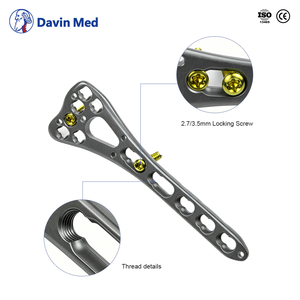
Metropolitan trauma centers handle extreme orthopedic trauma resulting from heavy motorcycle traffic. Clinical demand centers on anatomically pre-contoured distal radius locking plates, titanium cannulated intramedullary nails (femoral/tibial), and high-strength external fixators capable of rapid damage control stabilization.
Inquire NowDegenerative Spine Interventions
Vinmec, Tâm Anh, & Bạch Mai
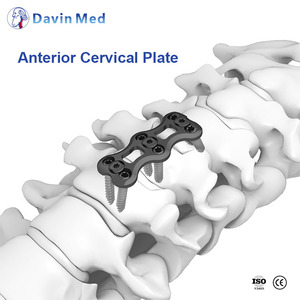
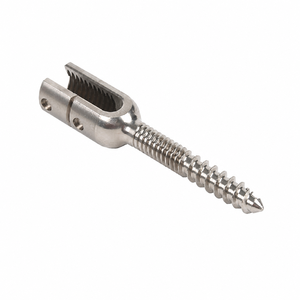
Vietnam's aging demographics have led to a surge in lumbar spinal stenosis, spondylolisthesis, and cervical disc disease surgeries. Surgeons require low-profile anterior cervical plates, polyaxial pedicle screw fixation systems with friction-head mechanisms, and radiolucent PEEK interbody fusion cages.
Inquire NowSports Medicine & Arthroscopy
Hoàn Mỹ & International Clinics
Active lifestyle participation across major cities (Hanoi, Ho Chi Minh City, Da Nang) has increased arthroscopic ligament reconstruction procedures. Clinical requirements include PEEK and biocomposite interference screws, titanium suture anchors, and cortical fixators for ACL/PCL joint restoration.
Inquire NowRegulatory & Market Dynamics: Vietnam MedTech Directives (2025–2030)
Navigating the regulatory matrix in Vietnam requires compliance with updated governmental decrees aimed at modernizing healthcare procurement, improving transparency, and standardizing medical device quality control:
- Decree 98/2021/NĐ-CP & Decree 07/2023/NĐ-CP Integration: Vietnam has instituted strict public registration filing mandates (Số lưu hành). Importers must submit complete technical dossiers, ISO 13485 certificates, and Certificate of Free Sale (CFS) issued by recognized international authorities.
- Public Hospital Tender Grouping (Bidding Classes): Tenders across Vietnamese public hospitals categorize medical devices into distinct bidding groups based on manufacturing origin, CE/FDA approvals, and factory audit status. Devices holding robust international technical files can compete in premium tender tiers (Group 1 & Group 2), yielding higher market capture.
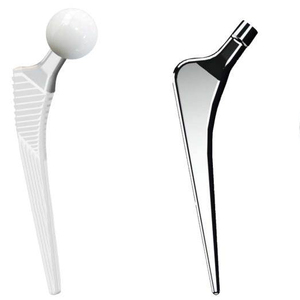
- Local Assembly vs Imported Finished Devices: Vietnam encourages foreign direct investment (FDI) in localized medical device assembly. However, structural load-bearing components like pedicle screws, total joint prostheses, and locking trauma plates remain predominantly dependent on high-precision overseas forging and CNC milling.
Manufacturing Process Integrity & Engineering Excellence
Quality assurance in orthopedic implant production is not merely about dimensional compliance—it directly dictates clinical outcomes, osseointegration success, and revision prevention. Premier manufacturing partners adhere to rigorous production workflows:
1. Metallurgical & Raw Material Verification
Every bar stock batch of Ti-6Al-4V ELI (ASTM F136), Commercially Pure Titanium (ASTM F67 Grade 4), 316L Stainless Steel (ASTM F138), or PEEK (ASTM F2026) undergoes spectral analysis, microstructural inspection, and tensile property validation before entering CNC turning cells.
2. Swiss-Type Multi-Axis Machining
Utilizing high-end Swiss-type lathes and 5-axis machining centers, intricate thread geometry—such as variable-pitch pedicle screw threads, self-tapping flutes, and micro-locking plate holes—is executed with repeatable tolerances within ±0.003mm.
3. Controlled Surface Treatments & Anodization
Implants undergo chemical deburring, ultrasonic cleaning, micro-blast textured treatments for enhanced cell adhesion, and Type II/III color anodization to provide immediate intraoperative color-coding for surgical staff.
4. 100% Laser Marking & Lot Traceability
Each individual bone plate, screw, and cage receives precise fiber-laser etching indicating part numbers, lot numbers, and dimensional indicators, guaranteeing complete backward traceability from operating room to raw material melt log.
Frequently Asked Questions by Local & Regional Procurement Managers
Partner with a Global Leader in Orthopedic Manufacturing
Whether you are expanding hospital distribution networks across Vietnam or launching a worldwide private-label brand, our biomedical engineering team provides the technical precision, regulatory files, and material excellence your business demands.
Inquire Now