1. The Strategic Role of Orthopedic Implant Technical Files in the Mumbai Healthcare Ecosystem
As the commercial capital and primary healthcare hub of Western India, Mumbai hosts a dense concentration of tertiary trauma networks, public municipal teaching hospitals—such as King Edward Memorial (KEM) Hospital, Lokmanya Tilak Municipal General Hospital (Sion Hospital), and B.Y.L. Nair Charitable Hospital—and premium private medical institutions, including Lilavati Hospital, Kokilaben Dhirubhai Ambani Hospital, and Breach Candy Hospital. Distributing medical devices across Maharashtra requires strict compliance with India's Central Drugs Standard Control Organization (CDSCO) under the Medical Devices Rules (MDR 2017 & 2023 updates).
For orthopedic importers, medical device distributors, and hospital procurement boards in Mumbai, sourcing orthopedic implants from China requires far more than basic physical hardware. It demands a fully compliant, audit-ready Technical File (STED - Summary Technical Documentation Format). A complete Technical File guarantees that spine systems, intramedullary nails, locking compression plates, and joint prostheses meet global safety and performance standards while accelerating Indian registration on the CDSCO Sugam Portal.
Core Structure of a CDSCO-Ready STED Technical File
Our OEM manufacturing facility supplies comprehensive technical files structured according to GHTF/IMDRF principles, containing all documentation required by Indian Authorized Agents (AIR) for Form MD-14 import license applications:
Device Description & Specification
Includes full engineering CAD drawings, dimensional tolerances, thread pitch geometries, surface roughness values (Ra), and component bill of materials (BOM).
Material Characterization
Mill test certificates verifying chemical composition, tensile/yield strength, microstructural phase integrity, and corrosion resistance per ASTM F136, ASTM F138, and ASTM F2026.
Verification & Biomechanical Validation
Biomechanical testing data including static pullout strength, axial fatigue limit, dynamic torsional stiffness, and wear particulate analysis per ASTM & ISO standards.
2. Implant Material Metallurgy & Technical File Verification Matrix
Material grade selection is the first technical parameter evaluated during CDSCO expert committee reviews and hospital tender evaluations in Mumbai. Using unverified raw stock leads to severe clinical risks such as fretting corrosion, premature implant fatigue failure, or localized systemic toxicity. Below is the technical validation matrix supplied in our standard manufacturing Technical Dossier:
| Material Classification | International Standard | Target Clinical Applications | Biomechanical Advantage & Dossier Proof |
|---|---|---|---|
| Titanium Alloy (Ti-6Al-4V ELI) | ASTM F136 / ISO 5832-3 |
Pedicle Screws, Spine Rods, Intramedullary Nails, Locking Trauma Plates | Extra Low Interstitial (ELI) grade yields enhanced fatigue strength (>860 MPa) and superior biocompatibility; proven low elastic modulus reduces stress shielding. |
| Commercially Pure Titanium (CP-Ti) | ASTM F67 / ISO 5832-2 |
CMF Maxillofacial Mini-Plates, Cranial Mesh, Small Fragment Trauma | Exceptional ductility allowing intraoperative contouring without micro-fracturing along plate bend zones; low artifact footprint in post-op MRI/CT scans. |
| Stainless Steel 316L Medical Grade | ASTM F138 / ISO 5832-1 |
Trauma Plates, External Fixation Schanz Pins, Bone Files & Rasp Gauges | Vacuum Arc Remelted (VAR) high-density steel; chemical passivation treatment prevents pitting corrosion under high intra-articular load environments. |
| Polyetheretherketone (PEEK) | ASTM F2026 |
Cervical & Lumbar Interbody Fusion Cages (PLIF/TLIF/ALIF), Suture Anchors | Radiolucent profile allowing non-invasive fusion assessment; modulus of elasticity (~3.5 GPa) closely mimics human cortical bone to prevent cage subsidence. |
| Cobalt-Chromium-Molybdenum (CoCrMo) | ASTM F1537 / ISO 5832-12 |
Total Joint Arthroplasty (Hip Femoral Heads & Knee Femoral Components) | Extreme wear resistance and mirror-polished surface finish (Ra < 0.02 µm) for smooth articulation against UHMWPE liners. |
3. Localized Surgical Application Scenarios Across Mumbai Healthcare Networks
Mumbai's orthopedic surgical demands are uniquely bifurcated between high-volume acute trauma interventions and specialized elective reconstructive procedures. China manufacturers supplying technical files to this market must tailor product offerings to the specific operational realities of Indian surgical suites.
High-Velocity Road Traffic Trauma along Mumbai Expressways
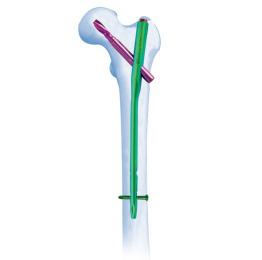
The high incident rate of polytrauma cases along the Western Express Highway, Eastern Express Highway, and Mumbai-Pune Expressway transfers high-volume emergencies to suburban trauma care facilities in Thane, Sion, and Navi Mumbai. Importers rely on complete trauma systems featuring cannulated Proximal Femoral Nailing (PFNA) and anatomical Locking Compression Plates (LCP) equipped with combination holes. These systems permit both dynamic axial compression and stable locking fixation, facilitating immediate load-bearing recovery.
Coastal Environmental & Tropical Packaging Factors
Mumbai's tropical coastal climate subjects hospital storage rooms to high ambient humidity and saline airborne elements. Traditional packaging often suffers from seal degradation or moisture condensation. Our technical file specifies double-layer Tyvek® cleanroom pouching with medical-grade aluminum barrier foil, validated through accelerated shelf-life stability testing per ASTM F1980, ensuring sterile integrity for up to 5 years.
4. Enterprise Manufacturing Infrastructure & Technical File OEM Services
As a leading Chinese orthopedic implant manufacturer supplying global OEM partners and regional Indian distributors, our manufacturing complex operates under strict ISO 13485:2016 quality management protocols. Our facility houses high-precision CNC multi-axis machining centers, Japanese Citizen Swiss-type automatic lathes, and German-imported laser marking units.
Complete Systems Supplied with Full Technical Dossiers:
- Thoracolumbar Spine Fixation Systems: Low-profile polyaxial pedicle screws, cross-links, titanium rods, and matching PEEK interbody fusion cages (PLIF, TLIF).
- Intramedullary Nail Systems: Cannulated femoral, tibial, and humeral nails with targeted distal aiming instrumentation designed for minimal fluoroscopy exposure.
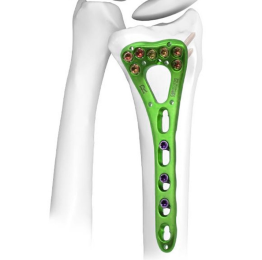
- Anatomical Locking Compression Plate (LCP) Systems: Pre-contoured plates for distal radius, proximal humerus, distal femur, and tibial plateau fractures.
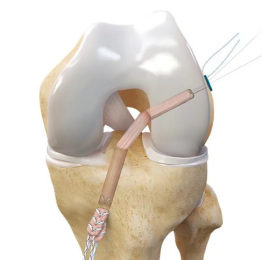
- Sports Medicine Fixation: High-strength PEEK suture anchors, titanium interference screws, and cortical button devices for ACL/PCL joint reconstruction.
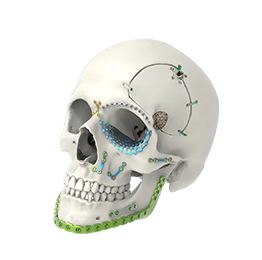
- Craniomaxillofacial (CMF) Systems: Micro (1.5mm) and Mini (2.0mm/2.4mm) bone plates, orbital mesh, and dedicated craniotomy neuro-fixation kits.
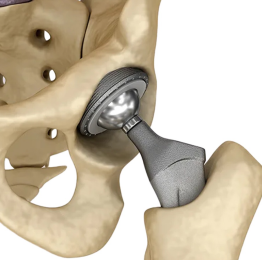
- Joint Arthroplasty Systems: Total Hip Replacement (THR) stems with modular femoral heads and Total Knee Replacement (TKR) tibial/femoral components.
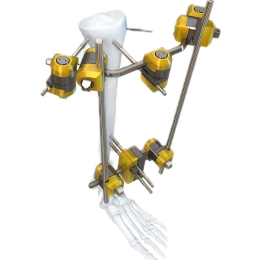
- Damage-Control External Fixation: Unilateral, wrist, and ring fixator frames for open fractures and limb lengthening applications.
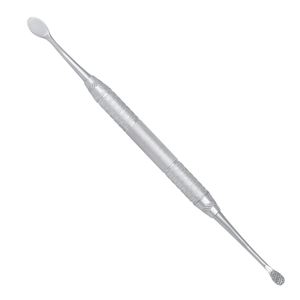
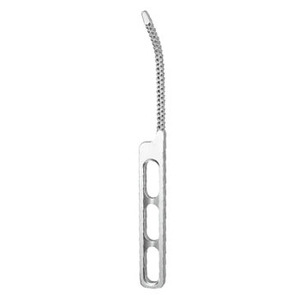
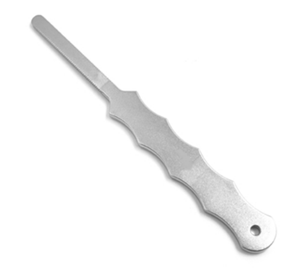
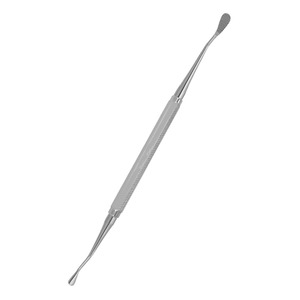
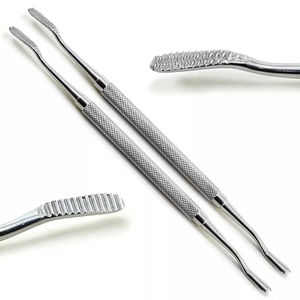
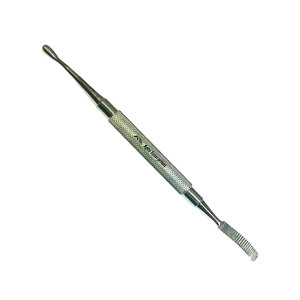
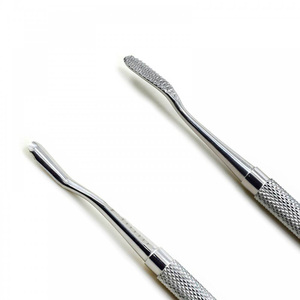
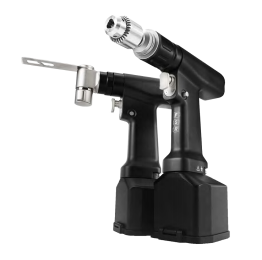
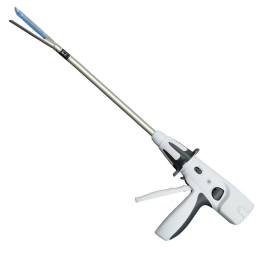
- Precision Surgical Power Tools & Bone Files: Autoclavable cannulated drills, oscillating saws, and stainless steel manual deburring files (Miller, Howard, Colburn series).
5. Localized Market Growth Trends in Mumbai & Western India (2024–2030)
The demand for medical-grade orthopedic implants in Maharashtra is undergoing rapid evolution driven by three distinct structural growth catalysts:
Rise in Specialized Spine & Joint Elective Surgeries
An aging urban demographic across Mumbai, Thane, and Navi Mumbai has led to a steep increase in lumbar degenerative conditions and osteoarthritis, driving consistent demand for spinal pedicle screws, PEEK cages, and total joint prostheses.
Expansion of Municipal Tenders (BMC / MCGM)
Public health spending by the Municipal Corporation of Greater Mumbai (MCGM) prioritizes standardized, budget-optimized trauma implants that possess valid CE marks, ISO certificates, and complete CDSCO STED dossiers for tender qualification.
Surge in Orthopedic Medical Tourism
Mumbai continues to attract international patients from the Middle East, East Africa, and South Asia for cost-effective orthopedic reconstructions. Private healthcare providers demand top-tier implant surface treatments and proven long-term clinical data.
6. Frequently Asked Questions (FAQ) for Mumbai Orthopedic Importers & Distributors
Answers to critical technical, regulatory, and logistics queries raised by medical device buyers in India: