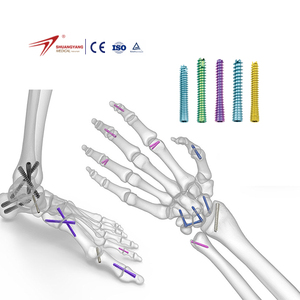
Herbert Cannulated Titanium Compression Screw System
Designed for scaphoid fractures, intra-articular osteotomy, and small bone fragment fixation. Features variable thread pitch for superior interfragmentary compression.
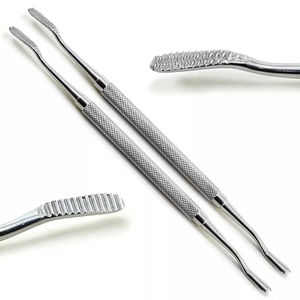
Precision-manufactured medical devices evaluated for structural fatigue resistance, bio-inertness, and seamless intraoperative instrument interface. Ready for hospital tenders and private procurement.
Designed for scaphoid fractures, intra-articular osteotomy, and small bone fragment fixation. Features variable thread pitch for superior interfragmentary compression.
Crafted from high-grade German-standard surgical stainless steel (ASTM F138). Ergonomic grip with micro-cut serrations for smooth bone contouring in maxillofacial and orthopedic procedures.
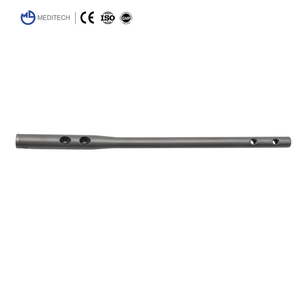
Class III CE/ISO certified cannulated intramedullary nails. Engineered with distal multi-planar locking options for enhanced rotational stability in diaphyseal fractures.
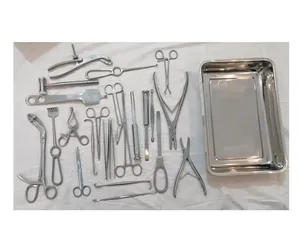
Autoclavable modular surgical trays featuring precision torque limiters, depth gauges, bone drills, and tap handles matched for trauma and dental reconstruction.
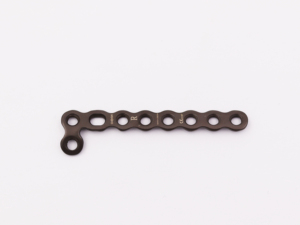
Ultra-low profile anatomical titanium locking plates designed for small bone reconstruction, hand, wrist, and maxillofacial internal rigid fixation.
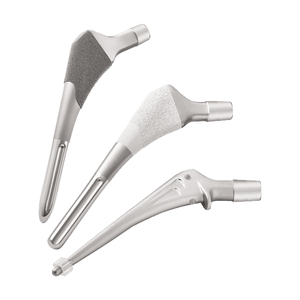
Forged Ti-6Al-4V ELI femoral stem with plasma spray hydroxyapatite (HA) coating. Standard and high-offset options compatible with standard 12/14 taper femoral heads.
Self-tapping titanium bone screws (1.5mm to 6.5mm) in modular caddy trays. Precision Swiss CNC-milled Star-drive / Torx recesses to eliminate cam-out.
Custom OEM micro-machined titanium components manufactured with sub-micron tolerances for craniomaxillofacial, spinal, and extremities application.
The Argentine orthopaedic market represents one of the most dynamic yet highly regulated medical device ecosystems in Latin America. Operating within this landscape requires an in-depth understanding of the regulatory framework governed by ANMAT (Administración Nacional de Medicamentos, Alimentos y Tecnología Médica), specifically under Disposición 2318/02 and subsequent medical device classifications. For Argentine distributors, importers, and healthcare networks (such as PAMI, IOMA, and private healthcare prepagas like OSDE, Swiss Medical, and Galeno), securing a dependable, ISO 13485-certified manufacturing partner is essential to ensure seamless product registration, supply continuity, and surgical safety.
Macroeconomic fluctuations and import valuation checks in Argentina have created a pressing demand for direct factory-to-distributor supply chains. Importers can no longer afford supply chain disruptions, uncalibrated surgical instruments, or incomplete technical dossiers (STED). As a premier orthopaedic factory and global exporter, our facility provides full documentation packages—including Certificates of Free Sale (CFS), ISO 13485:2016 audit reports, full material test reports (MTR), and validated sterilization protocol data—custom-tailored to accelerate ANMAT Class III and Class IV product approvals.
We prepare standardized Common Technical Documents (CTD) and STED files containing biocompatibility testing (ISO 10993), mechanical fatigue limits (ASTM F1717/F543), and clinical evaluation reports.
Designed to fulfill tender specifications for PAMI, national trauma centers, and private hospital networks in Argentina. Tier-1 mechanical quality delivered at competitive direct-factory pricing.
Direct air-freight and ocean shipment routing to Ezeiza Airport (EZE), Terminal de Cargas Argentina (TCA), and Puerto de Buenos Aires with compliant customs harmonized codes (HS Code 9021.10).
From high-altitude trauma cases in the Andean provinces to high-volume joint reconstruction in metropolitan centers, our product architecture covers the entire spectrum of surgical intervention.
Spinal pathologies, degenerative disc disease, and traumatic vertebral fractures require uncompromised biomechanical rigidity. Our Spine System incorporates top-loading polyaxial and monoaxial pedicle screws engineered with friction-fit heads to prevent rod slippage under heavy lateral bending loads. The locking mechanism utilizes a square-thread set screw designed to reduce cross-threading risks intraoperatively.
For interbody fusion, our radiolucent PEEK cages (conforming to ASTM F2026) feature integrated tantalum markers for precise radiographic verification in AP and lateral fluoroscopy. Coupled with pre-contoured titanium rods (ASTM F136) and low-profile anterior cervical plates (ACDF), Argentine spine surgeons are provided with an integrated construct that promotes rapid osseointegration and long-term segmental stability.
Trauma care accounts for a significant portion of orthopedic surgical volume in Argentina. Our cannulated intramedullary nail portfolio includes Proximal Femoral Nails (PFNA), Tibial Nails, and Humeral Nails. Manufactured using high-fatigue titanium alloy, these implants feature optimized anatomical curvatures that facilitate reamed or unreamed insertion techniques.
The matching targeting instruments are manufactured with aerospace-grade aluminum and hardened stainless steel, ensuring carbon-fiber radiolucent aiming arms maintain sub-millimeter distal locking accuracy under C-arm fluoroscopy. This dramatically reduces intraoperative radiation exposure for surgical teams while ensuring secure distal bolt placement.
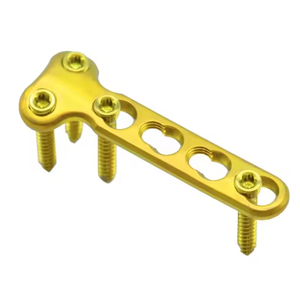
Internal fixation of complex intra-articular and peri-articular fractures demands anatomical contouring to minimize soft tissue disruption. Our Locking Plate Systems feature combi-holes that accept both standard cortical screws for dynamic compression and threaded locking screws for fixed-angle stability in osteoporotic bone.
The matrix spans distal radius plates, proximal humeral plates, distal femoral plates, tibial plateau plates, and clavicle reconstruction systems. Each plate undergoes automated CNC milling followed by precision surface passivation and color anodization, allowing surgical nurses to instantly identify plate sizing and screw gauge compatibility during emergency procedures.
Sub-micron accuracy and strict adherence to ASTM / ISO raw material standards guarantee implant longevity, fatigue failure resistance, and optimal biocompatibility.
Every orthopaedic implant exported to the Argentine market originates from fully traceable certified raw bar stock. We strictly eliminate industrial-grade titanium or non-validated stainless steel alloys. Below is the authoritative biomaterial reference matrix utilized across our manufacturing lines:
| Biomaterial Class | International Standard | Mechanical Strength (Tensile) | Biocompatibility & Features | Target Clinical Application |
|---|---|---|---|---|
| Ti-6Al-4V ELI (Grade 23) | ASTM F136 / ISO 5832-3 | ≥ 860 MPa | Extra Low Interstitial elements; maximum fracture toughness and fatigue strength. | Pedicle screws, intramedullary nails, locking plates, trauma bolts. |
| Commercially Pure Titanium | ASTM F67 / ISO 5832-2 | 240 - 550 MPa | High ductility for intraoperative cold bending and anatomical adaptation. | CMF micro/mini plates, cranioplasty mesh, reconstruction plates. |
| Stainless Steel 316L | ASTM F138 / ISO 5832-1 | ≥ 490 MPa | High resistance to pitting corrosion; cost-effective structural integrity. | Trauma compression plates, Schanz pins, external fixation rods. |
| CoCrMo Alloy | ASTM F1537 / ISO 5832-12 | ≥ 897 MPa | Ultra-high wear resistance and polished surface micro-smoothness (<0.05 µm Ra). | Total hip femoral heads, total knee femoral components, bearing joints. |
| Medical Grade PEEK | ASTM F2026 | 90 - 100 MPa | Radiolucent, elastic modulus (3.6 GPa) closely matching cortical bone. | Spinal interbody fusion cages (TLIF, PLIF, ACDF), suture anchors. |
| UHMWPE / Cross-linked | ASTM F648 / ISO 5834-2 | ≥ 40 MPa | Low coefficient of friction, high impact resistance and wear longevity. | Acetabular cup liners, tibial knee inserts, joint bearings. |
*Note: Material test certificates (MTR) with heat numbers and chemical breakdown reports are provided for every shipment batch sent to Argentine customs.
Empowering local distributors to establish their own proprietary implant lines with complete laser-etched branding and regulatory dossier assistance.
Transforming physical prototypes or 2D technical drawings into 3D CAD models. Our engineers optimize thread pitch, geometry, and mechanical stress distribution prior to production.
Utilizing 5-axis Citizen and Tornos CNC Swiss automatic lathes to machine complex geometries, cannulated bores, and self-tapping flutes with micro-inch tolerances.
Type II anodizing for color-coded size recognition. High-precision fiber laser marking for 100% lot traceability, UDI (Unique Device Identification), and custom brand logos.
Ultrasonic cleaning followed by double Tyvek blister sealing within an ISO Class 7 cleanroom environment. Delivered sterile-ready or non-sterile according to client specification.
Supplying customized ANMAT product registration packages, including material certificates, process validation protocols, risk analysis (ISO 14971), and IFUs in Spanish.
Argentine distributors can apply for sample implant sets and demonstration instrument caddies to conduct hands-on evaluations with leading orthopedic surgeons prior to bulk purchase.
Addressing key regulatory, logistical, and technical questions common to medical device procurement directors in Argentina.
Whether you are expanding your trauma portfolio, launching a private-label spine system, or competing in Argentine public hospital tenders, our engineering and export teams are ready to provide technical guidance, sample kits, and direct factory quotations.