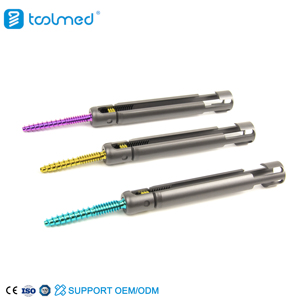
Professional Manufacturer Everest 5.5 MIS Titanium Polyaxial Pedicle Screw System Orthopedic Spine Implants
Feature: Low-profile head, color anodized rod channels.
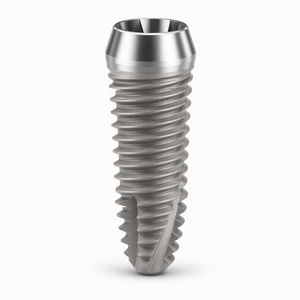
Precision-machined implant systems engineered to international ASTM specifications. Ready for private-label laser marking, custom kit packaging, and South Korean regulatory submittal.
South Korea stands as one of Asia's most technologically advanced and rapidly aging medical markets. According to demographic data from Statistics Korea, South Korea officially transitioned into a super-aged society in 2025, with over 20% of its population aged 65 and older. This demographic shift has created unprecedented clinical demand for spine instrumentation, joint reconstruction devices, trauma locking plates, and specialized sports medicine surgical tools across both tertiary university medical centers and private specialized orthopedic hospitals (such as those concentrated in Seoul's Gangnam, Seocho, and Songpa districts).
However, for South Korean medical device brand owners, importers, and regional distributors, maintaining dedicated in-house manufacturing infrastructure presents massive capital expenditure (CAPEX) hurdles. To remain competitive under the National Health Insurance (NHI) reimbursement pricing pressure and the strict oversight of the Ministry of Food and Drug Safety (MFDS), leading Korean orthopedic companies are increasingly partnering with specialized overseas white-label contract manufacturers.
By leveraging qualified white-label suppliers capable of delivering ISO 13485-certified, sub-micron precision implants and matching surgical instrument sets, South Korean medical brands can focus their capital on local clinical marketing, surgeon training, and hospital tender management while maintaining total control over product branding and regulatory ownership.
Different tiers of the South Korean healthcare system demand distinct product specifications, handling characteristics, and instrument packaging tailored to surgeon workflow preferences.
High-volume specialized spine hospitals in metropolitan Seoul prioritize Minimally Invasive Surgery (MIS) pedicle screw systems. Surgeons require ultra-low-profile polyaxial screw heads (such as 5.5mm rod configurations) that minimize soft-tissue disruption and muscular retraction. White-label systems supplied to these clinics feature friction-head orientation retention, high-pitch dual lead threads for rapid insertion, and cannulated shafts compatible with intraoperative C-arm fluoroscopy and robotic navigation tracks.
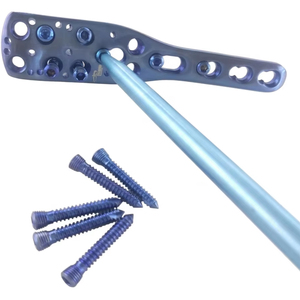
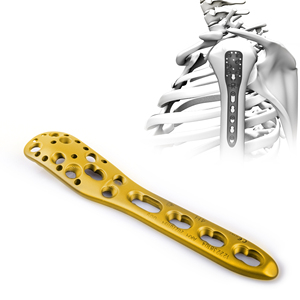
Korea's top-tier university hospitals handle complex traumatic fractures, non-unions, and revision surgeries. These centers require anatomical titanium locking plate systems (LCP/PHILOS proximal humeral plates, distal radius, and distal femur plates) manufactured from implant-grade ASTM F136 Ti-6Al-4V ELI. Crucially, surgical instrument kits supplied alongside implants must withstand rigorous automated washer-disinfector cycles and high-temperature vacuum autoclaving without dimensional distortion or laser marking degradation.
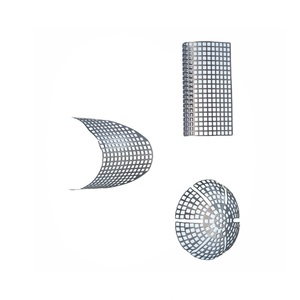
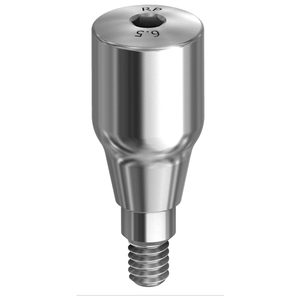
In outpatient sports medicine and dental implant centers across Busan, Daegu, and Incheon, precision micro-machining is paramount. Dental abutments with conical Morse taper connections (0°, 15°, 25° angles) and biocompatible CMF titanium mesh demand sub-micron tolerances to prevent rotational micro-movement and peri-implantitis. Custom OEM color anodization assists Korean surgical teams in rapid intraoperative component identification.
Direct comparative reference for technical evaluation teams, regulatory officers, and procurement directors auditing contract manufacturing capabilities.
| Material Specification | International Standard | Clinical Application in Korea | Mechanical & Biocompatible Advantages |
|---|---|---|---|
| Ti-6Al-4V ELI Titanium | ASTM F136 / ISO 5832-3 | MIS Pedicle Screws, Spine Rods, Trauma Locking Plates | Extra Low Interstitial (ELI) grade provides superior fatigue strength, high damage tolerance, and optimal biomechanical modulus matching cortical bone. |
| Commercially Pure Titanium | ASTM F67 Grade 2 / Grade 4 | CMF Maxillofacial Mesh, Micro Plates, Cranial Fixation | High intraoperative ductility allowing manual contouring by surgeons while maintaining mechanical stability across craniofacial defects. |
| PEEK Optima Plastic | ASTM F2026 | TLIF / PLIF / Cervical Interbody Fusion Cages | Radiolucent properties for clear postoperative X-ray evaluation; elastic modulus (~3.6 GPa) closely matches natural human cancellous bone to reduce stress shielding. |
| Implant Stainless Steel | ASTM F138 316L | External Fixation Schanz Pins, K-Wires, Surgical Drivers | High strength, exceptional surface hardness after vacuum heat treatment, and cost-effective corrosion resistance under heavy mechanical load. |
| Surgical Instrument Stainless | AISI 420 / 630 (17-4PH) | Torque Limiters, Bone Forceps, Plate Benders, Retractors | High wear resistance for surgical cutting edges and driver tips; immune to galling and corrosion during repeated ultrasonic cleaning and steam sterilization. |
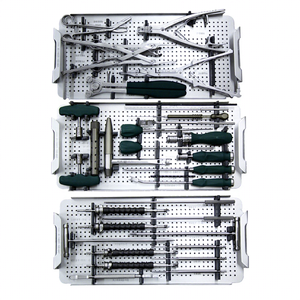
Historically, Korean healthcare providers occasionally sourced implants and surgical tools from separate vendors. Today, hospital purchasing committees enforce strict bundle requirements. Implants must be delivered alongside ergonomic, dedicated surgical instrument trays featuring exact driver-bit tolerance matching. White-label manufacturers who supply turn-key solutions—including custom-molded anodized aluminum sterilization boxes—hold a decisive competitive edge in Korean hospital tenders.
The South Korean MFDS has fully instituted mandatory Unique Device Identification (UDI) system tracking for Class III and Class II medical devices. Local distributors require factory-level direct laser marking of GS1-compliant 2D DataMatrix codes, lot numbers, and dimensional references on every screw head, plate, and surgical handle. Contract factories with automated laser-marking and optical inspection lines eliminate domestic relabeling costs for Korean importers.
Empowering South Korean medical device companies with world-class OEM/ODM production, uncompromised quality control, and end-to-end regulatory support.
Equipped with multi-axis Swiss-type CNC automatic lathes and 5-axis high-speed machining centers. We achieve thread tolerances within ±0.005mm, ensuring zero wobble during driver engagement and flawless Morse taper fits for dental and orthopedic implants.
Operating under strict ISO 13485 quality management system guidelines. Every raw titanium bar or PEEK batch is backed by certified chemical composition and tensile testing mill reports, guaranteed 100% traceable from raw material to final sterile pouch packaging.
Our regulatory engineering team prepares complete Technical Files formatted to STED (Summary Technical Documentation) standards, simplifying the product registration process for South Korean distributors seeking local MFDS Class II and Class III device approval.
In-depth technical and commercial answers addressing common inquiry points from Korean procurement managers, regulatory affairs officers, and OEM partners.