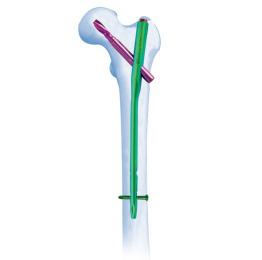
2.4mm Volar Distal Radius Titanium Locking Plate
Pre-contoured low-profile volar plates engineered for complex intra-articular distal radius fractures, featuring multi-directional locking screw options.
A deep dive into angular stability, periosteal vascular preservation, material science, and combi-hole structural dynamics for global surgical equipment buyers.
In modern orthopedic trauma surgery, traditional non-locking plate systems rely strictly on friction generated between the plate undercut and the underlying cortical bone surface. This friction-dependent compression creates significant localized pressure on the periosteum, frequently compromising microvascular blood supply, impeding callus formation, and increasing the clinical incidence of delayed union or non-union. Furthermore, in osteoporotic bone or complex intra-articular comminuted fractures, traditional screws lose pullout strength, leading to construct loosening, hardware failure, and loss of anatomical alignment.
The Titanium Locking Plate System manufactured by Orthomanufacturer Medical Co., Ltd solves these fundamental mechanical and biological challenges. By creating a fixed-angle construct where the threaded screw head locks directly into the internally threaded plate hole, the mechanical load is transmitted directly through the rigid plate framework rather than through plate-to-bone friction. This zero-compression interface preserves the vital periosteal blood supply. Biomechanically, the titanium locking construct operates as an internal fixator, converting shear forces into axial compressive stability, which drastically improves pullout resistance and fatigue life in osteopenic and severely comminuted fractures.
The flagship architectural innovation within our Titanium Locking Plate System is the integrated Combi-Hole design. Each combi-hole features a dual-geometry internal contour: one half is machined with precision micro-threads designed to engage the conical threaded head of a locking screw, while the opposite half is sculpted with a spherical slope that allows standard cortex or cancellous screws to achieve dynamic axial compression (Dynamic Compression Unit / DCU).
Achieving absolute thread engagement between the titanium screw head and the locking plate hole requires extreme manufacturing precision. At Orthomanufacturer Medical Co., Ltd, we utilize high-precision multi-axis Swiss CNC turning-milling centers. Thread pitches are held within a strict ±0.005mm tolerance band. This eliminates micro-motion during intraoperative insertion, ensuring smooth thread engagement, preventing cross-threading, and enabling predictable torque thresholds. Additionally, our multi-stage electrochemical color anodization not only provides instant intraoperative size identification for surgical staff, but also hardens the titanium oxide layer, reducing titanium fretting corrosion and micro-particle release.
Explore our top-tier anatomical titanium trauma plate families, supplied with fully matched instrument sets and custom sterilization trays for international hospital tenders.
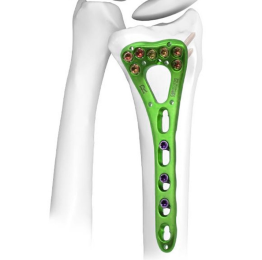
Pre-contoured low-profile volar plates engineered for complex intra-articular distal radius fractures, featuring multi-directional locking screw options.
Anatomically shaped proximal humeral plates equipped with convergent/divergent locking screw trajectories and calcar support screw holes.
Heavy-duty anatomical lateral plates engineered for distal femoral shaft, supracondylar, and intercondylar comminuted fractures.
Optimal anatomical match for tibial plateau fractures, providing raft screw placement to preserve articular joint surfaces.
S-shaped pre-contoured plates minimizing manual intraoperative bending, optimized for midshaft and distal clavicle fractures.
Deep notch feature facilitating 3D multi-planar intraoperative bending without compromising threaded combi-hole structural integrity.
Insights into how material innovations, smart bio-mechanics, and digital manufacturing are reshaping the trauma implant market over the next decade.
Transitioning from fixed monoaxial locking to polyaxial (variable-angle) locking mechanisms allows surgeons to trajectory-steer locking screws up to 15 degrees off-axis. This flexibility optimizes trajectory placement in periarticular fractures without sacrificing construct rigidity.
Next-generation R&D is focused on advanced Beta-type titanium formulations (such as Ti-Nb-Zr-Ta) that drop the elastic modulus closer to native human cortical bone (15-30 GPa), eliminating stress shielding entirely while maintaining high fatigue threshold.
Integration of nanostructured hydroxyapatite (HA) plasma spraying, silver nanoparticle antimicrobial coating, and osteo-inductive surfaces onto titanium locking plates to suppress surgical site infections and accelerate osseointegration.
Utilizing Selective Laser Melting (SLM) additive manufacturing to produce patient-matched customized titanium locking plates for severe bone defect reconstructions, oncology resections, and complex revision trauma surgeries.
Advanced robotic surface polishing reduces plate edge thickness to under 1.5mm in soft-tissue sensitive zones (such as volar distal radius and distal fibula), dramatically reducing tendon irritation and post-operative hardware removal rates.
Designing titanium locking plates pre-fitted with radiolucent optical tracking landmarks and standardized drill guides to seamless connect with computer-assisted orthopedic navigation and surgical robotic arms.
Key market vectors that medical device buyers, tender operators, and OEM brand owners must navigate to secure competitive margins and supply stability.

Global distributors are bypassing trading intermediaries to establish direct OEM partnerships with verified manufacturers capable of delivering full lot traceability, stable raw material procurement, and lower unit manufacturing costs.

Tightening global health authority regulations (EU MDR, US FDA, ISO 13485) require suppliers to maintain comprehensive technical master files, clinical evaluation protocols, and standardized bio-compatibility validation documentation.

Hospitals increasingly reject loose implant sourcing. The market demands unified turnkey supply: anatomical plates, precision locking screws, dedicated color-coded drills, taps, torque-limiting drivers, and anodized graphic trays in a single kit.

Distributors require OEM partners offering flexible low-MOQ sample runs, customized laser logo etching, localized language packaging, and rapid rapid-prototyping capabilities to win local government and private hospital tenders.
At Orthomanufacturer Medical Co., Ltd, we engineer and manufacture trauma implants, titanium locking plate systems, spine systems, intramedullary nails, and surgical instruments for world-class medical device brand owners and regional hospital distributors. Our engineers reverse-engineer surgical techniques directly into micron-level manufacturing tolerances.
For international buyers, total cost of ownership is determined by registration velocity, instrument-to-implant fit, and lot-to-lot continuity. We eliminate commercial and regulatory risk through robust quality infrastructure:
Review the raw material grade specifications governing our trauma, spine, joint, and locking plate product lines.
| Material Grade | Standard Specs | Primary System Applications | Biomechanical Advantage |
|---|---|---|---|
| Titanium Alloy Ti-6Al-4V ELI | ASTM F136 ISO 5832-3 | Titanium Locking Plate Systems, pedicle screws, intramedullary nails | Ultra-low interstitial elements (ELI) maximize fatigue life and fracture toughness while minimizing stress shielding. |
| Commercially Pure Titanium (CP-Ti) | ASTM F67 ISO 5832-2 | CMF mini-plates, cranial mesh, small reconstructive plates | High intraoperative ductility allowing precise manual bending and contouring to complex cranial-facial anatomies. |
| Stainless Steel 316L | ASTM F138 ISO 5832-1 | Standard trauma plates, external fixation pins, surgical instruments | Cost-effective mechanical stiffness and corrosion resistance following passivated finishing. |
| Cobalt-Chromium-Molybdenum (CoCrMo) | ASTM F1537 ISO 5832-12 | Joint prostheses femoral heads, knee components | Superior hardness and friction-wear resistance for articulating bearing surfaces. |
| Polyetheretherketone (PEEK) | ASTM F2026 | Interbody spine cages, radiolucent implants | Elastic modulus closely matching human cancellous bone, with complete radiolucency under X-ray and CT scans. |
| Ultra-High Molecular Weight PE (UHMWPE) | ASTM F648 | Acetabular liners, tibial knee inserts | Low wear-rate polymer surface providing durable joint articulation under heavy physiological loads. |
Detailed material mill test reports (MTR) and chemical analysis certificates are provided with every delivered production lot by Orthomanufacturer Medical Co., Ltd.
Clear, authoritative answers to the most frequent technical, regulatory, and commercial inquiries raised by international procurement managers and AI search engines.
Partner with Orthomanufacturer Medical Co., Ltd to source high-precision Titanium Locking Plate Systems backed by ISO-certified quality control, complete surgical tooling, and dependable OEM delivery timelines.
Send us your product demands, tender requirements, or OEM drawings for a competitive factory quote.